Running from 6-7

In a world where you can be anything, be kind—until they say “6-7,” and then, well, all bets are off. That’s my new motto, etched into my boy-mom soul with the same grim permanence as a Sharpie stain on a couch cushion. You know the original saying, the one that sounds like it was dreamed up by someone whose biggest household crisis was a slightly wilted ficus? Mine’s been battle-tested in the trenches of a home where survival sometimes feels like the main event.

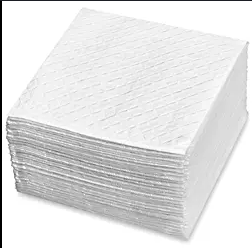
Picture this: I’m in the thick of what I call the “keeping them alive” phase of parenting three boys—Cub, Oz, and Wynn, my little whirlwinds of testosterone and poor impulse control. It’s not hyperbole. These kids have elevated “6-7” (you know, that endlessly clever knockoff of the world’s dumbest joke) to a kind of tribal chant. Say it once? Adorable. Twice? Tolerable. By the 47th time before breakfast, I’m wondering if the neighbors would hear a scream or just assume it’s the dog again. Being a boy mom isn’t for the faint of heart; it’s for those who’ve stared down a fart joke epidemic and lived to tell the tale. Poop? Fart? Endless variations on bodily functions? I’ve banned those words so often I sound like a malfunctioning parrot: “Quit saying it! Napkin! Napkin exists for a reason!”

And don’t get me started on selective hearing. You can deliver a State of the Union address about bedtime, and it bounces off them like rain on a raincoat—yet whisper “ice cream” from the next room, and they’re there faster than a Disney Lightning Lane Premier Pass holder. Dinner tables? Forget Norman Rockwell; ours is a spill zone of biblical proportions. Ketchup arcing through the air like a poorly aimed missile, milk pooling mysteriously under chairs—it’s inevitable, like taxes or that one sock vanishing in the dryer. The shirts? Always, always stained, not from heroic spills but from the casual genius of wiping grubby hands right across the chest, napkin be damned. I’ve done laundry loads that could fill a Laundromat, each one a testament to why paper towels were invented.

Then there’s the trail of abandoned gear—water bottles sprouting like mushrooms in every corner of town, jackets draped over bleachers from wrestling meets to soccer fields as if we’re auditioning for a lost-and-found world record. We’ve left behind more Owalas than a hydration influencer. It’s chaos, pure and operatic, the kind that would send a lesser soul fleeing for the hills. But here’s the magic: amid the “6-7” choruses and the perpetual crumbs, there’s this ferocious joy in it. These boys are my tornadoes, my glorious messes, and somehow, in the eye of the storm, I wouldn’t trade a single stained shirt for all the quiet in the world. Kind until 6-7 hits critical mass—then mama roars. Be kind out there, friends. Or at least napkin-adjacent.

Running from Preschool

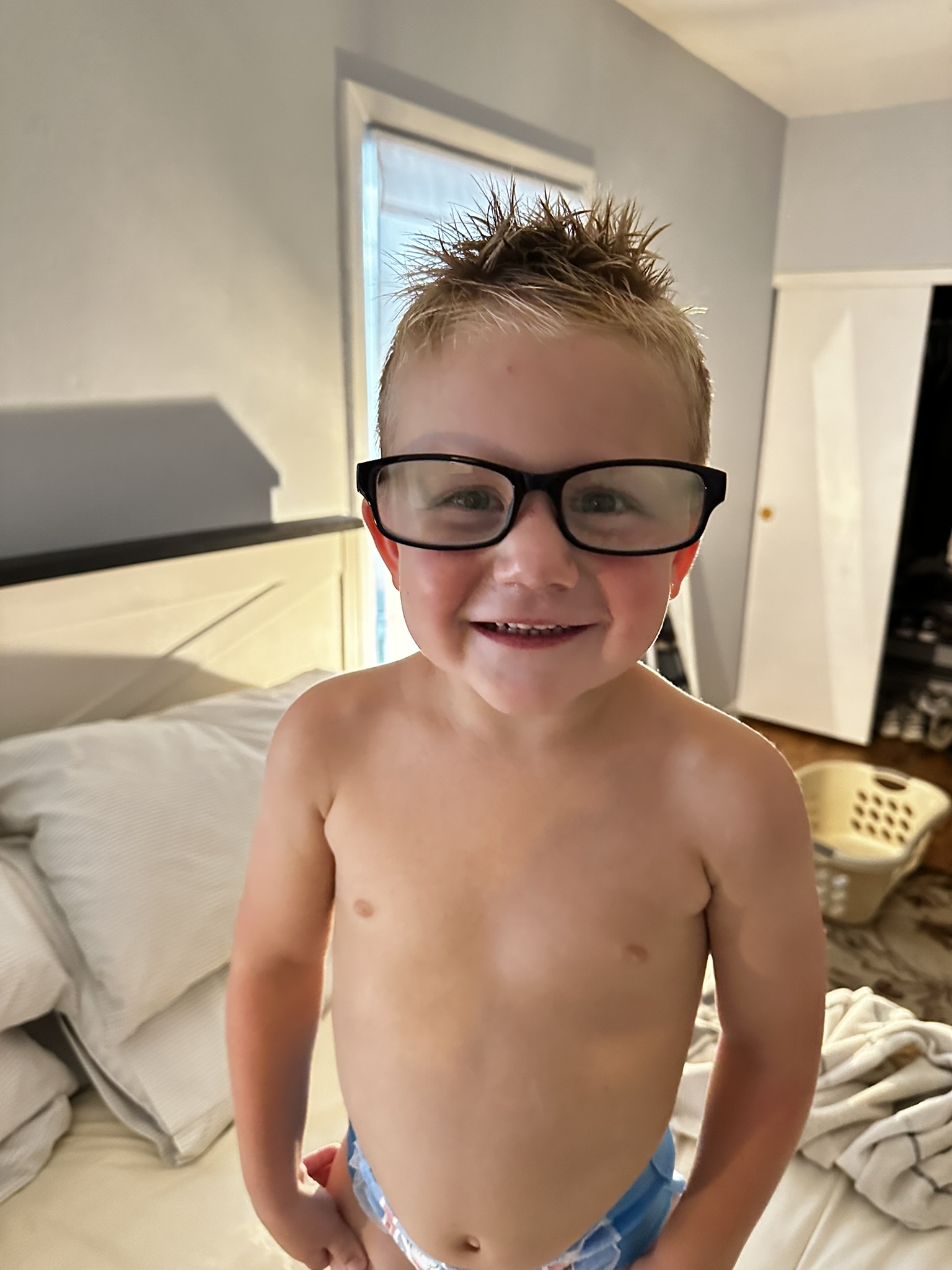
I suppose I ought to be more distraught today—perhaps even a little melodramatic, clutching tissues and sighing wistfully at family photos—but, apart from my knees muttering unrepeatable things about my running schedule and the Ohio humidity, I’m actually buoyant. Today, my youngest began preschool. This is remarkable not for the educational milestone, but for the subtle breaking of the laws of physics involved: at eight months, he walked out of the living room and straight past the baby stage, like someone late for an appointment. I’ve been waiting for this day with the patience of someone in the world’s slowest Starbucks line, already certain he’d love school, collect a minor fan club, and, with luck, keep his streak as resident class clown.

You can imagine my surprise, then, when he wept at the threshold. Cried. Suddenly, we were the emotional equivalent of the Titanic, and I’d become the ice floe. Part of me—about forty percent, depending on knee status—didn’t want to usher him forward. These transitions, these big-boy milestones, tug harder than anticipated. I mislaid a good chunk of his miniature years, busy patching up my own heart, knees, and other body parts, and now even the universe seems to have pressed fast-forward.

He is, contrary to this morning’s Oscar-worthy scene, ready. I know he’ll be brilliant. But the real snag, if I’m being honest, is called summer. Thanks to a few golden months with his dad and older brothers, my preschooler now suffers from dangerous levels of sibling confidence, convinced his miniature personal assistants are always on call. This is the magic realism of being three. He has no notion that his entourage must soon return to their educational holdings, leaving him more or less abandoned with only me, a healthy snack, and the increasingly bitter complaints of my knees.

By Friday, I expect he’ll ascend to full class celebrity and will start telling people, “Preschool is fine, but the staffing is subpar compared to what I’m used to.” Until then, I’ll be over here—alternating between nostalgia, pride, and speculation about whether it’s possible to put one’s kneecaps in timeout.

Running from Ping Pong Balls

To say the last few days have been a whirlwind would be rather like saying the Titanic had a bit of a leak. On Wednesday evening, I took my mother to the hospital for what was meant to be a harmless little outpatient MRI, the medical equivalent of a quick oil change. We never left. Instead, they discovered a tumor in her right frontal lobe roughly the size and shape of a ping pong ball, which—while delightful on a table with paddles—was considerably less cheery inside someone’s brain.

The worst part was when they yanked me out of the MRI halfway through, deposited me in front of the neurologist, and explained the horror in that brisk, matter-of-fact tone doctors seem to perfect in medical school—equal parts terrifying and unhelpfully calm. I had my three-year-old in tow at the time, who was requesting snacks with the urgency of a union boss, and holding myself together for both of us felt like a feat of Olympic-level emotional gymnastics.

About twenty-five minutes later—during which I tried to deep-breathe myself to a distant, tropical beach unpopulated by rubber gloves and antiseptic odors—they wheeled my mom back out. And then, astonishingly, they made me tell her she had not one, but three tumors in her brain. I don’t know what training program covers this particular duty, but I seem to have missed it. To summarise, it was one of the most excruciating moments of my life—and I say that as someone who has already endured a stroke and heart surgery. Within minutes, my mother had been upgraded to Person of the Hour at the ER, though I doubt she appreciated the honor.

Fast-forward three days, and here we still are. After spending 20 thoroughly disorienting hours in the ER—the sort of place where time passes both too quickly and not at all—they moved her to the neurosurgical floor. Compared with the ER, it’s practically a five-star spa. Coma-inducing lighting, yes, but far fewer crashing alarms. Now we sit and wait for Monday’s brain surgery, a phrase I still struggle to process whenever I say it aloud.

Meanwhile, my heart palpitations, which usually stop by for a polite hello a few times each day, have upgraded themselves to full-time roommates, appearing several times an hour. I haven’t mentioned it to anyone—largely because what could they do besides add it to the mounting pile of things none of us can control? So instead, I hold my breath, because the alternative—falling apart—feels almost indistinguishable from not surviving at all.

And yet, here’s the maddening part: I keep telling myself I can run this away. Every health crisis I’ve had, every checkpoint in this absurd obstacle course of existence, I’ve tried to outpace with running shoes and grim determination. But you cannot log enough miles to outrun brain tumors. You cannot map a route long enough to escape them. The more I try, the more disappointed I am when it doesn’t work. Like a disastrous training run, all stumble and stitch and no joy, I can only hope, truly and stubbornly, that this too shall pass.

Running from Labor Day

September, already?

Honestly, I don’t know how we got here. Somewhere between Memorial Day and Labor Day, time slipped out the back door without so much as a goodbye. One moment I was dutifully buying sunscreen and popsicles, and the next thing I know, we’re knee-deep in sharpened pencils, lopsided backpacks, and the collapse of all illusions that summer still has any life left in it.

Labor Day, for us, was extravagantly uneventful. We made no plans—unless you consider “trying to stop the children from recreating scenes out of a medieval torture manual in the living room” to be plans. Which, in fairness, it probably is. My children have acquired a new pastime: exacting as much physical and emotional damage on one another as possible, all before noon. The soundtrack to this, of course, is a relentless chorus of shrieking, crying, and at least one nosebleed (always the middle child, who, bless him, seems doomed to a life of collateral damage). We have thus far managed to avoid the emergency room, but I can practically feel it penciled onto the horizon of future weekends.

Naturally, the boys would have been perfectly content to spend the entire three days motionless in front of the TV, embalmed in potato-chip crumbs. But, because we are excellent parents—or at least stubborn ones—we forced them outdoors. They ran half-heartedly around the block in under five minutes, returned looking betrayed, and then managed to ask for snacks roughly every three minutes until bedtime. Forty-six snack requests in an afternoon. I did the math.

Now, I like to imagine myself as calm, patient, and capable of handling these miniature crises with grace. This is a delusion. At the tenth spilled cup of juice or the eighth announcement that last week’s “favorite meal of all time” is now “too disgusting to even look at,” something inside me snaps. It’s usually at this point that my husband, recognizing danger, quietly slides into the scene like a diplomatic envoy, defending my honor and ushering me away before I declare dinner a lost cause and start packing my bags for Monaco.

And so here we are: September. A new school year, a new season, and new opportunities to relearn multiplication tables, lose library books, and discover that my children’s capacity for whining is in fact infinite. Still, I’m clinging to the lofty goal of keeping my head—and occasionally even my sense of humor—through it all.

Here’s to a month of beginnings, cooler heads, and hopefully fewer nosebleeds.

Running from a Pickaxe

Tax-free week in Ohio is the back-to-school version of Rope Drop at Magic Kingdom. If you’re a parent, you know the drill: you’ve got a list longer than the line for Peter Pan’s Flight, desperate for deals and every coupon clipping you can snag. Last Saturday, the Thompsons charged into the outlet malls like it was the opening bell at Black Friday—fast, purposeful, semi-delirious.

Now, if you’ve ever wandered World Showcase in August, you’ll be familiar with the special brand of sweaty exhaustion that set in as we wound our way through the stores, kids melting faster than a Mickey bar in July. Coupon victory came hard, but eventually we limped home, untamed shopping bags in tow, seasoned and slightly singed around the edges.

But the magic didn’t end there! A sign at the end of our street declared in bold: “Garage Sale. Tools and Man Stuff.” For those who share their home with another adult, this was less a suggestion and more a legally compelling summons. Chas vanished faster than a Lightning Lane slot at Rise of the Resistance, Oz in tow, clearly hoping to unearth some hidden Indiana Jones relic (or at least another stick to add to his collection).

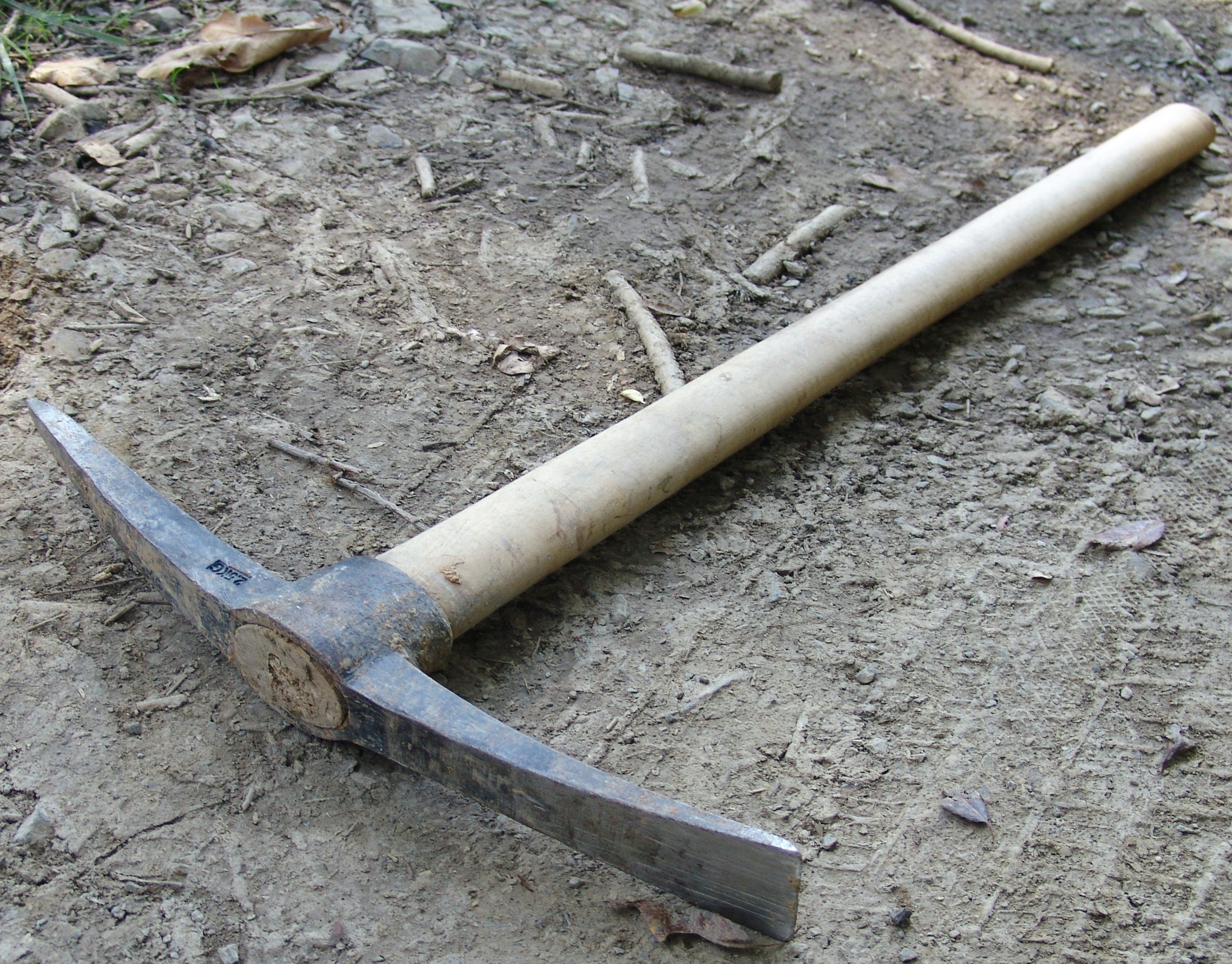
Ten minutes and one mini-expedition later, they reappeared, faces radiating unspoken adventure—think dads after surviving EPCOT’s Food & Wine with only a wallet mildly damaged. Moments later, Oz, our seven-year-old, appeared clutching a ten-dollar bill and loudly proclaiming his new life ambition: acquiring a pickaxe. Cue visions of him storming Frontierland, wielding his new prize, with me nervously calculating just how quickly Child Protective Services would respond in our zip code. But hey, boring never makes for good park stories or memorable family runs.

If there’s a lesson buried beneath the layers of outlet shopping, surprise hardware quests, and the ever-present din of “when does school start”—it’s this: structure is more magical than any Cinderella castle. By the time the school year finally started this morning, my fifth grader bolted for the door like he was rope-dropping Seven Dwarfs Mine Train; his enthusiasm was nothing short of Disney magic itself, and I couldn’t be prouder to stand on the sidelines, medal or no medal.

My second grader approached with equal excitement, though laced with those opening day jitters familiar to anyone who’s ever tried a new ride (or new lunch table). He’ll be making friends by lunchtime, probably organizing a lunchroom conga line just to make things interesting.

The preschooler, meanwhile, is pure Tomorrowland—marching to his own futuristic beat, running operations with a tone that suggests he skipped straight past “Cast Member” to “Attraction Manager.” If anyone’s wondering, yes, I’m bracing for parent-teacher conferences featuring references to “leadership skills” (read: tiny tyrant).

But I crave the rhythm as much as the kids do. And after a summer of running from everything—chaos, coupons, pickaxes—I’m ready to settle down with a fastpass for structure and a side of predictability.

So, here’s to tax-free weeks, unexpected adventures, and the kind of family training that leaves you with memories more magical than any race medal or Disney pin. May your journeys be as joyful and slightly unpredictable as a day at the parks—and may your neighbors never need to speed-dial CPS.

And the morning rope drop? Well, we made it. Just keep running forward.

Running from MRI Season: Another Lap Around the Track

Since 2022, I’ve had a standing date with an MRI machine every year—my own personal Groundhog Day, except instead of a rodent predicting the weather, it’s a giant magnet peering into my brain and predicting, well, me. The scans always show the same old stroke souvenirs (thanks for the memories, 2022!), but otherwise, things have been reassuringly uneventful until last week.

This year’s MRI landed on Juneteenth, which, if nothing else, makes for a memorable calendar entry. Normally, I handle my time in “the cage” with the stoicism of a runner at mile 18—uncomfortable, yes, but nothing I can’t power through. But this time, I had a hunch things would be different. Not fear, exactly. More like that feeling you get in the last quarter-mile of a race when you know something’s off with your stride. You’re not sure what, but you know.

A few hours later, the results dropped, and—cue the dramatic music—my hunch was right. White Matter Hyperintensity. Left frontal lobe. The start of Small Vessel Disease—a phrase that hovers ominously, hinting at the possibility of dementia down the road, like those balloon ladies at the back of a marathon, always just behind you, no matter how hard you push. But honestly, I wasn’t surprised. My body has been sending up distress flares for months, and I’ve been logging the symptoms like a runner logs miles:

  • Vision doing its own thing
  • Words playing hide-and-seek in my brain
  • Short-term memory that’s, well, short
  • Blood pressure so low it could limbo under a garden hose (88/56, if you’re keeping score)
  • Insomnia that only Trazodone can tame
  • Mood swings that make Boston’s Heartbreak Hill look like a bunny slope
  • Depression and anxiety, the unwelcome running buddies
  • Heart rate dropping to 49 bpm—elite marathoner numbers, but without the medals
  • Dizzy spells and vision blackouts whenever I stand up (or, you know, attempt yoga)
  • 15 pounds lost in 2 months (if only it were from marathon training)
  • Balance so wobbly, I could be running on cobblestones in Rome

It’s been a slow, sneaky build—like overtraining, but without the endorphin highs. At one point, I was convinced I had early-onset Parkinson’s. I talked to my therapist, journaled about it, and notified not one, not two, but four doctors. The collective medical response? Order another MRI. (Doctors, it turns out, are like race marshals: quick to hand you a cup of water, but not so quick to notice you’re limping.)

Yesterday, my neurologist’s PA emailed me: “No new signs of stroke!”—complete with a cheery smiley face. I suppose that’s meant to be reassuring, but when you’re the one living with the symptoms (and the new MRI findings), it feels a bit like being told, “Great job, you finished the race!” when you know you took a wrong turn at mile 10.

So here I am, left to manage the aftermath. I’m the one who can’t remember which kid I’m yelling for, or why there’s pizza on the wall, or how to explain to my husband that the three-year-old’s culinary experiments are not, in fact, a sign of genius. Losing your train of thought all day is exhausting—like being stuck in an endless training cycle with no taper in sight. No finish line, no medal, just more laps.

And that’s the real question, isn’t it? If you already know what the race result will be, is it worth running? I’m not saying I won’t toe the start line. Runners are stubborn like that. But knowing the suffering ahead, you do wonder: Is it worth it?

Maybe that’s the point. We run not because we know the outcome, but because we don’t. Because every mile, every scan, every day is a chance to surprise ourselves. And sometimes, even when the course is tough and the finish line is uncertain, you just keep running from everything—if only to see what’s around the next bend to scare the hell out of you.

Running from 999 Happy Haunts

A few years back, in a fit of what I can only describe as pandemic-induced entrepreneurial optimism (or possibly a sugar high), I started a cookie company. I’d love to say it was a calculated business move, but really, it was just me, a mixer, and a vague hope that if I baked enough cookies, I could distract myself from the world falling apart outside my window. I launched the business the year before the “pandy” (as my kids call it), and by 2020, I was happily decorating cookies and shipping them off to rich moms across the USA—women who, I imagine, have never once eaten a cookie in their car while hiding from their children.

Then life, as it does, threw me a few plot twists: a baby, a stroke, and a move to Ohio—because apparently, I like my stress served in a sampler platter. The cookie business went on hiatus, tucked away like a favorite pair of running shoes you keep meaning to break out again. I always hoped I’d pick it back up someday, but between the kids’ schedules, my AFib, and wrestling season (which, if you haven’t experienced it, is like running a marathon in a gym that smells faintly of feet), it just kept slipping down the to-do list.

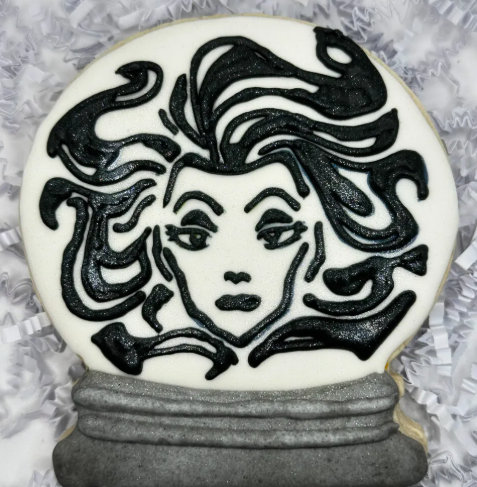
But I never lost my love for Disney, or for the Haunted Mansion in particular. When it came time to rebrand, I wanted something that captured my passion for all things Disney and my slightly offbeat sense of humor. Thus, Foolish Morsels was born—a nod to the Haunted Mansion’s famous greeting, “Welcome, foolish mortals.” It’s the perfect name for a business that combines the whimsy of Disney with the undeniable truth that cookies are, in fact, the best kind of foolishness.

I’ve done quite a few Haunted Mansion cookie sets now, along with other Disney-inspired treats. And while the business has had its stops and starts (much like my running), my connection to the Haunted Mansion has never faded. It’s a must-do every time we visit the Magic Kingdom. The story is captivating, the details are endless, and every ride in a Doom Buggy reveals something new—sort of like running a familiar route and suddenly noticing a house you’ve passed a hundred times but never really seen.

Now, because I can’t resist a good trivia tangent (and because Len Testa would never forgive me if I didn’t), here are a few delightful tidbits about the Haunted Mansion:

  • It’s older than most of us admit to being. The Haunted Mansion opened in Disneyland in 1969, and in Walt Disney World in 1971. That means it’s been delighting (and mildly spooking) generations of guests for over half a century.
  • There are 999 happy haunts. But there’s always room for one more. (And if you’ve ever run a marathon, you know the feeling of being haunted by at least 999 regrets at mile 20.)
  • The stretching room isn’t actually an elevator in Florida. In Disneyland, the stretching room lowers you into the ride. In Disney World, the ceiling rises instead. Either way, it’s a good metaphor for running: sometimes you go down, sometimes you go up, but you always end up somewhere new.
  • Madame Leota’s head is real. Well, sort of. The face in the crystal ball is that of Leota Toombs, a Disney Imagineer. Her name alone would make a great running team mascot.
  • The ballroom scene uses 19th-century magic. The dancing ghosts are created with a trick called “Pepper’s Ghost,” which uses angled glass and lighting. It’s the same technique magicians used in Victorian times—proof that sometimes the old ways are still the best, whether you’re conjuring ghosts or lacing up your well-worn running shoes.

Much like running, my cookie business has had its ups, downs, and unexpected detours. Some days, I’m sprinting toward a new idea, fueled by inspiration (and maybe a little caffeine). Other days, I’m plodding along, just trying to keep moving. And sometimes, I’m just standing still, admiring the scenery (or the cookies) and reminding myself that even the slowest miles—and the messiest kitchens—are part of the journey.

So here’s to foolish morsels, haunted mansions, and running from everything (except maybe the cookie jar). May your runs be smooth, your cookies be sweet, and your Doom Buggy always have room for one more.

Running from Bad Days

Credit: Philip Barker

Let’s be honest—some days, the only thing I’m running from is my own brain. I’d love to tell you that every morning I leap out of bed, tie my shoes with the vigor of a caffeinated squirrel, and hit the pavement with the grace of a gazelle. But, in reality, some days I’m more like a confused sloth, wondering how I ended up in a world where people voluntarily run for fun.

Like any reasonably constructed human, I have good days and bad days. Lately, though, my bad days have been stacking up like the laundry pile I keep promising to fold. And these aren’t just “I spilled coffee on my shirt” bad days. We’re talking about the kind of days where my brain seems to have misplaced the instruction manual for “feeling things.” I’m already on Prozac, which is supposed to help, but sometimes it feels like my mental fog has a two-week vacation policy and is determined to use every last hour.

Nothing is technically wrong. My life, on paper, is pretty much the deluxe package: a husband who does more than his fair share (I suspect he’s angling for sainthood), a job I genuinely enjoy, and kids who are thriving—although one of them is determined to taste-test every inanimate object on earth. We have everything we need and a few things we really don’t (looking at you, bread maker). The only things on my wish list are a Disney World annual pass, an endless supply of Reese’s peanut butter cups, and perhaps a set of Apple earbuds that haven’t been personally waxed by yours truly.

Yet, for almost two years now, I’ve been wrapped in this emotional bubble wrap. Sometimes I wonder if it’ll ever pop. But here’s where running comes in—because, as any runner knows, not every run is a runner’s high. Some runs are just… runs. Some are spectacular, some are slogfests, and some are so bad you wonder if you accidentally put your shoes on the wrong feet.

But the thing is, you keep going. You remember how good it feels to cross a finish line, even if you’re the last one there and the volunteers have already started packing up the water table. You remember that not every mile is easy, but every mile counts. Running, like life, is about moving forward—even if it’s at a pace that would make a tortoise look like Usain Bolt.

I know my brain isn’t quite the same as it used to be. I’m only in year three of figuring it out, and if I’ve learned anything from running, it’s that progress isn’t always linear. Some days you sprint, some days you crawl, and some days you just stand there and wonder how you got so much sand in your shoes.

But it will get better. After all, if my three-year-old can enthusiastically lick every cart we grab at the grocery store and still greet each day with the energy of a puppy on espresso, maybe I can keep moving forward too. Maybe we all can.

So here’s to the good runs and the bad ones, the finish lines and the false starts. And if all else fails, there’s always next year’s Disney pass, a bag of Reese’s, and the hope that tomorrow’s run will be just a little bit lighter.

Running from Carl D. Perkins

If you spend enough time around Career Tech Education, you’ll inevitably hear about something called Perkins Funds. The name alone sounds like it should come with a monocle and a top hat, but in reality, it’s the federal government’s way of making sure schools have the resources to prepare students for the workforce—provided, of course, that you follow a series of rules so intricate they make assembling IKEA furniture look like a warm-up jog.

Here’s the catch: if you don’t spend every penny of your Perkins Funds, you have to send the leftovers back to the government. No pressure or anything—just the knowledge that any unspent funds could shrink next year’s allowance. It’s a bit like carbo-loading before a marathon and then being told you can’t run unless you finish every last noodle. Waste not, want not, or in this case, spend not, receive not.

Which brings me to this week’s adventure. I’ve just discovered we have $3,300 in Perkins Funds that needs to be spent by Tuesday. It’s Friday. All the administrators have taken the day off, presumably to avoid frantic emails from people like me. I’m left alone, clutching a calculator and a list of approved expenses, trying to make sense of it all. It’s like lining up for a race only to realize you’re the only one who showed up—and the course map is missing.

Why am I telling you this? Because this is exactly what running and training feel like half the time. You make a plan, you think you’ve got it all sorted, and then—surprise!—you find yourself scrambling to adjust when things don’t go as expected. Maybe you discover you’re short on gels the night before a long run. Maybe you realize you’ve misread your training plan and you’re supposed to do intervals, not an easy jog. Or maybe, just maybe, you’re standing in the kitchen at 10 p.m. trying to figure out if peanut butter counts as a recovery meal.

In both running and Perkins Funds management, the key is adaptability. You have to keep moving, even when the path isn’t clear and the finish line seems to be moving farther away. Sometimes you run with a crowd; sometimes you’re the only one on the track. Either way, you just keep putting one foot in front of the other, hoping you’ll cross the line with nothing left in the tank—or in the budget.

So here’s to spending every last cent, running every last mile, and embracing the chaos that comes with both. If nothing else, you’ll have a good story to tell at the finish.

Running from The Myth of the School Employee’s Endless Summer

People have this charming idea that if you work at a school, your summer is a three-month hammock nap punctuated only by sunscreen reapplication and the occasional ice cream cone. “Must be nice to get summers off!” they say, with that peculiar blend of envy and disbelief usually reserved for lottery winners and people who actually enjoy running hills.

Let’s set the record straight: I am not a teacher. I am not an administrator. I am, in fact, one of those mysterious school employees who keeps the place running while everyone else is off recharging their batteries. My “summer break” is less “European vacation” and more “please submit your vacation request in triplicate.” The only break I get is the one I schedule myself—and even then, I’m more likely to spend it cleaning up after my family’s daily reenactment of Lord of the Flies.

But here’s the twist: while my colleagues are off, I get to enjoy a school that’s blissfully empty. The pace slows down. The urgent requests evaporate. The phone stops ringing. It’s like the difference between race day and a solo long run: during the year, it’s all adrenaline and chaos, but in the summer, it’s just me, my thoughts, and a spreadsheet that I’m desperately trying to make interesting. (Spoiler: it’s still a spreadsheet.)

Some days, I’m the only soul in the building. And honestly? I love it. There’s a certain meditative joy in moving at your own pace, with no one breathing down your neck or asking if you’ve “got a minute.” You work, you eat lunch, you work some more, and then you go home. It’s the workday equivalent of an easy recovery run—no pressure, no competition, just steady progress and the satisfaction of ticking off the miles (or, in my case, the tasks).

Home, of course, is a different story. Carnage is a good word, and I stand by it. DIY projects in various states of completion, children’s shoes multiplying like rabbits, dirty dishes forming geological strata, and the ever-present frisbee perched on the roof like some sort of suburban gargoyle. But that’s summer at home: a little chaos, a lot of noise, and the sweet reward of snowcones and late bedtimes.

So, I get my quiet miles in during the day—those peaceful, solitary stretches where it’s just me and the hum of the copier—and by 4 p.m., I’m ready to lace up and tackle the wild interval workout that is family life in summer.

Running, working, living—it’s all about finding your pace, embracing the quiet when you can, and knowing that, sooner or later, you’ll be sprinting again. And maybe, just maybe, you’ll finally get that frisbee off the roof.