Running from Illness

It takes a very particular sort of person to care for sick children—someone with the patience of a saint, the reflexes of an emergency-room nurse, and the stomach of a Victorian chimney sweep.

There is the coughing, naturally. There is the whining, which starts as a small, plaintive sound from the upstairs hallway and gradually becomes the background music of your life. And then there is vomit, appearing at the precise moment you have misplaced the one remaining washable blanket and are wearing the only shirt you own that you genuinely like.

No one tells you, when you have multiple children, that illness does not arrive as a family event. It is not a group activity, like bowling or a pleasant trip to the apple orchard. No, each child gets sick independently, on a carefully staggered schedule designed to maximize inconvenience and consume every vacation day you have earned since the Clinton administration.

Child One gets sick on Monday. Child Two, having spent 48 hours licking the same remote control and breathing directly into everyone’s face, begins coughing on Wednesday. By Friday, you are standing in the kitchen holding a thermometer, a bottle of children’s medicine, and what may be a sock, wondering whether you can use a sick day retroactively for your emotional well-being.

And, if you are the mother, there is an additional detail nobody puts in the parenting brochure: sick children generally do not want Dad.

Dad is fine. Dad is nice. Dad may even possess admirable qualities, such as the ability to open jars or find the missing extension cord. But when a child has a fever, a cough, or the vague conviction that their entire life has become unbearable because their nose feels “weird,” they want Mom.

Last night, while I was tending to two sick children—one coughing dramatically and the other requiring the sort of logistical support normally reserved for a small military operation—my husband went fishing.

For three hours.

Fishing is, I suppose, his version of running. Not running as in athletic movement, obviously. More in the sense of fleeing into the wilderness, where no one is asking for ginger ale, a different blanket, or an explanation of why the television is “too loud” when it is not actually on.

Meanwhile, I was running my own race: the Sick-Kid Marathon. There are no medals. No water stations. No encouraging strangers clapping from the sidewalk. Just a never-ending loop between bedrooms, the bathroom, the medicine cabinet, and the laundry room, with occasional obstacles involving tissues, suspicious noises, and somebody yelling, “Mooooom!”

The real danger, however, is still ahead.

Eventually, my husband will get sick.

At that point, I expect he will require a carefully managed recovery environment: low lighting, specific snacks, several blankets, continuous hydration, and perhaps a handwritten note from the governor acknowledging his bravery. He will cough once and look at me as if he has survived the Oregon Trail.

And I will have to be strong.

Because I have already had a stroke, for God’s sake. I do not have the cardiovascular capacity to endure a household respiratory virus and a grown man’s dramatic interpretation of it.

So, for now, I run. I run from germs. I run from laundry. I run from the sound of someone clearing their throat upstairs. And most of all, I run from the inevitable moment when the fishing trip ends, the illness reaches its final victim, and someone asks me where the thermometer is.


Running from Activation

There is a particular kind of morning — you will know it if you have ever had one — when the world seems to have organized itself, quietly and with great cunning, for the sole purpose of annoying you. Today was such a morning. I left the house already vibrating at a slightly higher frequency than usual, the way a kettle does just before it screams, and somewhere in the back of my skull Limp Bizkit began helpfully cycling through “Break Stuff” on an endless loop, as if my subconscious were a jukebox stocked entirely by a furious teenager in 1999.

I should, in fairness, have gone for a run. Running is what I do with feelings I haven’t yet agreed to have. But I hadn’t caught up with my own mood yet — hadn’t been formally introduced to it — until I wandered outside and discovered that the garage door had stood wide open all night, an oversight so small and so blameless that it nevertheless struck me as a personal insult, possibly the worst thing to happen to anyone, anywhere, in recorded history.

Let the record show that I am not, strictly speaking, having a bad day. I suspect I am starting my period, which means I am experiencing a kind of generalized, low-grade fury at everything within range that has the audacity to move — cars, pedestrians, the wind. Every part of me would like to break something. Preferably something inanimate. Then go home and lie very still.

It also happens to be September 11th. Twenty-five years, now, since that morning — a fact that arrives with the particular vertigo of realizing a wound you assumed had closed is, in fact, still an active construction site. I was freshly installed at college that year, on my own for the first time, which is a vulnerable enough state of being without the added flourish of watching your country get attacked on live television. I lived, at the time, a stone’s throw from a tank manufacturing plant in western Ohio — the sort of detail that sounds like exaggeration but is merely geography — and for weeks afterward everyone eyed the mail with real suspicion, and you could not switch on a television without some fresh apocalyptic footage burning itself directly onto your retinas. It was chaos, unfiltered and total, and I don’t believe I have ever entirely put it back together.

Maybe that makes me a baby. Maybe this blog’s title has been quietly diagnosing me all along, and I am, in fact, someone who runs from things — who has always run from things, only without the courtesy of telling myself so. Maybe I need to run more. Faster. Harder. Maybe I simply don’t run enough, and this whole exercise is my body’s way of billing me for the debt.

Either way, I have got to get out of here.

Running from the Old Me

How did I—a reasonably sane 42-year-old woman who once fancied herself a college athlete—end up screeching across the dinner table, “Stop saying buttcrack, for the love of God”? It’s a fair question, and the answer, I’m afraid, is that life has a way of sprinting ahead while you’re still lacing up your trainers. None of it was my doing. Not a single humiliating, heart-stopping mile. Call me stubborn if you must, but let me trot out the evidence like so many rogue blisters on a marathoner’s heel.

Exhibit A: Compartment Syndrome, My Five-Year Nemesis (2001–2005)
Ah, college volleyball glory days—until my legs decided to rebel. Chronic compartment syndrome: too much muscle crammed into too small a sheath, swelling like overpacked luggage on a redeye flight. I could barely hobble off the court, pain radiating like I’d run a marathon barefoot over coals. Surgery in 2002? Fizzled like a dud firework. The punchline? I was too fit. My body, that traitorous overachiever, had outgrown its own packaging. Who knew ambition could literally cramp your style?

Exhibit B: The Husband Who Strayed (2015—or Whenever the Heck It Ended)
End of June 2015, baby in arms, no maternity leave, husband off on noble recruiting trips like the dedicated coach he was. Or so I thought. What should have been a relay race through early parenthood turned into a solitary slog through betrayal’s mud pit. The fallout? A wound that festers still, quite possibly the hidden accelerant to that later stroke. Life’s curveballs don’t come with batting practice.

Exhibit C: The NICU Marathon (January 1–21, 2018)
Why my body treats pregnancy like a bad blind date—bolting for the exit before the appetizers arrive—is one of life’s more baffling mysteries. My babies always emerge from the chaos strong, healthy, and perfect as polished trophies, yet my womb seems to regard the whole affair as an unwelcome intrusion, ejecting its precious cargo weeks ahead of schedule. It’s a wretched mismatch, like a marathoner cursed with shoes two sizes too small. That premature arrival turned our world into a 21-day gauntlet of beeping monitors, tiny incubators, and the kind of bone-deep terror that makes every sunrise feel like borrowed time. Touch-and-go doesn’t begin to cover it. He’s thriving now, of course—my little sprinter, outpacing the odds—but those NICU nights remain the slowest, most grueling miles I’ve ever logged.

Exhibit D: The Stroke That Came Out of Nowhere (March 24, 2022)
Picture this: six weeks postpartum, fit as a fiddle, no vices to speak of. I’d never smoked, rarely sipped, and my cholesterol was so pristine you could frame it. Doctors poked and prodded, shrugged their white-coated shoulders, and declared it cryptogenic—a fancy word for “beats us.” Just one of those cosmic pratfalls, like tripping over your own shadow mid-stride. No warning, no fault, just a brain misfiring while I was still catching my breath from new-mom life.

Exhibit E: AFib’s Electrical Gremlins (January 19, 2025)
One ordinary Sunday, my heart decides it’s auditioning for a techno rave. Electrical system gone haywire—no clogged pipes, no dietary sins, no excess poundage. Just faulty wiring in the old ticker, demanding a hospital marathon and surgical pit stop. Here I am, patched up and plodding on, wondering if my body’s secretly plotting a mutiny.

I could keep lapping this track—miscarriages, job upheavals, the daily gauntlet of boy-mom chaos—but what’s the point? Running from everything has left me winded, circling the same bruised shin. No more. I’m grabbing the baton, plotting a new course, even if the map’s half-sketched. Because here’s the truth I’ve pounded into my skull on a thousand solo jogs: you don’t outrun life’s ambushes by fleeing faster. You lace up tighter, pick your stride, and charge toward whatever finish line you damn well choose. Buttcrack or no buttcrack.

Running from Ping Pong Balls

To say the last few days have been a whirlwind would be rather like saying the Titanic had a bit of a leak. On Wednesday evening, I took my mother to the hospital for what was meant to be a harmless little outpatient MRI, the medical equivalent of a quick oil change. We never left. Instead, they discovered a tumor in her right frontal lobe roughly the size and shape of a ping pong ball, which—while delightful on a table with paddles—was considerably less cheery inside someone’s brain.

The worst part was when they yanked me out of the MRI halfway through, deposited me in front of the neurologist, and explained the horror in that brisk, matter-of-fact tone doctors seem to perfect in medical school—equal parts terrifying and unhelpfully calm. I had my three-year-old in tow at the time, who was requesting snacks with the urgency of a union boss, and holding myself together for both of us felt like a feat of Olympic-level emotional gymnastics.

About twenty-five minutes later—during which I tried to deep-breathe myself to a distant, tropical beach unpopulated by rubber gloves and antiseptic odors—they wheeled my mom back out. And then, astonishingly, they made me tell her she had not one, but three tumors in her brain. I don’t know what training program covers this particular duty, but I seem to have missed it. To summarise, it was one of the most excruciating moments of my life—and I say that as someone who has already endured a stroke and heart surgery. Within minutes, my mother had been upgraded to Person of the Hour at the ER, though I doubt she appreciated the honor.

Fast-forward three days, and here we still are. After spending 20 thoroughly disorienting hours in the ER—the sort of place where time passes both too quickly and not at all—they moved her to the neurosurgical floor. Compared with the ER, it’s practically a five-star spa. Coma-inducing lighting, yes, but far fewer crashing alarms. Now we sit and wait for Monday’s brain surgery, a phrase I still struggle to process whenever I say it aloud.

Meanwhile, my heart palpitations, which usually stop by for a polite hello a few times each day, have upgraded themselves to full-time roommates, appearing several times an hour. I haven’t mentioned it to anyone—largely because what could they do besides add it to the mounting pile of things none of us can control? So instead, I hold my breath, because the alternative—falling apart—feels almost indistinguishable from not surviving at all.

And yet, here’s the maddening part: I keep telling myself I can run this away. Every health crisis I’ve had, every checkpoint in this absurd obstacle course of existence, I’ve tried to outpace with running shoes and grim determination. But you cannot log enough miles to outrun brain tumors. You cannot map a route long enough to escape them. The more I try, the more disappointed I am when it doesn’t work. Like a disastrous training run, all stumble and stitch and no joy, I can only hope, truly and stubbornly, that this too shall pass.

Running from Caulk, Sawdust and Badassery

So, it’s been a month since I last posted on this blog—although in internet time, that’s at least a minor eternity. Why the drought? Well, you can refer to my previous post about my MRI results, but the gist is: nothing clarifies your outlook quite like a suddenly definite road sign on the horizon. Once you know what’s waiting for you at the end (whether it’s a marathon finish line or a knee with the structural integrity of overcooked pasta), every step on the journey becomes infinitely weirder. And maybe a bit more precious. Or at least, less likely to involve taking up parkour.

In the meantime, I’ve been on a quest that rivals anything in The Lord of the Rings, except with more existential navel-gazing and less elf hair: becoming a “better person.” Spoiler alert—this is hard. Nearly impossible, in fact, if you are starting from square one on the “being chill with yourself” board game.

Enter the self-help book. I am currently listening to Jen Sincero’s You Are a Badass, which feels a lot like being gently, repeatedly slapped with a glittery affirmation pillow. Credit where credit is due—it’s a breezy, friendly listen. But, as with most books in this genre, it eventually rolls to a halt at the crossroads of “trust the Universe,” “trust God,” and “trust your Spirit Guide (now available in fun holographic collectible form!).”

This is where I, as a timeworn skeptic, bristle a little. What if I don’t want to trust anything? What if I’m just not religious? I used to be, in the way that teenagers are usually religious because their grandma bakes them brownies to bring to Bible study. But that ended when I was essentially benched from the community for prioritizing volleyball over church. Which, frankly, still seems less heretical than missing church for, say, competitive taxidermy. And honestly, if God didn’t want people to play sports on Sundays, the NFL would have been smitten years ago. You cannot convince me that whatever is in charge of the universe didn’t have at least a modest hand in the Immaculate Reception.

In short: Self-help is not universal truth. If “trust the Universe” works for you, great. If you prefer to put your faith in your dog, or a really well-made grilled cheese, go for it.

Me? I put my trust in woodwork—actual, sawdust-laden, knuckle-busting home improvement. I redid my entire bathroom: cutting, caulking, painting, and discovering that bathtub caulk is essentially the universe’s way of teaching us patience. For those precious hours, I wasn’t worrying about my cosmic purpose. I had a concrete (or, more accurately, tile-and-grout) assignment—to make something better, one squint-eyed line of paint at a time.

So that’s the real moral here: Find your purpose, however fleeting or piecemeal. Keep it until it doesn’t fit anymore, then look for a new one. Purpose is like running shoes. You’ll need different ones for different terrains—just make sure something gets you out the door.

And with that, I promise not to wait another eternity to check in. Unless, of course, I get really into retiling the kitchen. In which case, all bets—and possibly all counters—are off.

Running from MRI Season: Another Lap Around the Track

Since 2022, I’ve had a standing date with an MRI machine every year—my own personal Groundhog Day, except instead of a rodent predicting the weather, it’s a giant magnet peering into my brain and predicting, well, me. The scans always show the same old stroke souvenirs (thanks for the memories, 2022!), but otherwise, things have been reassuringly uneventful until last week.

This year’s MRI landed on Juneteenth, which, if nothing else, makes for a memorable calendar entry. Normally, I handle my time in “the cage” with the stoicism of a runner at mile 18—uncomfortable, yes, but nothing I can’t power through. But this time, I had a hunch things would be different. Not fear, exactly. More like that feeling you get in the last quarter-mile of a race when you know something’s off with your stride. You’re not sure what, but you know.

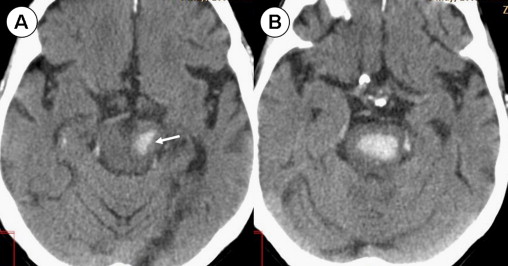
A few hours later, the results dropped, and—cue the dramatic music—my hunch was right. White Matter Hyperintensity. Left frontal lobe. The start of Small Vessel Disease—a phrase that hovers ominously, hinting at the possibility of dementia down the road, like those balloon ladies at the back of a marathon, always just behind you, no matter how hard you push. But honestly, I wasn’t surprised. My body has been sending up distress flares for months, and I’ve been logging the symptoms like a runner logs miles:

  • Vision doing its own thing
  • Words playing hide-and-seek in my brain
  • Short-term memory that’s, well, short
  • Blood pressure so low it could limbo under a garden hose (88/56, if you’re keeping score)
  • Insomnia that only Trazodone can tame
  • Mood swings that make Boston’s Heartbreak Hill look like a bunny slope
  • Depression and anxiety, the unwelcome running buddies
  • Heart rate dropping to 49 bpm—elite marathoner numbers, but without the medals
  • Dizzy spells and vision blackouts whenever I stand up (or, you know, attempt yoga)
  • 15 pounds lost in 2 months (if only it were from marathon training)
  • Balance so wobbly, I could be running on cobblestones in Rome

It’s been a slow, sneaky build—like overtraining, but without the endorphin highs. At one point, I was convinced I had early-onset Parkinson’s. I talked to my therapist, journaled about it, and notified not one, not two, but four doctors. The collective medical response? Order another MRI. (Doctors, it turns out, are like race marshals: quick to hand you a cup of water, but not so quick to notice you’re limping.)

Yesterday, my neurologist’s PA emailed me: “No new signs of stroke!”—complete with a cheery smiley face. I suppose that’s meant to be reassuring, but when you’re the one living with the symptoms (and the new MRI findings), it feels a bit like being told, “Great job, you finished the race!” when you know you took a wrong turn at mile 10.

So here I am, left to manage the aftermath. I’m the one who can’t remember which kid I’m yelling for, or why there’s pizza on the wall, or how to explain to my husband that the three-year-old’s culinary experiments are not, in fact, a sign of genius. Losing your train of thought all day is exhausting—like being stuck in an endless training cycle with no taper in sight. No finish line, no medal, just more laps.

And that’s the real question, isn’t it? If you already know what the race result will be, is it worth running? I’m not saying I won’t toe the start line. Runners are stubborn like that. But knowing the suffering ahead, you do wonder: Is it worth it?

Maybe that’s the point. We run not because we know the outcome, but because we don’t. Because every mile, every scan, every day is a chance to surprise ourselves. And sometimes, even when the course is tough and the finish line is uncertain, you just keep running from everything—if only to see what’s around the next bend to scare the hell out of you.

Running from 999 Happy Haunts

A few years back, in a fit of what I can only describe as pandemic-induced entrepreneurial optimism (or possibly a sugar high), I started a cookie company. I’d love to say it was a calculated business move, but really, it was just me, a mixer, and a vague hope that if I baked enough cookies, I could distract myself from the world falling apart outside my window. I launched the business the year before the “pandy” (as my kids call it), and by 2020, I was happily decorating cookies and shipping them off to rich moms across the USA—women who, I imagine, have never once eaten a cookie in their car while hiding from their children.

Then life, as it does, threw me a few plot twists: a baby, a stroke, and a move to Ohio—because apparently, I like my stress served in a sampler platter. The cookie business went on hiatus, tucked away like a favorite pair of running shoes you keep meaning to break out again. I always hoped I’d pick it back up someday, but between the kids’ schedules, my AFib, and wrestling season (which, if you haven’t experienced it, is like running a marathon in a gym that smells faintly of feet), it just kept slipping down the to-do list.

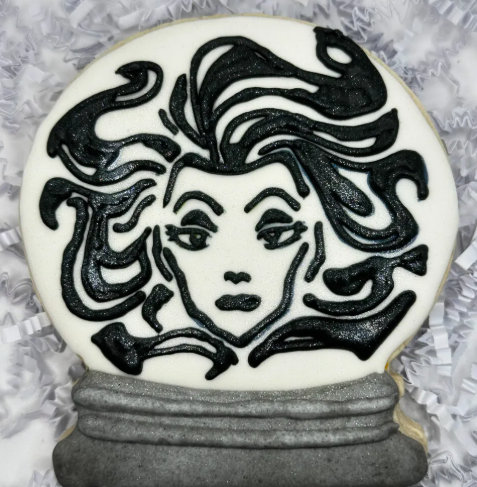
But I never lost my love for Disney, or for the Haunted Mansion in particular. When it came time to rebrand, I wanted something that captured my passion for all things Disney and my slightly offbeat sense of humor. Thus, Foolish Morsels was born—a nod to the Haunted Mansion’s famous greeting, “Welcome, foolish mortals.” It’s the perfect name for a business that combines the whimsy of Disney with the undeniable truth that cookies are, in fact, the best kind of foolishness.

I’ve done quite a few Haunted Mansion cookie sets now, along with other Disney-inspired treats. And while the business has had its stops and starts (much like my running), my connection to the Haunted Mansion has never faded. It’s a must-do every time we visit the Magic Kingdom. The story is captivating, the details are endless, and every ride in a Doom Buggy reveals something new—sort of like running a familiar route and suddenly noticing a house you’ve passed a hundred times but never really seen.

Now, because I can’t resist a good trivia tangent (and because Len Testa would never forgive me if I didn’t), here are a few delightful tidbits about the Haunted Mansion:

  • It’s older than most of us admit to being. The Haunted Mansion opened in Disneyland in 1969, and in Walt Disney World in 1971. That means it’s been delighting (and mildly spooking) generations of guests for over half a century.
  • There are 999 happy haunts. But there’s always room for one more. (And if you’ve ever run a marathon, you know the feeling of being haunted by at least 999 regrets at mile 20.)
  • The stretching room isn’t actually an elevator in Florida. In Disneyland, the stretching room lowers you into the ride. In Disney World, the ceiling rises instead. Either way, it’s a good metaphor for running: sometimes you go down, sometimes you go up, but you always end up somewhere new.
  • Madame Leota’s head is real. Well, sort of. The face in the crystal ball is that of Leota Toombs, a Disney Imagineer. Her name alone would make a great running team mascot.
  • The ballroom scene uses 19th-century magic. The dancing ghosts are created with a trick called “Pepper’s Ghost,” which uses angled glass and lighting. It’s the same technique magicians used in Victorian times—proof that sometimes the old ways are still the best, whether you’re conjuring ghosts or lacing up your well-worn running shoes.

Much like running, my cookie business has had its ups, downs, and unexpected detours. Some days, I’m sprinting toward a new idea, fueled by inspiration (and maybe a little caffeine). Other days, I’m plodding along, just trying to keep moving. And sometimes, I’m just standing still, admiring the scenery (or the cookies) and reminding myself that even the slowest miles—and the messiest kitchens—are part of the journey.

So here’s to foolish morsels, haunted mansions, and running from everything (except maybe the cookie jar). May your runs be smooth, your cookies be sweet, and your Doom Buggy always have room for one more.

Running from Bad Days

Credit: Philip Barker

Let’s be honest—some days, the only thing I’m running from is my own brain. I’d love to tell you that every morning I leap out of bed, tie my shoes with the vigor of a caffeinated squirrel, and hit the pavement with the grace of a gazelle. But, in reality, some days I’m more like a confused sloth, wondering how I ended up in a world where people voluntarily run for fun.

Like any reasonably constructed human, I have good days and bad days. Lately, though, my bad days have been stacking up like the laundry pile I keep promising to fold. And these aren’t just “I spilled coffee on my shirt” bad days. We’re talking about the kind of days where my brain seems to have misplaced the instruction manual for “feeling things.” I’m already on Prozac, which is supposed to help, but sometimes it feels like my mental fog has a two-week vacation policy and is determined to use every last hour.

Nothing is technically wrong. My life, on paper, is pretty much the deluxe package: a husband who does more than his fair share (I suspect he’s angling for sainthood), a job I genuinely enjoy, and kids who are thriving—although one of them is determined to taste-test every inanimate object on earth. We have everything we need and a few things we really don’t (looking at you, bread maker). The only things on my wish list are a Disney World annual pass, an endless supply of Reese’s peanut butter cups, and perhaps a set of Apple earbuds that haven’t been personally waxed by yours truly.

Yet, for almost two years now, I’ve been wrapped in this emotional bubble wrap. Sometimes I wonder if it’ll ever pop. But here’s where running comes in—because, as any runner knows, not every run is a runner’s high. Some runs are just… runs. Some are spectacular, some are slogfests, and some are so bad you wonder if you accidentally put your shoes on the wrong feet.

But the thing is, you keep going. You remember how good it feels to cross a finish line, even if you’re the last one there and the volunteers have already started packing up the water table. You remember that not every mile is easy, but every mile counts. Running, like life, is about moving forward—even if it’s at a pace that would make a tortoise look like Usain Bolt.

I know my brain isn’t quite the same as it used to be. I’m only in year three of figuring it out, and if I’ve learned anything from running, it’s that progress isn’t always linear. Some days you sprint, some days you crawl, and some days you just stand there and wonder how you got so much sand in your shoes.

But it will get better. After all, if my three-year-old can enthusiastically lick every cart we grab at the grocery store and still greet each day with the energy of a puppy on espresso, maybe I can keep moving forward too. Maybe we all can.

So here’s to the good runs and the bad ones, the finish lines and the false starts. And if all else fails, there’s always next year’s Disney pass, a bag of Reese’s, and the hope that tomorrow’s run will be just a little bit lighter.

Running from Compression Socks

Let’s begin, as Bill Bryson might, with a confession: I have never been particularly good at moderation. This is a story about legs, socks, and the peculiar lengths to which one will go to avoid being ordinary—told with the sort of self-effacing candor that would make even Len Testa pause mid-spreadsheet.

In college, I played volleyball for four years. Not the “I’ll just jog around and maybe spike a ball” kind of volleyball, but the “I would like my lower legs to feel as if they might detonate at any moment” variety. My post-game shuffle was less “athlete’s swagger” and more “recently escaped from a bear trap.” Eventually, a kindly doctor at the Cleveland Clinic diagnosed me with Compartment Syndrome, which, for the uninitiated, is a condition where the pressure in your leg compartments (there are four, in case you’re keeping score) is supposed to be a modest 1-10. Mine, ever the overachiever, clocked in at a robust 32.

Surgery ensued. For a while, my legs behaved, but my final year was spent rationing my steps like a Victorian miser with his last candle—saving every ounce of leg function for game time. After graduation, my legs, apparently satisfied with their dramatic performance, retired from pain altogether. I have not heard a peep from them since.

Fast forward three years, circa 2008. I decided to start running. This was a calculated risk, since I was fairly certain my legs would recall their old grievances and revolt. But as it turns out, it wasn’t the running that bothered them—it was the jumping. Also, possibly the squatting of 225 pounds and leg pressing 550, but who’s counting? (Me. I was counting. Repeatedly. Because, as you will see, I have a pathological need to prove my toughness.)

Since then, I’ve collected an assortment of race bibs: countless 5Ks, two 10Ks, seven half marathons, and four full marathons. My legs, stoic as ever, have remained silent. I am, as the kids say, “blessed.”

Now, about socks. When I first entered the running world, I noticed a proliferation of tall socks. Not just any socks, but socks that looked like they’d been engineered by NASA and sponsored by a pharmaceutical company. Compression socks, they called them. Supposedly, they reduced muscle vibration and improved blood flow. I, of course, scoffed. I didn’t even wear tall socks for volleyball, and that was the style. Compression socks, I decided, were for the faint of heart, the weak of calf, the people who did not squat 225 pounds for fun.

I have a toxic trait: I must do everything the hard way, just to prove I am tougher than, well, you. Natural childbirth, three times, no drugs? Check. Running for nearly two decades without compression socks? Double check. My “toughness klout” was off the charts.

Until today.

A recent visit to the neurologist (because apparently, one cannot simply coast on bravado forever) resulted in a prescription not for medication, but for hydration, more salt, and—horror of horrors—compression socks. Apparently, my blood pressure has decided to set up camp at 88/53, which is the circulatory equivalent of a sloth on a hammock.

So here I am, scrolling through Amazon, contemplating which shade of compression sock best complements existential dread. My toughness score? Plummeting. My fashion sense? Questionable at best. How, I wonder, does one make compression socks look good in the summer? If you have ideas, please share. Perhaps this is the nudge I need to start running again—this time with a tight, textured addition to my ensemble.

Because if there’s anything I’ve learned, it’s that you can run from a lot of things. But you can’t outrun the need for a good pair of socks.

Running from Neurological Oddities

There are few things more humbling than spending your lunch hour watching videos of yourself learning to walk, talk, and generally function like a human being again. Today, I found myself rewatching the TikToks I posted during my stroke recovery—a sort of highlight reel of my greatest hits and near-misses, all set to whatever pop song was trending in 2022.

I was, if I may say so, impressively strong back then. Not because I was aspiring to be some inspirational poster child, but because, frankly, I had no other option. I chronicled everything: therapy sessions, daily triumphs, the occasional existential dread about the future. It’s all there, preserved in 60-second bursts for posterity—and, apparently, for my own forgetful self.

What struck me most was how much I’d forgotten. For example, I completely blanked on how much my body temperature regulation went haywire. I’m always cold, which is a fun little bonus when you’re also on blood thinners. I also forgot that I lost nerve sensation on my right side. My brain, ever the improviser, now guesses if something is hot or cold based on what my left side is feeling. If you hand me a mug of coffee and I grab it with my right hand, I couldn’t tell you if it’s piping hot or ice cold. It’s like living with a thermostat that’s been installed by a committee of squirrels.

Showers are a particularly surreal experience. If the water hits only my right side, I have no idea if I’m about to be poached or frozen. It’s weird, I know. But then again, the human body is basically a collection of weirdnesses held together by hope and duct tape.

Another delightful quirk: my sense of hunger has left the building. It’s been three years since the stroke, and my appetite is still on vacation. The cruel irony is that, while I don’t actually feel hungry, I still exhibit all the classic symptoms of hanger. My husband can attest to this, usually from a safe distance. Imagine being grumpy, irritable, and irrationally upset, but having no idea why—sort of like a toddler, but with a driver’s license.

Cognitive symptoms are another fun surprise party that my brain likes to throw, usually when I least expect it. Take last night, for example: I sat through a baseball game and froze my tukis off, and my brain responded by turning into a malfunctioning computer. The cold, combined with the sensory overload of the crowd, left me unable to think straight for the rest of the evening. I couldn’t find words, couldn’t remember which pedal was the brake, and brushing my kids’ teeth felt like assembling IKEA furniture without instructions.

Once I get my muscle memory going, I’m usually fine. But sometimes, just remembering how to start is like trying to recall the plot of a dream you had three years ago.

While I’m not exactly running marathons these days, walking and exercise in general have become my secret weapons. They help me feel sharper, more focused, and a little more like the version of myself I remember. Finding tools and routines that work for me is empowering—proof that, even when your brain is throwing curveballs, you can still swing for the fences.

The trick, I’ve learned, is being honest with myself about how I’m feeling. Denial is tempting, but the worst lies are always the ones we tell ourselves. So I keep walking, keep laughing, and keep sharing—even if it’s just with my future self over lunch.

In the end, recovery is less about “getting back to normal” and more about discovering a new normal, quirks and all. And if that means my right hand is forever confused about coffee temperature, well, at least it keeps life interesting.