Running from Everything: The August Marathon

Here in the thick of August, we find ourselves on the last, long lap of summer—the kind you run when you can both see the finish line and also suspect it might, in fact, be moving further away every time you glance up. In our house, the new school year is lurking just around the last bend: two weeks for the kids, but my husband and I are up for a head start with students next week. If this were a Disney race, we’d already have hit the castle, gotten distracted by a Dole Whip, and realized we still have to finish.

I work all summer, so my personal schedule doesn’t change much—it’s the unremarkable “Tomorrowland Speedway” of routines: reliable, uninspired, and a little too loud. But my husband and our kids? Their summer is pure Magic Kingdom chaos: rope drop every morning, parades all day, fireworks every night. Bedtime and wake-up times are more like vague suggestions, as if the laws of time only apply to mortals living outside the borders of summer vacation.

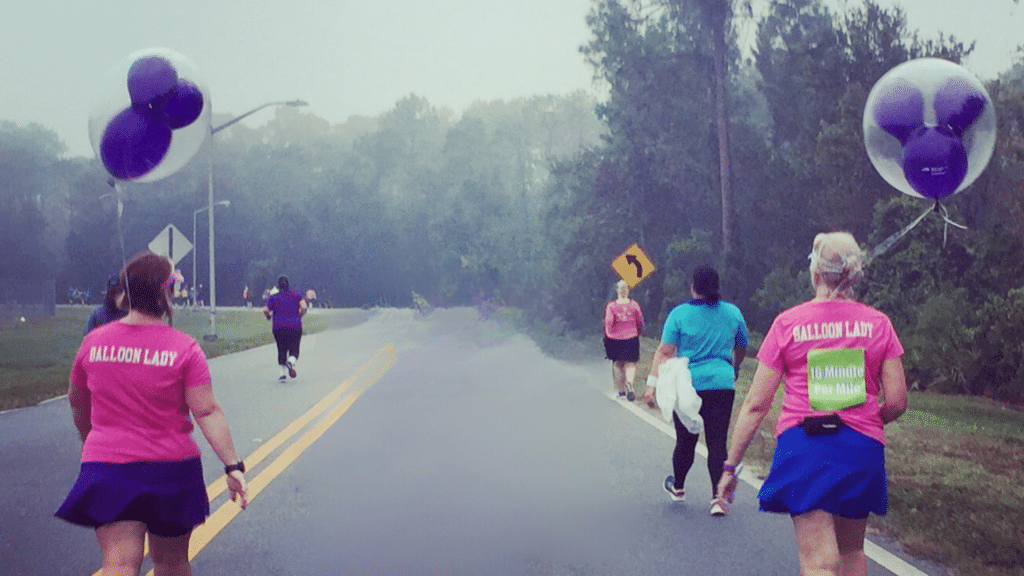
But race director that I am, I know better than to let the “RunDisney After Party” lifestyle run all the way to the start line of school. With two weeks left, I’ve activated the dreaded Operation: Earlier Bedtimes, much to the dismay of the crew who have become accustomed to living like nocturnal pirates. If I don’t do this now, the first day of school will look less like the opening moments of a Disney half marathon and more like the “balloon ladies” coming for anyone left at the back.

To try and restore balance (or at least fake it long enough to get us to the first bell), I’m putting us all on a reentry plan worthy of any Dopey Challenge: one room gets cleaned each day, one load of laundry run, and there’s a loose attempt at meal planning, in between the usual nutritional gambit of “Is this leftover pizza or the lost-and-found churro from last week?” I know this will pay off with more evenings free for kid activities, maybe even some peaceful runs around the neighborhood—my solo laps through the EPCOT of suburban life, waving to neighbors like we’re all characters in some elaborate parade.

Most days, I’m just trying to help my kids (and myself) become finishers in the marathon of “life skills.” The goal isn’t perfection; it’s having options. I want my kids to try gymnastics, football, science club, trombone—whatever piques their curiosity, like a list of Genie+ reservations: the more you sample, the better your story. Back in my day, exploring wasn’t so easy, and specializing was rarely a choice. I’ve found that being a jack-of-all-trades and a master of none has gotten me far: kind of like being able to race all four Disney parks, rather than winning one. In my career and as a coach, I see again and again that it’s the kids who diversify—who build different muscles, learn from new experiences, and sometimes even get a little lost along the way—who really go the distance.

And that’s what I’m aiming for: a family ready not just for school, but for the miles and magic that come after the starting gun sounds.

Running from MRI Season: Another Lap Around the Track

Since 2022, I’ve had a standing date with an MRI machine every year—my own personal Groundhog Day, except instead of a rodent predicting the weather, it’s a giant magnet peering into my brain and predicting, well, me. The scans always show the same old stroke souvenirs (thanks for the memories, 2022!), but otherwise, things have been reassuringly uneventful until last week.

This year’s MRI landed on Juneteenth, which, if nothing else, makes for a memorable calendar entry. Normally, I handle my time in “the cage” with the stoicism of a runner at mile 18—uncomfortable, yes, but nothing I can’t power through. But this time, I had a hunch things would be different. Not fear, exactly. More like that feeling you get in the last quarter-mile of a race when you know something’s off with your stride. You’re not sure what, but you know.

A few hours later, the results dropped, and—cue the dramatic music—my hunch was right. White Matter Hyperintensity. Left frontal lobe. The start of Small Vessel Disease—a phrase that hovers ominously, hinting at the possibility of dementia down the road, like those balloon ladies at the back of a marathon, always just behind you, no matter how hard you push. But honestly, I wasn’t surprised. My body has been sending up distress flares for months, and I’ve been logging the symptoms like a runner logs miles:

  • Vision doing its own thing
  • Words playing hide-and-seek in my brain
  • Short-term memory that’s, well, short
  • Blood pressure so low it could limbo under a garden hose (88/56, if you’re keeping score)
  • Insomnia that only Trazodone can tame
  • Mood swings that make Boston’s Heartbreak Hill look like a bunny slope
  • Depression and anxiety, the unwelcome running buddies
  • Heart rate dropping to 49 bpm—elite marathoner numbers, but without the medals
  • Dizzy spells and vision blackouts whenever I stand up (or, you know, attempt yoga)
  • 15 pounds lost in 2 months (if only it were from marathon training)
  • Balance so wobbly, I could be running on cobblestones in Rome

It’s been a slow, sneaky build—like overtraining, but without the endorphin highs. At one point, I was convinced I had early-onset Parkinson’s. I talked to my therapist, journaled about it, and notified not one, not two, but four doctors. The collective medical response? Order another MRI. (Doctors, it turns out, are like race marshals: quick to hand you a cup of water, but not so quick to notice you’re limping.)

Yesterday, my neurologist’s PA emailed me: “No new signs of stroke!”—complete with a cheery smiley face. I suppose that’s meant to be reassuring, but when you’re the one living with the symptoms (and the new MRI findings), it feels a bit like being told, “Great job, you finished the race!” when you know you took a wrong turn at mile 10.

So here I am, left to manage the aftermath. I’m the one who can’t remember which kid I’m yelling for, or why there’s pizza on the wall, or how to explain to my husband that the three-year-old’s culinary experiments are not, in fact, a sign of genius. Losing your train of thought all day is exhausting—like being stuck in an endless training cycle with no taper in sight. No finish line, no medal, just more laps.

And that’s the real question, isn’t it? If you already know what the race result will be, is it worth running? I’m not saying I won’t toe the start line. Runners are stubborn like that. But knowing the suffering ahead, you do wonder: Is it worth it?

Maybe that’s the point. We run not because we know the outcome, but because we don’t. Because every mile, every scan, every day is a chance to surprise ourselves. And sometimes, even when the course is tough and the finish line is uncertain, you just keep running from everything—if only to see what’s around the next bend to scare the hell out of you.

Running from Bad Days

Credit: Philip Barker

Let’s be honest—some days, the only thing I’m running from is my own brain. I’d love to tell you that every morning I leap out of bed, tie my shoes with the vigor of a caffeinated squirrel, and hit the pavement with the grace of a gazelle. But, in reality, some days I’m more like a confused sloth, wondering how I ended up in a world where people voluntarily run for fun.

Like any reasonably constructed human, I have good days and bad days. Lately, though, my bad days have been stacking up like the laundry pile I keep promising to fold. And these aren’t just “I spilled coffee on my shirt” bad days. We’re talking about the kind of days where my brain seems to have misplaced the instruction manual for “feeling things.” I’m already on Prozac, which is supposed to help, but sometimes it feels like my mental fog has a two-week vacation policy and is determined to use every last hour.

Nothing is technically wrong. My life, on paper, is pretty much the deluxe package: a husband who does more than his fair share (I suspect he’s angling for sainthood), a job I genuinely enjoy, and kids who are thriving—although one of them is determined to taste-test every inanimate object on earth. We have everything we need and a few things we really don’t (looking at you, bread maker). The only things on my wish list are a Disney World annual pass, an endless supply of Reese’s peanut butter cups, and perhaps a set of Apple earbuds that haven’t been personally waxed by yours truly.

Yet, for almost two years now, I’ve been wrapped in this emotional bubble wrap. Sometimes I wonder if it’ll ever pop. But here’s where running comes in—because, as any runner knows, not every run is a runner’s high. Some runs are just… runs. Some are spectacular, some are slogfests, and some are so bad you wonder if you accidentally put your shoes on the wrong feet.

But the thing is, you keep going. You remember how good it feels to cross a finish line, even if you’re the last one there and the volunteers have already started packing up the water table. You remember that not every mile is easy, but every mile counts. Running, like life, is about moving forward—even if it’s at a pace that would make a tortoise look like Usain Bolt.

I know my brain isn’t quite the same as it used to be. I’m only in year three of figuring it out, and if I’ve learned anything from running, it’s that progress isn’t always linear. Some days you sprint, some days you crawl, and some days you just stand there and wonder how you got so much sand in your shoes.

But it will get better. After all, if my three-year-old can enthusiastically lick every cart we grab at the grocery store and still greet each day with the energy of a puppy on espresso, maybe I can keep moving forward too. Maybe we all can.

So here’s to the good runs and the bad ones, the finish lines and the false starts. And if all else fails, there’s always next year’s Disney pass, a bag of Reese’s, and the hope that tomorrow’s run will be just a little bit lighter.

Running from Carl D. Perkins

If you spend enough time around Career Tech Education, you’ll inevitably hear about something called Perkins Funds. The name alone sounds like it should come with a monocle and a top hat, but in reality, it’s the federal government’s way of making sure schools have the resources to prepare students for the workforce—provided, of course, that you follow a series of rules so intricate they make assembling IKEA furniture look like a warm-up jog.

Here’s the catch: if you don’t spend every penny of your Perkins Funds, you have to send the leftovers back to the government. No pressure or anything—just the knowledge that any unspent funds could shrink next year’s allowance. It’s a bit like carbo-loading before a marathon and then being told you can’t run unless you finish every last noodle. Waste not, want not, or in this case, spend not, receive not.

Which brings me to this week’s adventure. I’ve just discovered we have $3,300 in Perkins Funds that needs to be spent by Tuesday. It’s Friday. All the administrators have taken the day off, presumably to avoid frantic emails from people like me. I’m left alone, clutching a calculator and a list of approved expenses, trying to make sense of it all. It’s like lining up for a race only to realize you’re the only one who showed up—and the course map is missing.

Why am I telling you this? Because this is exactly what running and training feel like half the time. You make a plan, you think you’ve got it all sorted, and then—surprise!—you find yourself scrambling to adjust when things don’t go as expected. Maybe you discover you’re short on gels the night before a long run. Maybe you realize you’ve misread your training plan and you’re supposed to do intervals, not an easy jog. Or maybe, just maybe, you’re standing in the kitchen at 10 p.m. trying to figure out if peanut butter counts as a recovery meal.

In both running and Perkins Funds management, the key is adaptability. You have to keep moving, even when the path isn’t clear and the finish line seems to be moving farther away. Sometimes you run with a crowd; sometimes you’re the only one on the track. Either way, you just keep putting one foot in front of the other, hoping you’ll cross the line with nothing left in the tank—or in the budget.

So here’s to spending every last cent, running every last mile, and embracing the chaos that comes with both. If nothing else, you’ll have a good story to tell at the finish.

Running from The Myth of the School Employee’s Endless Summer

People have this charming idea that if you work at a school, your summer is a three-month hammock nap punctuated only by sunscreen reapplication and the occasional ice cream cone. “Must be nice to get summers off!” they say, with that peculiar blend of envy and disbelief usually reserved for lottery winners and people who actually enjoy running hills.

Let’s set the record straight: I am not a teacher. I am not an administrator. I am, in fact, one of those mysterious school employees who keeps the place running while everyone else is off recharging their batteries. My “summer break” is less “European vacation” and more “please submit your vacation request in triplicate.” The only break I get is the one I schedule myself—and even then, I’m more likely to spend it cleaning up after my family’s daily reenactment of Lord of the Flies.

But here’s the twist: while my colleagues are off, I get to enjoy a school that’s blissfully empty. The pace slows down. The urgent requests evaporate. The phone stops ringing. It’s like the difference between race day and a solo long run: during the year, it’s all adrenaline and chaos, but in the summer, it’s just me, my thoughts, and a spreadsheet that I’m desperately trying to make interesting. (Spoiler: it’s still a spreadsheet.)

Some days, I’m the only soul in the building. And honestly? I love it. There’s a certain meditative joy in moving at your own pace, with no one breathing down your neck or asking if you’ve “got a minute.” You work, you eat lunch, you work some more, and then you go home. It’s the workday equivalent of an easy recovery run—no pressure, no competition, just steady progress and the satisfaction of ticking off the miles (or, in my case, the tasks).

Home, of course, is a different story. Carnage is a good word, and I stand by it. DIY projects in various states of completion, children’s shoes multiplying like rabbits, dirty dishes forming geological strata, and the ever-present frisbee perched on the roof like some sort of suburban gargoyle. But that’s summer at home: a little chaos, a lot of noise, and the sweet reward of snowcones and late bedtimes.

So, I get my quiet miles in during the day—those peaceful, solitary stretches where it’s just me and the hum of the copier—and by 4 p.m., I’m ready to lace up and tackle the wild interval workout that is family life in summer.

Running, working, living—it’s all about finding your pace, embracing the quiet when you can, and knowing that, sooner or later, you’ll be sprinting again. And maybe, just maybe, you’ll finally get that frisbee off the roof.

Running from Little Green Men

As a self-proclaimed Walt Disney World expert—meaning I can tell you the exact number of churros you can eat before you lose the will to live—one of my favorite corners of the parks is Toy Story Land. Nestled in Disney’s Hollywood Studios (which, let’s be honest, will always be MGM Studios to those of us who remember the Backlot Tour and the inexplicable presence of a Golden Girls house), this is the place where you get to be a toy for the day. It’s all giant building blocks, oversized board game pieces, and a healthy dose of nostalgia. It’s like stepping into your childhood, only with more sunscreen and slightly more expensive snacks.

Now, as a parent, my mission is to bring a little of that magic home, specifically, to the boys’ bathroom. Yes, you heard me: I am attempting to transform the most utilitarian room in the house into a Toy Story-themed wonderland. I have plans. Big plans. Beadboard! Wallpaper! Window coverings! Hanging monkeys! (The plastic kind, not the real ones. I’m not that ambitious.) I want it to be colorful, kid-friendly, and the kind of place where you half-expect Woody to pop out from behind the shower curtain and remind you to wash your hands.

But here’s the thing: the only thing standing between me and this Pixar-inspired paradise is, well, me. And a lack of power tools. And possibly a healthy fear of accidentally nailing my own foot to the floor.

What I really want—what I yearn for—is a mitre saw. And a jigsaw. And a nail gun. I want to be the kind of person who uses phrases like “orbital sander” in casual conversation and actually knows what it means. I want home projects to be my hobby, not just something I watch on YouTube with a mixture of awe and mild terror.

But here’s the secret Disney never tells you: learning something new, whether it’s how to wield a nail gun or how to navigate Genie+, is a lot like training for a marathon.

Stay with me here. When you decide to run a marathon (or, in my case, when you decide to run away from everything and end up in a marathon by accident), you don’t just lace up your shoes and jog 26.2 miles. You start small. You run a block. You wheeze. You Google “can you die from running?” You keep going. Over time, you get a little stronger, a little faster, and a little more confident that you won’t collapse in a heap by mile two.

Learning a new skill—like transforming a bathroom into Andy’s room, or figuring out how to use a mitre saw without losing a finger—is the same way. It’s about taking baby steps. You watch a video. You read an article. You buy a tool and stare at it for a week, wondering if you need a permit just to plug it in. You make mistakes. You learn. You get a little better. Eventually, you’re not just surviving—you’re thriving. Or at least you’re not actively endangering yourself or others.

So, as I stand in the doorway of the boys’ bathroom, armed with nothing but enthusiasm and a vague idea of how wallpaper works, I remind myself: this is my marathon. There will be setbacks. There will be questionable design choices. There will almost certainly be paint on the ceiling. But with each small step, I’m getting closer to creating a space that’s as magical as Toy Story Land—minus the crowds and the $6 sodas.

And who knows? Maybe someday I’ll be the kind of person who can say “orbital sander” with confidence. Or at least with fewer power tool-related injuries.

Until then, I’ll keep running from everything—except my dreams of a Toy Story bathroom.

Have you tackled a Disney-inspired home project? Or survived a marathon (literal or metaphorical)? Share your stories below! And if you have tips for using a mitre saw, please send help.

Running from Design

I have big dreams for my home. Not the kind of dreams that involve marble countertops or a kitchen island the size of an aircraft carrier, but the sort that, if achieved, would allow me to walk into my living room and not immediately trip over a pile of shoes, a sticky patch of mystery goo, or a rogue action figure. My interior design style, much like my running pace, varies wildly depending on the day, the weather, and whether or not I’ve had coffee. But I don’t think it’s bad. And besides, the only person who visits with any regularity is my mom, and she’s legally obligated to say nice things.

Recently, my parents’ friends—who, judging by the amount of furniture I’ve inherited, must be living in an empty box by now—offered me a rug. It’s colorful. Very colorful. The kind of colorful that makes you question whether your brown couch (also from said friends) will ever recover from the shock. After two hours of rearranging furniture, which, by the way, is the closest I’ve come to cross-training in months, the rug was down. And, to my surprise, it looked… good. Not “featured in a magazine” good, but “I won’t trip over it in the dark” good.

This minor victory inspired a cascade of home improvement ambitions. I ordered artwork. I mapped out a board and batten wall. I even dusted off the nail gun I bought four months ago—still in its box, like a race medal I haven’t quite earned yet. There are, of course, a few obstacles:

  1. Power Tools: I have never operated anything more complicated than a blender. And that was only because I needed a post-run smoothie.
  2. Blood Thinners: When your blood is basically water, the prospect of wielding a nail gun becomes a high-stakes game of “Will it blend?”
  3. Spousal Support: My husband, bless him, is many things. Handy is not one of them. As my 3-year-old says, “They’re mommy’s tools!” He got the sports gene, not the construction gene.

I know the hardware store will cut boards for me, but the idea of asking for help makes me break out in a cold sweat. I can run a marathon, but apparently, I cannot ask a stranger to cut a piece of wood without fearing I’ll be mistaken for someone making a Pinterest craft gone wrong. (Not today, sir. Not today.)

Why am I doing this? Because, much like running, home improvement is a marathon, not a sprint. It’s a slow, steady process that involves planning, perseverance, and the occasional detour through the land of “What was I thinking?” My living room is rarely clean enough to be proud of—three boys see to that—but I want to create a space that makes me feel accomplished, even if the soundtrack is Phineas and Ferb singing about ‘S’winter’ and the floor is a minefield of Legos.

I’m thinking of documenting the process, because if running has taught me anything, it’s that progress is worth recording. Every training run, every new mile, every tiny improvement adds up. So too with home projects: getting the rug, moving the couch, and planning out the board and batten wall is, by my estimation, about 27% of the project. (Give or take. Len Testa would probably have a spreadsheet for this. Who am I kidding? I have a spreadsheet for this!)

We all have to start somewhere. Whether it’s the first mile of a marathon or the first nail in a wall, the important thing is to keep moving forward—preferably without stepping on anything sticky.

Sometimes, what you’re running from is just a living room in desperate need of a makeover. And sometimes, you run right into a home you’re proud of.

Running from Compression Socks

Let’s begin, as Bill Bryson might, with a confession: I have never been particularly good at moderation. This is a story about legs, socks, and the peculiar lengths to which one will go to avoid being ordinary—told with the sort of self-effacing candor that would make even Len Testa pause mid-spreadsheet.

In college, I played volleyball for four years. Not the “I’ll just jog around and maybe spike a ball” kind of volleyball, but the “I would like my lower legs to feel as if they might detonate at any moment” variety. My post-game shuffle was less “athlete’s swagger” and more “recently escaped from a bear trap.” Eventually, a kindly doctor at the Cleveland Clinic diagnosed me with Compartment Syndrome, which, for the uninitiated, is a condition where the pressure in your leg compartments (there are four, in case you’re keeping score) is supposed to be a modest 1-10. Mine, ever the overachiever, clocked in at a robust 32.

Surgery ensued. For a while, my legs behaved, but my final year was spent rationing my steps like a Victorian miser with his last candle—saving every ounce of leg function for game time. After graduation, my legs, apparently satisfied with their dramatic performance, retired from pain altogether. I have not heard a peep from them since.

Fast forward three years, circa 2008. I decided to start running. This was a calculated risk, since I was fairly certain my legs would recall their old grievances and revolt. But as it turns out, it wasn’t the running that bothered them—it was the jumping. Also, possibly the squatting of 225 pounds and leg pressing 550, but who’s counting? (Me. I was counting. Repeatedly. Because, as you will see, I have a pathological need to prove my toughness.)

Since then, I’ve collected an assortment of race bibs: countless 5Ks, two 10Ks, seven half marathons, and four full marathons. My legs, stoic as ever, have remained silent. I am, as the kids say, “blessed.”

Now, about socks. When I first entered the running world, I noticed a proliferation of tall socks. Not just any socks, but socks that looked like they’d been engineered by NASA and sponsored by a pharmaceutical company. Compression socks, they called them. Supposedly, they reduced muscle vibration and improved blood flow. I, of course, scoffed. I didn’t even wear tall socks for volleyball, and that was the style. Compression socks, I decided, were for the faint of heart, the weak of calf, the people who did not squat 225 pounds for fun.

I have a toxic trait: I must do everything the hard way, just to prove I am tougher than, well, you. Natural childbirth, three times, no drugs? Check. Running for nearly two decades without compression socks? Double check. My “toughness klout” was off the charts.

Until today.

A recent visit to the neurologist (because apparently, one cannot simply coast on bravado forever) resulted in a prescription not for medication, but for hydration, more salt, and—horror of horrors—compression socks. Apparently, my blood pressure has decided to set up camp at 88/53, which is the circulatory equivalent of a sloth on a hammock.

So here I am, scrolling through Amazon, contemplating which shade of compression sock best complements existential dread. My toughness score? Plummeting. My fashion sense? Questionable at best. How, I wonder, does one make compression socks look good in the summer? If you have ideas, please share. Perhaps this is the nudge I need to start running again—this time with a tight, textured addition to my ensemble.

Because if there’s anything I’ve learned, it’s that you can run from a lot of things. But you can’t outrun the need for a good pair of socks.

Running for The Boy Mom’s Field Guide

Let us begin with a simple truth: if you are the mother of boys, you are not so much raising children as you are attempting to survive a long-running, low-budget circus, minus the elephants but with all the mess. For the uninitiated-those fresh-faced, hopeful “boy moms” who still believe their living room can be both stylish and functional-consider this your orientation. For the veterans among us, think of it as a comforting nod, a knowing glance across the playground, and perhaps a prompt to add your own hard-won wisdom to the canon.

1. If It Smells Like Pee, It’s Pee

There is no need to consult a flowchart or conduct a chemical analysis. If your nose so much as twitches, you can be certain: it’s pee. And it will be somewhere you never thought possible-behind the curtains, inside a toy truck, or, in a feat of physics, on the ceiling. Accept this early, and you’ll save yourself hours of fruitless denial.

2. Cheese Sticks and Fruit Snacks: The Universal Solvent

It is a well-documented fact (by me, just now) that boys will never eat the dinner you lovingly prepared. However, announce bedtime or suggest dental hygiene, and they will be gripped by a hunger so profound it borders on the existential. The solution? Cheese sticks and fruit snacks. These are the Swiss Army knives of boy parenting: they resolve tantrums, mend broken spirits, and, on occasion, substitute for actual meals.

3. You Can’t Have Nice Things

At some point-usually after the third shattered lamp or the fortieth marker mural on the wall-you will utter the phrase, “This is why we can’t have nice things.” You will say it daily, sometimes hourly. It is not a complaint; it is a mantra, a rite of passage, and possibly the title of your future memoir.

4. The Wardrobe of the Perpetually Disheveled

Knees will be ventilated, shirts will be adorned with a Pollock-esque array of stains, and you will be tempted to throw them away. Don’t bother. Any new clothes will be similarly decorated within hours, and your children are blissfully unconcerned with appearances. Consider it early training for Silicon Valley.

5. Something Broken? It’s Always the Second One

If you have more than one boy, brace yourself: the second child will be the one to break it. Whether it’s a toy, a gadget, or your last nerve, the first child might be the careful experimenter, but the second? The second is the wild card, the chaos agent, the reason you now have “fragile” stickers on everything

6. The Emergency Car Toilet

You may believe your car is for transportation. Your sons believe it is a mobile restroom. Always have an empty bottle or a lidded cup at the ready. The need will arise, usually on the highway, and always when you are out of options.

7. The Paper Tsunami

Each day, your children will return from school with a stack of papers that could be used to wallpaper your house. Sort through them, keep the one with actual importance (there will be one, possibly), and dispose of the rest. After two weeks, throw away the “important” ones, too. Your kitchen table will never be clear, but you can slow the encroachment.

8. Did I Just Say That?

You will find yourself saying things that, in any other context, would result in a wellness check from concerned neighbors. “Get your penis off the wall” and “Crayons do not go there” are just the beginning. Embrace the absurdity.

9. Your Husband Counts

Remember, you are raising more than your own offspring; you are, in a very real sense, raising someone else’s son as well. Your mother-in-law will be delighted.

10. Soak Up Every Minute

Despite the chaos, or perhaps because of it, these years are fleeting. Laugh, play, and try to remember it all, even the bits that smell suspiciously of pee.

In summary, being a boy mom is less a job than an adventure-one with fewer safety harnesses and more cheese sticks than you ever imagined. Enjoy the ride, and remember: you are not alone.

Running towards Change

Let’s talk about crossroads. Not the Robert Johnson, “sold my soul to the devil and now I can play a mean blues guitar” kind, but the more mundane, “should I take the left path, the right path, or just sit down and have a sandwich?” variety. Life, it turns out, is littered with these intersections- some clearly marked, others disguised as perfectly ordinary Tuesdays. Sometimes you don’t even notice you’re at one until years later, when you realize that deciding to sit next to that stranger in Chemistry 101 led to marriage, children, and a lifelong inability to remember where you left your car keys.

Right now, I am standing at one of those crossroads, and not the metaphorical kind you can ignore until it disappears. Last Friday, I had heart surgery. (This is the sort of sentence that, if you’re lucky, you only have to write once in your life.) I’m in recovery, which mostly involves lying very still, contemplating the ceiling, and wondering if it’s possible to develop six-pack abs by sheer force of will. Spoiler: it is not.

The good news is, I’m on my way back to the body I knew before atrial fibrillation and a stroke decided to make themselves at home. The less-good news: I now have the stamina of a slightly asthmatic sloth and a to-do list that includes things like “walk to mailbox without needing a nap.” Progress, I’ve learned, is not a sprint. It’s more like a meandering stroll through a museum where half the exhibits are closed for renovation. And that’s okay. Sometimes watching things evolve slowly is its own kind of beautiful.

I’ve always been an athlete, or at least someone who owned a suspicious number of moisture-wicking shirts. My childhood was a montage of sports practices, muddy cleats, and the faint aroma of liniment. I majored in Sports Management, then doubled down with a Master’s in Sports Administration, because apparently I wanted to be able to administrate my own sports. I got married in a suite at a Cincinnati Reds game- a fact that is both romantic and, in retrospect, a logistical nightmare for anyone who dislikes stadium nachos. I’ve run four marathons, seven half marathons, two 10ks, and more 5ks than I can count. I coach volleyball. My husband coaches wrestling. My kids play sports. If you cut us, we bleed Gatorade.

So here I am, at a crossroads. One path leads to the couch, where I could spend the rest of my days as a professional spectator, perfecting the art of yelling at referees from the comfort of my living room. The other path is, frankly, a lot more work: getting back into shape after four months of enforced inactivity. (Technically, it’s been four years since I felt “normal,” but who’s counting? Oh, right. Me.) First, there was the stroke, which put a hard stop to regular exercise. Before that, I was pregnant, and my body decided to start practicing contractions at week eleven, which is a bit like showing up at the airport six months before your flight.

Anyway, I’m choosing the road less traveled. Not because I’m particularly brave, but because, as they say, “rent is due every day,” and I’ve been living rent-free in my own body for a bit too long. I want to feel like I’m in charge again, even if it means taking the scenic route, with plenty of rest stops along the way.

After all, you never really know what’s waiting around the next bend- maybe it’s a fresh challenge, maybe it’s a chance to surprise yourself, or maybe it’s just the satisfaction of putting one foot in front of the other again. Either way, onward.