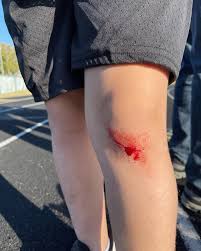
Running from the Indestructable Seven-Year-Old

There are certain inevitabilities in life: death, taxes, and the school nurse calling me at least three times a week. It’s become so routine that I half expect her to start our conversations with, “Hi, it’s me again,” as if we’re old friends catching up over coffee rather than discussing my seven-year-old son’s latest misadventure.

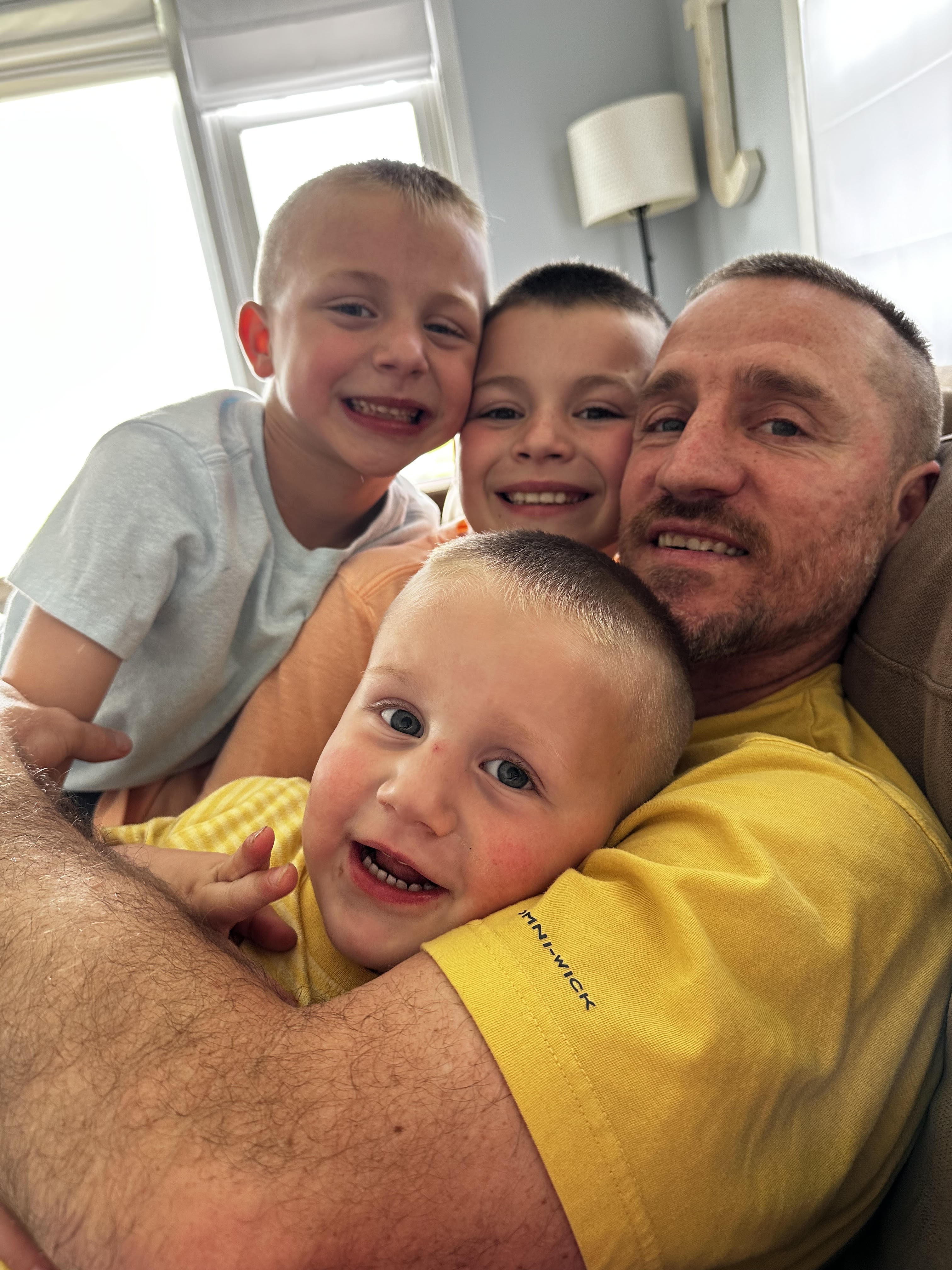
The calls always come around lunchtime, which is no coincidence. Recess follows lunch, and my son’s face—blessed with the classic Thompson head, which is, let’s be honest, a bit larger than the industry standard—seems to act as a homing beacon for any airborne object within a fifty-foot radius. If there’s a stray basketball, a rogue frisbee, or a meteorite hurtling toward Earth, you can bet it will make a beeline for his forehead.

Most of the nurses’ calls are about nosebleeds, which we average about five a week at home. The primary culprit? Wrestling that breaks out in my living room every afternoon from 3 to 8 p.m. But nosebleeds are just the beginning. We’ve also had incidents involving mysterious goose eggs, rope collisions, bee stings, and the full spectrum of scraped knees. In short, all the classic “boy things,” as the medical textbooks no doubt describe them.

In a strange way, I’m almost grateful that these incidents happen at school. When he was younger, I used to worry about taking him out in public, fearing that someone might call Child Protective Services after seeing his collection of bruises. But then my babysitter, having witnessed his Thompson head in action, became my unofficial alibi. Now, with the school nurse meticulously documenting every bump and scrape, I have a veritable archive proving that my child is uniquely qualified to injure himself in ways previously thought impossible.

My son is a marvel of perpetual motion. He arrived seven weeks early—clearly in a hurry—and has been moving at top speed ever since. He is, quite literally, the kid who saved me. After losing our little girl and enduring a rough patch in our marriage, I found myself in a dark place. His arrival was a lifeline, pulling me back into the world. This isn’t something he needs to know right now, but it’s why I look at him with a mixture of joy, gratitude, and mild terror every time he launches himself off the couch.

He also seems to run at a constant boil. Teachers frequently report that he rolls up his pant legs in the dead of winter because he’s “too hot.” He eats like a linebacker preparing for the Super Bowl—constantly, enthusiastically, and with no discernible impact on his weight, which has remained unchanged since 2023. I suspect he may be part hummingbird.

He’s one of the reasons I run. I know he’s proud of me, and I want to keep it that way. I work out and eat right not just for myself, but to show him that this is what you do: you keep moving, you take care of yourself, and you try to outrun the flying soccer balls of life.

I can’t wait to see what the future holds for him. I suspect it will involve a lot of movement, a few more nosebleeds, and maybe a Nobel Prize in physics for discovering new ways to collide with inanimate objects. Until then, I’m just over the moon to be his mama—even if it means keeping the school nurse on speed dial.
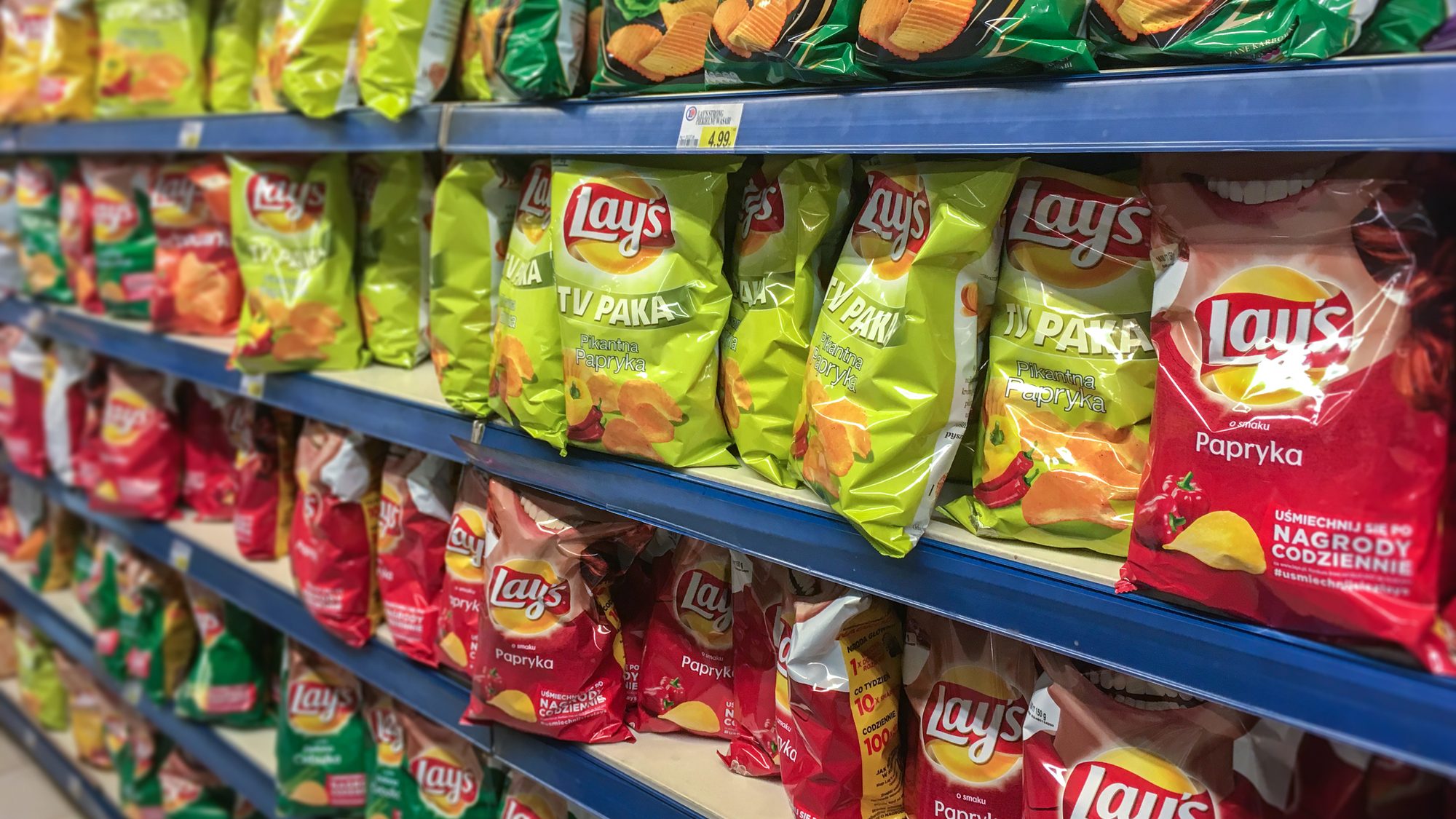

Running through the Grocery Gauntlet

If you ever want to test the limits of optimism, try doing a weekly grocery order for a family of five. Statistically, you’re not alone. According to the USDA, the average American family of five spends between $939 and $1,520 a month on groceries, with some families reporting totals as high as $1,600. That’s enough to make you wonder if everyone else is eating caviar for breakfast or just feeding their children gold-plated Pop-Tarts.

Now, I’ll admit, my own grocery budget is a bit of an outlier. I aim for under $500 a month, which, if you believe the experts, puts me somewhere between “frugal genius” and “possible magician.” Yet, despite my best efforts, my cupboards are always full, but never with anything that can be thrown in the air fryer and called dinner. In fact, my idea of a home-cooked meal is whatever can be heated at 400 degrees for 12 minutes or less.

Here’s the thing: even when I do muster the energy to cook, my kids treat my culinary efforts with the enthusiasm usually reserved for dental appointments. The return on investment for dinner prep is, frankly, abysmal. And to add insult to injury, we’re rarely home to eat anything anyway. The average U.S. household wastes 6.2 cups of food per week-enough to fill 360 takeout containers per year-and I’m fairly certain my fridge is personally responsible for half of that statistic. If there were a frequent flyer program for spoiled leftovers, I’d be platinum status.

Despite all this, I find myself at the store every week, buying essentials like Pull-Ups, toilet paper, and enough snack-size chip bags to supply a small army. It’s never a one-and-done trip; it’s a perpetual scavenger hunt. And yes, I use coupons, rebate apps, and weekly flyers like a seasoned bargain hunter. I seldom buy name brands, but I don’t think our generic mac and cheese is the reason my children are staging a hunger strike.

Food waste is a national pastime: 30–40% of food in the U.S. ends up in the trash, costing households up to $1,500 a year. If saving money is the top motivator for reducing waste (as 82% of Americans claim), then why does my fridge look like a science experiment gone wrong by Thursday? Maybe it’s because, like 87% of households, we’re guilty of letting perfectly edible food sit until it’s past its prime. Or maybe it’s because we’re never home. Between baseball, wrestling, football, and the occasional “dinner” of granola bars and bologna sandwiches, our kitchen is more museum than restaurant.

I know my grocery bill will inevitably rise as my boys get older. They’re wrestlers, which means half the year is spent cutting weight, and the other half is spent eating like they’re preparing for hibernation. Statistically, teenage boys can consume up to 3,000 calories a day, which means my $500 budget may soon be as outdated as my expired yogurt.

We don’t have pets, so at least I’m not feeding a small zoo. Eating out is a rare treat- maybe two or three times a month, and even then, it’s usually pizza. According to the Bureau of Labor Statistics, the average American household spends nearly $3,000 a year on eating out, but I can assure you, we are not average in this department.

So, what’s the secret? Am I under-spending, or just under-cooking? Should I be eating better, or am I simply not spending enough to keep up with the Joneses and their well-stocked air fryers? All I know is, my waistline doesn’t seem to agree with my modest grocery bill, and my fridge remains a monument to good intentions and wasted leftovers.

If there’s a Nobel Prize for creative couponing and food waste, I’d like to be considered. Until then, I’ll keep shopping, keep saving, and keep wondering why there’s never anything for dinner.

Statistics cited from the USDA, Bureau of Labor Statistics, and MITRE-Gallup food waste survey.

Running from Walking: A Staggering Return

Space Mountain Lighted Tunnel- Property of Joe Penniston

Let’s be honest: calling this a “running blog” is a bit like calling a toaster a “bread spa.” Yes, the original idea was to chronicle my athletic exploits, but if you’ve been around for more than five minutes, you know it’s mostly a catalogue of my minor health crises, parental misadventures, and the occasional existential whinge. Still, that was always the point. This is my corner of the internet, and if I want to use it to document my slow-motion journey back to fitness (and sanity), so be it. Besides, writing is cheaper than therapy and, crucially, doesn’t require insurance approval.

Tomorrow marks the start of my latest “running” adventure. I say “running” in the same way one might describe a sloth’s commute as “parkour.” The cardiologist has finally given me the green light to exercise, and I am positively itching to get started. There is, however, a catch: thanks to my heart medication, my blood pressure and heart rate now behave with the wild unpredictability of a British queue-steady, polite, and not prone to sudden excitement. So, running is out. Walking is in. Very, very slow walking.

To be clear, I’m not talking about the brisk, purposeful stride of someone late for a train. No, my current pace is more “lost tourist at EPCOT after three churros.” My stamina, as previously discussed, is somewhere between “elderly tortoise” and “houseplant.” But everyone starts somewhere. This is less “couch to 5K” and more “couch to mailbox and back, possibly with a nap.” Still, as any seasoned training plan will tell you, progress is not linear. Sometimes you ebb, sometimes you flow. Right now, I am ebbing so hard I might be mistaken for a receding tide.

Complicating matters, I am also attempting to plan a Walt Disney World weekend for my son’s 10th birthday. For the uninitiated, a day at Disney is less a vacation and more an endurance event. You will walk 10-12 miles a day, minimum, most of it spent dodging strollers and wondering if you should have taken out a second mortgage for a Dole Whip. If I don’t get my stamina up, I’ll be lucky to make it past the first popcorn cart on Main Street, USA.

The good news is that my family loves the outdoors. We hike, we walk, we play. My kids are at that magical age where they still think I’m fun and not just a mobile wallet with opinions. I’m grateful for the chance to join in this summer, even if my role is less “intrepid leader” and more “caboose with snacks.”

So, what’s the moral here? I’m looking ahead, not back. The tunnel isn’t dark; there’s light all the way through, and I’m confident I’ll be back on the running side before long. For now, I’ll take it one slow, meandering step at a time. After all, every journey starts with a single step-even if that step is followed by a sit-down and a long, thoughtful sigh.

In the immortal words of all good writers (and exasperated parents everywhere): onward, slowly, and with snacks.

Running for The Boy Mom’s Field Guide

Let us begin with a simple truth: if you are the mother of boys, you are not so much raising children as you are attempting to survive a long-running, low-budget circus, minus the elephants but with all the mess. For the uninitiated-those fresh-faced, hopeful “boy moms” who still believe their living room can be both stylish and functional-consider this your orientation. For the veterans among us, think of it as a comforting nod, a knowing glance across the playground, and perhaps a prompt to add your own hard-won wisdom to the canon.

1. If It Smells Like Pee, It’s Pee

There is no need to consult a flowchart or conduct a chemical analysis. If your nose so much as twitches, you can be certain: it’s pee. And it will be somewhere you never thought possible-behind the curtains, inside a toy truck, or, in a feat of physics, on the ceiling. Accept this early, and you’ll save yourself hours of fruitless denial.

2. Cheese Sticks and Fruit Snacks: The Universal Solvent

It is a well-documented fact (by me, just now) that boys will never eat the dinner you lovingly prepared. However, announce bedtime or suggest dental hygiene, and they will be gripped by a hunger so profound it borders on the existential. The solution? Cheese sticks and fruit snacks. These are the Swiss Army knives of boy parenting: they resolve tantrums, mend broken spirits, and, on occasion, substitute for actual meals.

3. You Can’t Have Nice Things

At some point-usually after the third shattered lamp or the fortieth marker mural on the wall-you will utter the phrase, “This is why we can’t have nice things.” You will say it daily, sometimes hourly. It is not a complaint; it is a mantra, a rite of passage, and possibly the title of your future memoir.

4. The Wardrobe of the Perpetually Disheveled

Knees will be ventilated, shirts will be adorned with a Pollock-esque array of stains, and you will be tempted to throw them away. Don’t bother. Any new clothes will be similarly decorated within hours, and your children are blissfully unconcerned with appearances. Consider it early training for Silicon Valley.

5. Something Broken? It’s Always the Second One

If you have more than one boy, brace yourself: the second child will be the one to break it. Whether it’s a toy, a gadget, or your last nerve, the first child might be the careful experimenter, but the second? The second is the wild card, the chaos agent, the reason you now have “fragile” stickers on everything

6. The Emergency Car Toilet

You may believe your car is for transportation. Your sons believe it is a mobile restroom. Always have an empty bottle or a lidded cup at the ready. The need will arise, usually on the highway, and always when you are out of options.

7. The Paper Tsunami

Each day, your children will return from school with a stack of papers that could be used to wallpaper your house. Sort through them, keep the one with actual importance (there will be one, possibly), and dispose of the rest. After two weeks, throw away the “important” ones, too. Your kitchen table will never be clear, but you can slow the encroachment.

8. Did I Just Say That?

You will find yourself saying things that, in any other context, would result in a wellness check from concerned neighbors. “Get your penis off the wall” and “Crayons do not go there” are just the beginning. Embrace the absurdity.

9. Your Husband Counts

Remember, you are raising more than your own offspring; you are, in a very real sense, raising someone else’s son as well. Your mother-in-law will be delighted.

10. Soak Up Every Minute

Despite the chaos, or perhaps because of it, these years are fleeting. Laugh, play, and try to remember it all, even the bits that smell suspiciously of pee.

In summary, being a boy mom is less a job than an adventure-one with fewer safety harnesses and more cheese sticks than you ever imagined. Enjoy the ride, and remember: you are not alone.

Running from the Random

If there’s one thing I’ve learned as the parent of three small boys, it’s that the universe is not governed by the laws of physics, but by the availability of cheese sticks. The second most important thing is that nothing, absolutely nothing, will ever go as planned. I used to think I was in charge of my own life, but that was before I found myself negotiating a ceasefire over a half-eaten string cheese at 6:45 a.m. while simultaneously stepping on a Lego and contemplating the existential meaning of a chalk mural on the porch. In short: I’m not always laughing, but I am never, ever bored.

Take, for example, last Tuesday. I wandered into the kitchen, which, in our house, is less a place for food preparation and more a staging ground for minor acts of anarchy. There, my seven-year-old was lying flat on his back, surrounded by a blizzard of computer paper, bellowing “LOBOTOMY! LOBOTOMY!” at the ceiling with the sort of conviction usually reserved for Shakespearean actors and people who have just stubbed their toe on a coffee table. I had no context for this scene, and, frankly, I was too frightened to ask for one. Sometimes, as a parent, you learn that ignorance is not only bliss, it’s a survival strategy.

Now, I’d like to say that I handled this tableau with the calm, measured wisdom of a seasoned parent, but the truth is, after a recent bout of health problems, including heart surgery, I’m mostly just trying to keep everyone alive and the house from being condemned. Cleaning, organizing, or preparing for the days ahead have all taken a back seat to the more pressing goal of making it to bedtime with my sanity (mostly) intact.

But necessity is the mother of invention, and so I have discovered a few ingenious ways to keep the children occupied while I attempt to rest and recover. Chief among these is the “Lego Dump.” This is a highly technical process in which I upend a tub of approximately 17,000 Lego pieces onto the sunroom floor and announce, with the gravitas of a NASA mission director, that I require them to build something very specific, say, flowers for me. This, in theory, should spark a harmonious burst of creative energy. In practice, it triggers a 90-minute debate over who stole Lego Spider-Man’s bottom half, followed by the construction of a swimming pool for a Minion, complete with a Lego parrot lifeguard and a suspiciously surly-looking unicorn.

The sunroom is now less a place for relaxation and more a minefield of plastic bricks, each one lying in wait to ambush my unsuspecting foot. I am convinced that, should archaeologists excavate our home centuries from now, they will assume we worshipped a pantheon of tiny, multicolored deities who demanded blood sacrifices in the form of parental toe injuries.

Still, the “Lego Dump” buys me precious minutes of rest time to recover from the Herculean effort of, say, moving from the couch to the kitchen on a Sunday. Recovery from heart surgery, as it turns out, is not the breezy spa vacation I’d hoped for. The good news is that I’ve lost weight, despite having done little more than sit very still for the last ten days. It’s a bit of a Catch-22: I can’t move much, but apparently, neither can my appetite.

So, here we are: three boys, two tired parents, a house that looks like the aftermath of a toy factory explosion, and a sunroom that doubles as a medieval torture chamber for feet. It’s not always pretty, and it’s rarely quiet, but it is, without question, never dull. And as any seasoned traveler (or parent) will tell you, sometimes the best stories come from the journeys you never planned to take.

Running towards Change

Let’s talk about crossroads. Not the Robert Johnson, “sold my soul to the devil and now I can play a mean blues guitar” kind, but the more mundane, “should I take the left path, the right path, or just sit down and have a sandwich?” variety. Life, it turns out, is littered with these intersections- some clearly marked, others disguised as perfectly ordinary Tuesdays. Sometimes you don’t even notice you’re at one until years later, when you realize that deciding to sit next to that stranger in Chemistry 101 led to marriage, children, and a lifelong inability to remember where you left your car keys.

Right now, I am standing at one of those crossroads, and not the metaphorical kind you can ignore until it disappears. Last Friday, I had heart surgery. (This is the sort of sentence that, if you’re lucky, you only have to write once in your life.) I’m in recovery, which mostly involves lying very still, contemplating the ceiling, and wondering if it’s possible to develop six-pack abs by sheer force of will. Spoiler: it is not.

The good news is, I’m on my way back to the body I knew before atrial fibrillation and a stroke decided to make themselves at home. The less-good news: I now have the stamina of a slightly asthmatic sloth and a to-do list that includes things like “walk to mailbox without needing a nap.” Progress, I’ve learned, is not a sprint. It’s more like a meandering stroll through a museum where half the exhibits are closed for renovation. And that’s okay. Sometimes watching things evolve slowly is its own kind of beautiful.

I’ve always been an athlete, or at least someone who owned a suspicious number of moisture-wicking shirts. My childhood was a montage of sports practices, muddy cleats, and the faint aroma of liniment. I majored in Sports Management, then doubled down with a Master’s in Sports Administration, because apparently I wanted to be able to administrate my own sports. I got married in a suite at a Cincinnati Reds game- a fact that is both romantic and, in retrospect, a logistical nightmare for anyone who dislikes stadium nachos. I’ve run four marathons, seven half marathons, two 10ks, and more 5ks than I can count. I coach volleyball. My husband coaches wrestling. My kids play sports. If you cut us, we bleed Gatorade.

So here I am, at a crossroads. One path leads to the couch, where I could spend the rest of my days as a professional spectator, perfecting the art of yelling at referees from the comfort of my living room. The other path is, frankly, a lot more work: getting back into shape after four months of enforced inactivity. (Technically, it’s been four years since I felt “normal,” but who’s counting? Oh, right. Me.) First, there was the stroke, which put a hard stop to regular exercise. Before that, I was pregnant, and my body decided to start practicing contractions at week eleven, which is a bit like showing up at the airport six months before your flight.

Anyway, I’m choosing the road less traveled. Not because I’m particularly brave, but because, as they say, “rent is due every day,” and I’ve been living rent-free in my own body for a bit too long. I want to feel like I’m in charge again, even if it means taking the scenic route, with plenty of rest stops along the way.

After all, you never really know what’s waiting around the next bend- maybe it’s a fresh challenge, maybe it’s a chance to surprise yourself, or maybe it’s just the satisfaction of putting one foot in front of the other again. Either way, onward.

Running from Danger

Let’s be honest: catastrophe is always lurking just outside the frame, like a raccoon in your garbage or a toddler with a marker. You can have your emergency fund, your canned beans, and enough insurance paperwork to wallpaper the Taj Mahal, but the universe remains stubbornly unscripted. If you think you can predict the future, I invite you to my house on banana-buying day.

Would I even want to know the future? I’m not sure my ego could survive it. It’s hard enough living with the knowledge that, in 2019, I bought a bread machine. If I knew everything ahead of time, I’d probably just curl up in a ball of embarrassment and never leave the linen closet. Honestly, most of my “big” decisions these days involve the produce aisle and the inscrutable dietary whims of small children. Bananas, for example: buy two, and the kids eat them in a single, frenzied sitting. Buy five, and they sit untouched, quietly evolving into fruit flies and existential regret.

Then there’s the matter of who gets to turn off the TV. In my house, this is not so much a simple request as it is a high-stakes summit meeting, complete with negotiations, shifting alliances, and the occasional threat of sanctions. Honestly, the Geneva Conventions could learn a thing or two from the way a three-year-old leverages bedtime against screen time. Choose the wrong delegate for this task, and you’re risking a meltdown of historic proportions—possibly involving tears, definitely involving accusations of gross injustice, and always requiring a follow-up peace treaty (usually brokered with applesauce or a cheese stick).

It’s a funny thing about decisions: what seems trivial to you can be life-altering to someone else—usually someone under four feet tall and heavily invested in Paw Patrol. As a parent, you’re not just steering your own ship; you’re captaining the whole flotilla, snack requests and all. The pressure is immense, but, as they say, pressure makes diamonds. (Or possibly just very tired people who dream of diamonds.)

By the time you’ve weathered three kids and a quarter-century of negotiations over bananas and TV remotes, you’re not so much a diamond as you are a well-worn pebble—polished, yes, but mostly from being rolled around by the tides of daily life. Maybe that’s why retirement is so sweet: it’s the first time in decades you get to decide, with no consequences, how many bananas to buy. And if you get it wrong? Well, there’s always banana bread.

Running from the Schedule

Anyone who has ever taken up running knows that a training plan has the uncanny ability to commandeer your calendar with the precision of a military operation. Suddenly, your weeks are peppered with 40-minute cross-training sessions, midweek 3-milers, and those dreaded Sunday long runs. It’s a relentless march of miles and minutes that feels both necessary and slightly masochistic. The irony, of course, is that while sticking to the schedule is meant to prepare you for race day, it can also leave you feeling like you’ve aged a decade in the process.

Take, for example, one particularly ill-fated 14-mile long run I endured. It was one of those runs where everything that could go wrong did—legs like lead, lungs on strike, and a general sense that the universe was conspiring against me. For three weeks afterward, I agonized over it, convinced that my marathon (still months away) was doomed because of this single bad outing. Spoiler alert: it wasn’t. But try telling that to my overthinking brain at the time.

Of course, running isn’t the only thing vying for space on my calendar these days. No, the real chaos begins when you add in my children’s baseball practices (two per kid per week), their games (sometimes three per kid per week), my volleyball coaching schedule (up to four games a week plus practices), dentist appointments, and—oh yes—a looming heart surgery. Somewhere in this maelstrom of activity is a vague hope of eating dinner, doing laundry, and remembering which parent needs the van for chauffeuring duties. It’s less “organized chaos” and more “chaos with occasional bursts of organization.”

Preparation, I’ve learned, is key to surviving this whirlwind. Theoretically, anyway. In practice, I’m hit or miss. Some nights I manage to do things my future self will thank me for—like setting up the coffee maker so all it needs is a flick of the switch in the morning. Other nights I collapse into bed with the vague hope that tomorrow will sort itself out (it rarely does).

With my April 25th surgery looming ever closer, I’m trying to lean into this whole “being prepared” thing more than usual. My post-surgery self will undoubtedly appreciate it—and so will my husband, mom, and aunt, who are poised to pick up the slack if I don’t get my act together. They’re lovely people but probably not thrilled at the prospect of navigating the fallout from my lack of planning.

In the end, though, life—like running—isn’t about perfection. It’s about putting one foot in front of the other and hoping you don’t trip over your own shoelaces along the way. And if all else fails? There’s always coffee waiting for me in the morning… assuming I remembered to set it up.

Running From the Beat of My Own Heart

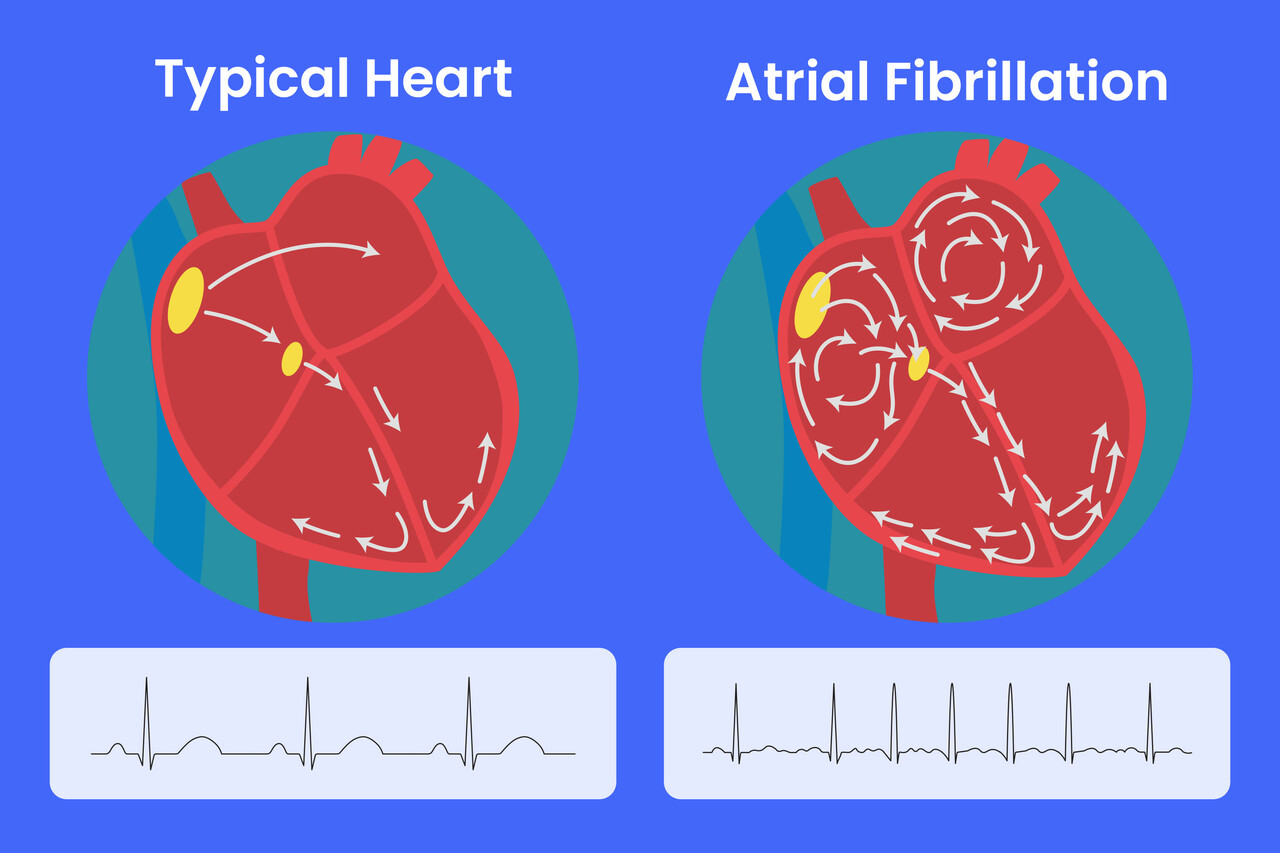
On an otherwise unremarkable Sunday in January, my heart decided it was auditioning for a drum solo in a heavy metal band. It was beating so erratically that I half-expected it to start flashing neon lights. Thankfully, I had my trusty Apple Watch, which promptly informed me that I was in atrial fibrillation—or AFib, as the cool kids call it. Never having experienced this particular thrill ride before, I did what any self-respecting adult would do: I called my mom. Naturally, she dispatched my dad, who happens to be a physician, to come and assess the situation.

Meanwhile, my husband was an hour away at a wrestling meet with our son, leaving me at home with a seven-year-old and a three-year-old. The idea of dragging them to the ER was laughable—imagine trying to explain to triage why one child is climbing the IV stand while the other is attempting to commandeer the defibrillator.

Dad arrived but couldn’t make heads or tails of my heart’s newfound jazz improvisation. He stuck around for a bit to make sure I didn’t keel over, and since the chaotic rhythm eventually subsided, I decided to spend the rest of the afternoon lying low on the couch. It was not exactly how I’d envisioned my weekend.

Hours later, when my husband finally returned home, my heart decided it wasn’t done with its antics. This time, it felt like it was attempting to launch me into orbit with its out-of-sync throbbing. Dad came back for Round Two of “What Is My Daughter’s Heart Doing Now?” and after 20 minutes of watching my pulse behave like a malfunctioning metronome, he declared it was time for the ER.

The car ride was a blur of breathlessness and sheer terror. I’d read enough about AFib to know it wasn’t something you wanted to mess around with—another stroke and cardiac arrest weren’t exactly on my bucket list. By the time we arrived at the hospital (mercifully empty), they whisked me straight into triage for an EKG. My heart rate was doing its best impression of a roller coaster: up, down, loop-de-loop.

In no time, I found myself hooked up to an array of machines that beeped ominously, as though auditioning for a sci-fi movie soundtrack. My heart rate settled at a steady 135 beats per minute but occasionally dropped into the 70s just to keep the nurses on their toes. Eventually, they dosed me with medication that calmed things down enough for me to be admitted.

And let me tell you, there’s no lonelier place on Earth than a hospital room at night. My husband went home to stay with the kids—it was Martin Luther King Jr. Day the next morning, so at least there wasn’t school to worry about—but that left me alone with nothing but my thoughts and an endless parade of nurses interrupting any attempt at sleep.

After three days of tests and sleepless nights, the verdict was in: my AFib wasn’t caused by anything as fixable as diet or exercise but rather by an electrical glitch in my heart. The solution? A cardiac ablation scheduled for the end of the month—because nothing says “fun” like heart surgery.

In the meantime, I’ve been navigating life on new medication while trying not to panic every time my heart skips a beat. Running—my beloved escape—has taken a backseat to teaching my kids how to dial 911 and writing a will (just in case). It’s a strange limbo: part fear of what’s next and part determination to savor every moment until then.

Perhaps this is where all those miles I’ve run have led me—not away from problems but straight into their arms. It feels unfair sometimes, like my body has betrayed me after years of taking care of it. But until someone invents an alternative to living, I’ll keep showing up for this messy, unpredictable life.

Running from Responsibility

Why does it always seem like it’s Monday? It’s a question that has haunted humanity since we first tethered ourselves to the tyranny of calendars. Personally, I don’t mind Mondays all that much. They bring with them a sort of comforting predictability—a return to routine, which, for someone like me, feels like slipping into a well-worn pair of slippers. Mondays are orderly, structured, and oddly satisfying. But Sundays? Sundays are the existential dread of the week—a slow-motion car crash of anxiety and obligation.

Let’s talk about Sundays. Sundays are the day that whispers in your ear, “You’re not relaxing; you’re procrastinating.” They’re the day when you’re supposed to unwind but instead find yourself mentally preparing for Monday. It’s as if Sunday exists solely to remind you of all the things you haven’t done yet. And heaven forbid there’s something scheduled on a Sunday—then the entire weekend becomes collateral damage. You can forget about enjoying Saturday because Sunday’s looming shadow will consume it whole.

Not that relaxation is really an option in my house. I live with three small boys who seem to have made it their life’s mission to turn every moment into a scene from an action movie—minus the stunt doubles. One is hurling rocks at his brother while another is testing the tensile strength of our front picture window with water balloons. Meanwhile, the third is pedaling his bike at breakneck speed around every driveway in the neighborhood, narrowly avoiding a tennis ball launched by one of his accomplices. It’s chaos on six legs, and I’m the hapless referee trying to prevent this circus from devolving into outright anarchy.

Then there’s my youngest, who has developed an obsession with Spider-Man so intense it borders on method acting. Every night as I wrestle him into his Spidey pajamas (the cleanest pair I can find), he fixes me with a look of grave concern and asks, “What’s happening to me?” It’s as though he genuinely believes the pajamas might trigger a radioactive spider bite and transform him into a web-slinging vigilante before bedtime.

But back to Sundays—the day that seems determined to ruin itself. They’re always gloomy, aren’t they? The sky turns gray as if even nature has decided it can’t be bothered with cheerfulness. There’s laundry to do, coffee never seems strong enough, and every task feels like an uphill battle against time itself. Sundays are not just for the birds; they’re for the grumpy, caffeine-deprived humans who wish they could fast-forward straight to Monday.

And then there are Sunday long runs—the supposed panacea for the weekend’s lethargy. But let’s be honest, they’re more like a double-edged sword. On one hand, they offer a fleeting sense of accomplishment and a brief respite from the chaos that ensues when three miniature humans are left unattended for more than five minutes. On the other hand, they have a peculiar way of making Sundays even more unbearable.

Spend more than an hour pounding the pavement, and you’ll find yourself wondering if the rest of the day has been irreparably damaged. It’s as if the clock itself has been warped by your exertions, stretching out the hours into an endless expanse of exhaustion and obligation. You return home, drenched in sweat and feeling like you’ve been put through a wringer, only to be greeted by the unrelenting demands of laundry, meal prep, and refereeing the ongoing battle between your offspring.

The irony is that long runs are meant to clear your head and invigorate your spirit. But on Sundays, they seem to have the opposite effect. The rest of the day becomes a blur of fatigue and anxiety, with every task feeling like a Herculean challenge. You’re left wondering if the temporary high of endorphins was worth the subsequent crash into the abyss of Sunday blues.

And don’t even get me started on the Spider-Man obsessed youngest, who, upon seeing you stumble through the door, sweat-drenched and limping, will look at you with an air of deep concern and ask, “What’s happening to you?” It’s as though he suspects that the long run has somehow triggered a transformation into a superhero, albeit one who’s lost his cape and can barely make it to the couch.

So yes, give me Mondays or give me death. Mondays may be mundane, but at least they don’t pretend to be something they’re not. They don’t lure you in with promises of relaxation only to slap you with a laundry list of chores and existential angst. Mondays are honest—they show up with their spreadsheets and schedules and say, “Let’s get on with it.” And honestly? That suits me just fine.