Running from Labor Day

September, already?

Honestly, I don’t know how we got here. Somewhere between Memorial Day and Labor Day, time slipped out the back door without so much as a goodbye. One moment I was dutifully buying sunscreen and popsicles, and the next thing I know, we’re knee-deep in sharpened pencils, lopsided backpacks, and the collapse of all illusions that summer still has any life left in it.

Labor Day, for us, was extravagantly uneventful. We made no plans—unless you consider “trying to stop the children from recreating scenes out of a medieval torture manual in the living room” to be plans. Which, in fairness, it probably is. My children have acquired a new pastime: exacting as much physical and emotional damage on one another as possible, all before noon. The soundtrack to this, of course, is a relentless chorus of shrieking, crying, and at least one nosebleed (always the middle child, who, bless him, seems doomed to a life of collateral damage). We have thus far managed to avoid the emergency room, but I can practically feel it penciled onto the horizon of future weekends.

Naturally, the boys would have been perfectly content to spend the entire three days motionless in front of the TV, embalmed in potato-chip crumbs. But, because we are excellent parents—or at least stubborn ones—we forced them outdoors. They ran half-heartedly around the block in under five minutes, returned looking betrayed, and then managed to ask for snacks roughly every three minutes until bedtime. Forty-six snack requests in an afternoon. I did the math.

Now, I like to imagine myself as calm, patient, and capable of handling these miniature crises with grace. This is a delusion. At the tenth spilled cup of juice or the eighth announcement that last week’s “favorite meal of all time” is now “too disgusting to even look at,” something inside me snaps. It’s usually at this point that my husband, recognizing danger, quietly slides into the scene like a diplomatic envoy, defending my honor and ushering me away before I declare dinner a lost cause and start packing my bags for Monaco.

And so here we are: September. A new school year, a new season, and new opportunities to relearn multiplication tables, lose library books, and discover that my children’s capacity for whining is in fact infinite. Still, I’m clinging to the lofty goal of keeping my head—and occasionally even my sense of humor—through it all.

Here’s to a month of beginnings, cooler heads, and hopefully fewer nosebleeds.
Running from a Pickaxe

Tax-free week in Ohio is the back-to-school version of Rope Drop at Magic Kingdom. If you’re a parent, you know the drill: you’ve got a list longer than the line for Peter Pan’s Flight, desperate for deals and every coupon clipping you can snag. Last Saturday, the Thompsons charged into the outlet malls like it was the opening bell at Black Friday—fast, purposeful, semi-delirious.

Now, if you’ve ever wandered World Showcase in August, you’ll be familiar with the special brand of sweaty exhaustion that set in as we wound our way through the stores, kids melting faster than a Mickey bar in July. Coupon victory came hard, but eventually we limped home, untamed shopping bags in tow, seasoned and slightly singed around the edges.

But the magic didn’t end there! A sign at the end of our street declared in bold: “Garage Sale. Tools and Man Stuff.” For those who share their home with another adult, this was less a suggestion and more a legally compelling summons. Chas vanished faster than a Lightning Lane slot at Rise of the Resistance, Oz in tow, clearly hoping to unearth some hidden Indiana Jones relic (or at least another stick to add to his collection).

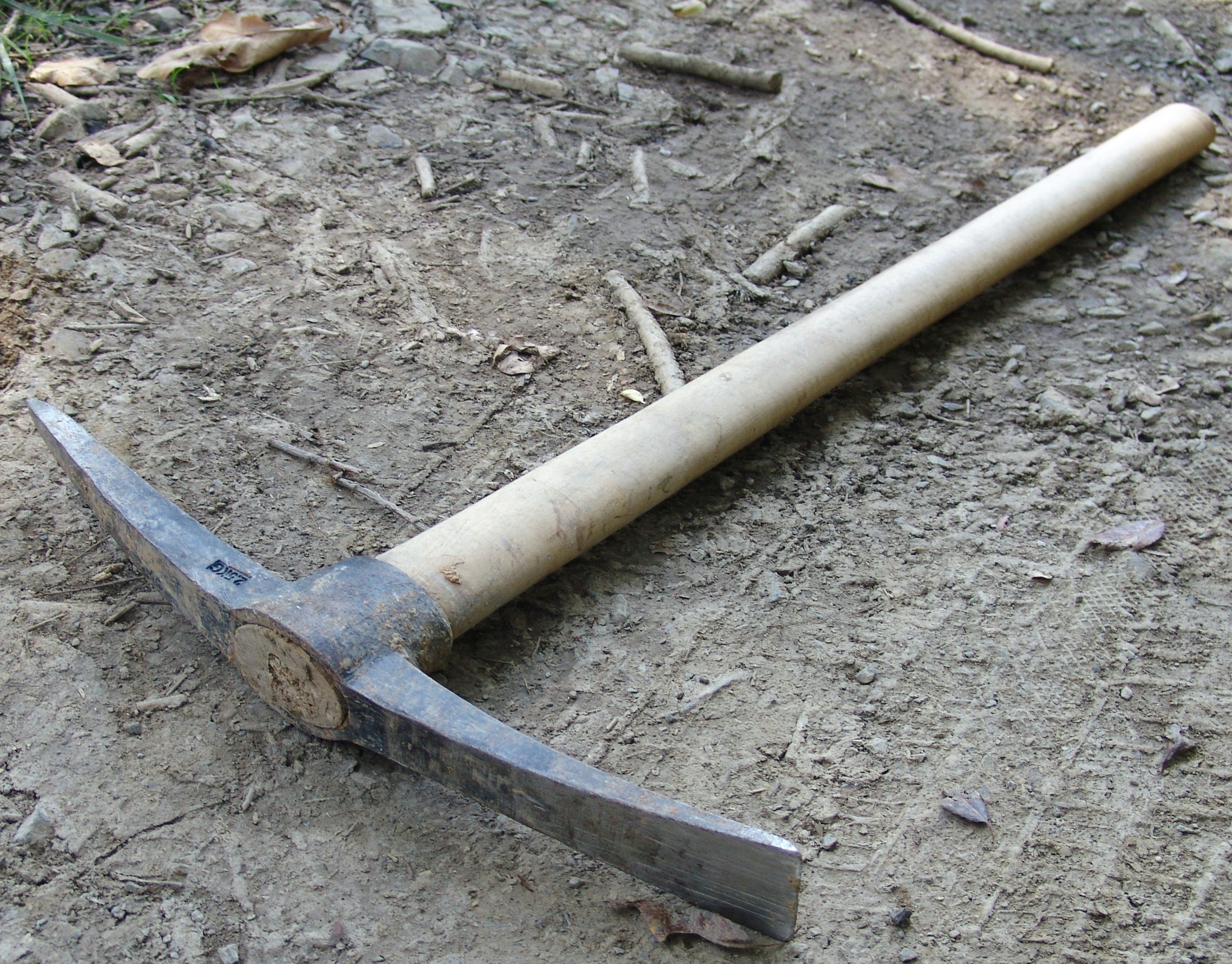
Ten minutes and one mini-expedition later, they reappeared, faces radiating unspoken adventure—think dads after surviving EPCOT’s Food & Wine with only a wallet mildly damaged. Moments later, Oz, our seven-year-old, appeared clutching a ten-dollar bill and loudly proclaiming his new life ambition: acquiring a pickaxe. Cue visions of him storming Frontierland, wielding his new prize, with me nervously calculating just how quickly Child Protective Services would respond in our zip code. But hey, boring never makes for good park stories or memorable family runs.

If there’s a lesson buried beneath the layers of outlet shopping, surprise hardware quests, and the ever-present din of “when does school start”—it’s this: structure is more magical than any Cinderella castle. By the time the school year finally started this morning, my fifth grader bolted for the door like he was rope-dropping Seven Dwarfs Mine Train; his enthusiasm was nothing short of Disney magic itself, and I couldn’t be prouder to stand on the sidelines, medal or no medal.

My second grader approached with equal excitement, though laced with those opening day jitters familiar to anyone who’s ever tried a new ride (or new lunch table). He’ll be making friends by lunchtime, probably organizing a lunchroom conga line just to make things interesting.

The preschooler, meanwhile, is pure Tomorrowland—marching to his own futuristic beat, running operations with a tone that suggests he skipped straight past “Cast Member” to “Attraction Manager.” If anyone’s wondering, yes, I’m bracing for parent-teacher conferences featuring references to “leadership skills” (read: tiny tyrant).

But I crave the rhythm as much as the kids do. And after a summer of running from everything—chaos, coupons, pickaxes—I’m ready to settle down with a fastpass for structure and a side of predictability.

So, here’s to tax-free weeks, unexpected adventures, and the kind of family training that leaves you with memories more magical than any race medal or Disney pin. May your journeys be as joyful and slightly unpredictable as a day at the parks—and may your neighbors never need to speed-dial CPS.

And the morning rope drop? Well, we made it. Just keep running forward.

Running from MRI Season: Another Lap Around the Track

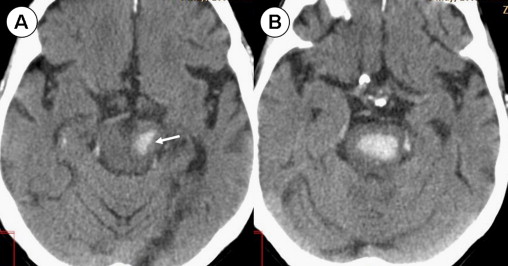
Since 2022, I’ve had a standing date with an MRI machine every year—my own personal Groundhog Day, except instead of a rodent predicting the weather, it’s a giant magnet peering into my brain and predicting, well, me. The scans always show the same old stroke souvenirs (thanks for the memories, 2022!), but otherwise, things have been reassuringly uneventful until last week.

This year’s MRI landed on Juneteenth, which, if nothing else, makes for a memorable calendar entry. Normally, I handle my time in “the cage” with the stoicism of a runner at mile 18—uncomfortable, yes, but nothing I can’t power through. But this time, I had a hunch things would be different. Not fear, exactly. More like that feeling you get in the last quarter-mile of a race when you know something’s off with your stride. You’re not sure what, but you know.

A few hours later, the results dropped, and—cue the dramatic music—my hunch was right. White Matter Hyperintensity. Left frontal lobe. The start of Small Vessel Disease—a phrase that hovers ominously, hinting at the possibility of dementia down the road, like those balloon ladies at the back of a marathon, always just behind you, no matter how hard you push. But honestly, I wasn’t surprised. My body has been sending up distress flares for months, and I’ve been logging the symptoms like a runner logs miles:

  • Vision doing its own thing
  • Words playing hide-and-seek in my brain
  • Short-term memory that’s, well, short
  • Blood pressure so low it could limbo under a garden hose (88/56, if you’re keeping score)
  • Insomnia that only Trazodone can tame
  • Mood swings that make Boston’s Heartbreak Hill look like a bunny slope
  • Depression and anxiety, the unwelcome running buddies
  • Heart rate dropping to 49 bpm—elite marathoner numbers, but without the medals
  • Dizzy spells and vision blackouts whenever I stand up (or, you know, attempt yoga)
  • 15 pounds lost in 2 months (if only it were from marathon training)
  • Balance so wobbly, I could be running on cobblestones in Rome

It’s been a slow, sneaky build—like overtraining, but without the endorphin highs. At one point, I was convinced I had early-onset Parkinson’s. I talked to my therapist, journaled about it, and notified not one, not two, but four doctors. The collective medical response? Order another MRI. (Doctors, it turns out, are like race marshals: quick to hand you a cup of water, but not so quick to notice you’re limping.)

Yesterday, my neurologist’s PA emailed me: “No new signs of stroke!”—complete with a cheery smiley face. I suppose that’s meant to be reassuring, but when you’re the one living with the symptoms (and the new MRI findings), it feels a bit like being told, “Great job, you finished the race!” when you know you took a wrong turn at mile 10.

So here I am, left to manage the aftermath. I’m the one who can’t remember which kid I’m yelling for, or why there’s pizza on the wall, or how to explain to my husband that the three-year-old’s culinary experiments are not, in fact, a sign of genius. Losing your train of thought all day is exhausting—like being stuck in an endless training cycle with no taper in sight. No finish line, no medal, just more laps.

And that’s the real question, isn’t it? If you already know what the race result will be, is it worth running? I’m not saying I won’t toe the start line. Runners are stubborn like that. But knowing the suffering ahead, you do wonder: Is it worth it?

Maybe that’s the point. We run not because we know the outcome, but because we don’t. Because every mile, every scan, every day is a chance to surprise ourselves. And sometimes, even when the course is tough and the finish line is uncertain, you just keep running from everything—if only to see what’s around the next bend to scare the hell out of you.

Running from 999 Happy Haunts

A few years back, in a fit of what I can only describe as pandemic-induced entrepreneurial optimism (or possibly a sugar high), I started a cookie company. I’d love to say it was a calculated business move, but really, it was just me, a mixer, and a vague hope that if I baked enough cookies, I could distract myself from the world falling apart outside my window. I launched the business the year before the “pandy” (as my kids call it), and by 2020, I was happily decorating cookies and shipping them off to rich moms across the USA—women who, I imagine, have never once eaten a cookie in their car while hiding from their children.

Then life, as it does, threw me a few plot twists: a baby, a stroke, and a move to Ohio—because apparently, I like my stress served in a sampler platter. The cookie business went on hiatus, tucked away like a favorite pair of running shoes you keep meaning to break out again. I always hoped I’d pick it back up someday, but between the kids’ schedules, my AFib, and wrestling season (which, if you haven’t experienced it, is like running a marathon in a gym that smells faintly of feet), it just kept slipping down the to-do list.

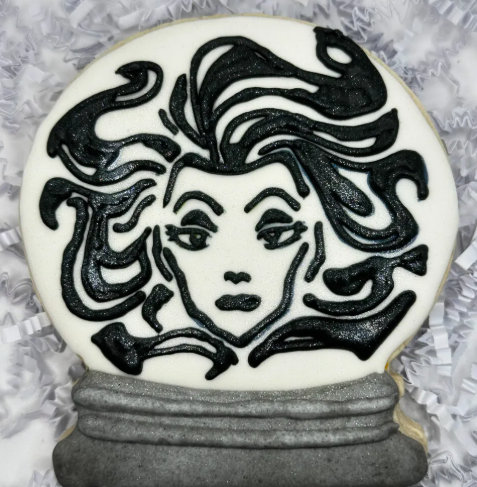
But I never lost my love for Disney, or for the Haunted Mansion in particular. When it came time to rebrand, I wanted something that captured my passion for all things Disney and my slightly offbeat sense of humor. Thus, Foolish Morsels was born—a nod to the Haunted Mansion’s famous greeting, “Welcome, foolish mortals.” It’s the perfect name for a business that combines the whimsy of Disney with the undeniable truth that cookies are, in fact, the best kind of foolishness.

I’ve done quite a few Haunted Mansion cookie sets now, along with other Disney-inspired treats. And while the business has had its stops and starts (much like my running), my connection to the Haunted Mansion has never faded. It’s a must-do every time we visit the Magic Kingdom. The story is captivating, the details are endless, and every ride in a Doom Buggy reveals something new—sort of like running a familiar route and suddenly noticing a house you’ve passed a hundred times but never really seen.

Now, because I can’t resist a good trivia tangent (and because Len Testa would never forgive me if I didn’t), here are a few delightful tidbits about the Haunted Mansion:

  • It’s older than most of us admit to being. The Haunted Mansion opened in Disneyland in 1969, and in Walt Disney World in 1971. That means it’s been delighting (and mildly spooking) generations of guests for over half a century.
  • There are 999 happy haunts. But there’s always room for one more. (And if you’ve ever run a marathon, you know the feeling of being haunted by at least 999 regrets at mile 20.)
  • The stretching room isn’t actually an elevator in Florida. In Disneyland, the stretching room lowers you into the ride. In Disney World, the ceiling rises instead. Either way, it’s a good metaphor for running: sometimes you go down, sometimes you go up, but you always end up somewhere new.
  • Madame Leota’s head is real. Well, sort of. The face in the crystal ball is that of Leota Toombs, a Disney Imagineer. Her name alone would make a great running team mascot.
  • The ballroom scene uses 19th-century magic. The dancing ghosts are created with a trick called “Pepper’s Ghost,” which uses angled glass and lighting. It’s the same technique magicians used in Victorian times—proof that sometimes the old ways are still the best, whether you’re conjuring ghosts or lacing up your well-worn running shoes.

Much like running, my cookie business has had its ups, downs, and unexpected detours. Some days, I’m sprinting toward a new idea, fueled by inspiration (and maybe a little caffeine). Other days, I’m plodding along, just trying to keep moving. And sometimes, I’m just standing still, admiring the scenery (or the cookies) and reminding myself that even the slowest miles—and the messiest kitchens—are part of the journey.

So here’s to foolish morsels, haunted mansions, and running from everything (except maybe the cookie jar). May your runs be smooth, your cookies be sweet, and your Doom Buggy always have room for one more.

Running from The Myth of the School Employee’s Endless Summer

People have this charming idea that if you work at a school, your summer is a three-month hammock nap punctuated only by sunscreen reapplication and the occasional ice cream cone. “Must be nice to get summers off!” they say, with that peculiar blend of envy and disbelief usually reserved for lottery winners and people who actually enjoy running hills.

Let’s set the record straight: I am not a teacher. I am not an administrator. I am, in fact, one of those mysterious school employees who keeps the place running while everyone else is off recharging their batteries. My “summer break” is less “European vacation” and more “please submit your vacation request in triplicate.” The only break I get is the one I schedule myself—and even then, I’m more likely to spend it cleaning up after my family’s daily reenactment of Lord of the Flies.

But here’s the twist: while my colleagues are off, I get to enjoy a school that’s blissfully empty. The pace slows down. The urgent requests evaporate. The phone stops ringing. It’s like the difference between race day and a solo long run: during the year, it’s all adrenaline and chaos, but in the summer, it’s just me, my thoughts, and a spreadsheet that I’m desperately trying to make interesting. (Spoiler: it’s still a spreadsheet.)

Some days, I’m the only soul in the building. And honestly? I love it. There’s a certain meditative joy in moving at your own pace, with no one breathing down your neck or asking if you’ve “got a minute.” You work, you eat lunch, you work some more, and then you go home. It’s the workday equivalent of an easy recovery run—no pressure, no competition, just steady progress and the satisfaction of ticking off the miles (or, in my case, the tasks).

Home, of course, is a different story. Carnage is a good word, and I stand by it. DIY projects in various states of completion, children’s shoes multiplying like rabbits, dirty dishes forming geological strata, and the ever-present frisbee perched on the roof like some sort of suburban gargoyle. But that’s summer at home: a little chaos, a lot of noise, and the sweet reward of snowcones and late bedtimes.

So, I get my quiet miles in during the day—those peaceful, solitary stretches where it’s just me and the hum of the copier—and by 4 p.m., I’m ready to lace up and tackle the wild interval workout that is family life in summer.

Running, working, living—it’s all about finding your pace, embracing the quiet when you can, and knowing that, sooner or later, you’ll be sprinting again. And maybe, just maybe, you’ll finally get that frisbee off the roof.

Running from Friendship

I don’t have many friends. This is not a cry for help, nor is it a prelude to a heartwarming tale of self-discovery. It’s just a fact, like “I don’t like olives” or “I have never understood the appeal of jazzercise.” The friends I do have are scattered across the country like confetti after a parade—Kansas, North Carolina, California, Colorado, Wisconsin—each one safely insulated from the risk of spontaneous coffee invitations. Not a single one in Ohio, despite the fact that I live here, which is either a testament to my introversion or to the enduring mystery of Ohio itself.

Now, some might say this sounds lonely, and perhaps it is, but I find it oddly comforting. It’s a bit like running solo before dawn: the world is quiet, the air is crisp, and there’s nobody around to judge your pace, your playlist, or the fact that you’ve stopped to walk for the third time in a mile. I avoid judgment the way most runners avoid hills—by plotting elaborate routes and, if necessary, faking an injury.

I’m not what you’d call a “social” person. Every friend I’ve made has been through the forced proximity of work or some shared task. I’ve never met anyone in a bar and thought, “This is the beginning of a beautiful friendship.” My friendships are more like aid stations on a marathon course: you’re thrown together by circumstance, you exchange a few words, maybe a cup of Gatorade, and then you’re off again, each of you running your own race.

I am, I suspect, a high-maintenance friend, which is why I try to keep a low profile. Most of my friends are older than me—sometimes by decades. My best friend Greg is creeping toward 70, which is perfect because neither of us is likely to suggest skydiving or a spontaneous road trip to Burning Man. What I want is a friend who will sit on the porch with me at 7:30 a.m., sipping coffee after I’ve already done three loads of laundry. Or someone who’ll go to Disney World and not ride anything, just people-watch and critique the churros. I want friends who understand that sometimes, the best part of getting together is knowing you can leave whenever you want, no explanations required.

And food—let’s talk about food. If there’s a tub of cookie dough, and I eat three-quarters of it, I expect nothing but silent admiration. Or at the very least, discretion.

At the end of the day, I just want to be comfortable. And that, I think, is why my circle is so small. Not many people make me feel at ease, and after a few too many disappointments, I’ve learned to stick with the ones who do. The people I keep close are consistent, reliable, and utterly nonjudgmental. I like the person I am around them, which, when you think about it, is a rare and wonderful thing.

In running, as in friendship, it’s not about the size of your group or the speed of your splits. It’s about finding your pace, your people, and your own version of comfort—whether that’s a sunrise run, a quiet porch, or a spoon and a tub of cookie dough. And if you’re lucky, you get to do it all without anyone asking why you’re walking again.

Running from DIY Delusion

If you’ve ever found yourself scrolling through Pinterest, you’ll know it’s a bit like wandering into a bakery after a juice cleanse—everything looks so easy, so achievable, so… not at all like your actual life. Pinterest, with its glossy photos and endless scroll, is the internet’s way of whispering, “You could do this. You really could.” And like a moth to a flame, I believed it.

For months, I’ve been nurturing the idea of installing a board and batten wall. Not just any wall, mind you, but the perfect wall. The sort of wall that, if it could talk, would say, “I was born for this.” I had the time, the motivation, and, after a recent cardiac adventure that left me feeling like a deflated pool float, an urgent need to prove I could still accomplish something more ambitious than folding laundry.

Enter: the nail gun. A tool I’d dreamed of owning, right up there with a self-cleaning oven and a Roomba that doesn’t get stuck on socks. Three months ago, I bought one. I read the directions (twice!); I watched YouTube tutorials; I even made a playlist called “Nail Gun Anthems.” And then, like any responsible adult, I let it sit in the corner for ninety days, gathering dust and silently judging me.

Eventually, the lure of Pinterest perfection proved too strong. I rallied Chas and the kids for a family outing to the lumber yard, which, if you’ve never been, is like IKEA for people who think splinters are a badge of honor. There, I agonized over wood choices, grain patterns, and whether I could pull off flannel in June. Supplies purchased, I returned home, ready to embark on my first real project with power tools that weren’t a drill.

How did it go? Let’s just say it was a rousing success—if you define “success” as “the wall is still standing and most of my fingers remain attached.” I did cut a few boards too short, but I’m convinced the wall is crooked, not my measuring tape. This is the story I’m sticking with, and I dare anyone to prove otherwise.

Like running (which, let’s be honest, is mostly just running from my own questionable decisions), DIY is a marathon, not a sprint. The first training cycle is always the hardest, mostly because you have no idea what you’re doing, and the internet is full of liars. But for a first attempt, I’m calling it a win. I enjoyed the process, I learned a lot, and I only swore in front of the children twice. Progress!

My summer to-do list is still longer than a CVS receipt, but my goal is simple: add value to my grandma’s house (our current rental) and, perhaps, convince my family that I am, in fact, a useful human being. After years of asking for help, it feels good to give something back—even if that something is a slightly uneven wall.

So here’s to another trip to the lumber yard, another project, and another day with all ten fingers. May your Pinterest dreams be slightly more achievable than mine—and may your nail gun always be pointed away from your toes.

Running from Little Green Men

As a self-proclaimed Walt Disney World expert—meaning I can tell you the exact number of churros you can eat before you lose the will to live—one of my favorite corners of the parks is Toy Story Land. Nestled in Disney’s Hollywood Studios (which, let’s be honest, will always be MGM Studios to those of us who remember the Backlot Tour and the inexplicable presence of a Golden Girls house), this is the place where you get to be a toy for the day. It’s all giant building blocks, oversized board game pieces, and a healthy dose of nostalgia. It’s like stepping into your childhood, only with more sunscreen and slightly more expensive snacks.

Now, as a parent, my mission is to bring a little of that magic home, specifically, to the boys’ bathroom. Yes, you heard me: I am attempting to transform the most utilitarian room in the house into a Toy Story-themed wonderland. I have plans. Big plans. Beadboard! Wallpaper! Window coverings! Hanging monkeys! (The plastic kind, not the real ones. I’m not that ambitious.) I want it to be colorful, kid-friendly, and the kind of place where you half-expect Woody to pop out from behind the shower curtain and remind you to wash your hands.

But here’s the thing: the only thing standing between me and this Pixar-inspired paradise is, well, me. And a lack of power tools. And possibly a healthy fear of accidentally nailing my own foot to the floor.

What I really want—what I yearn for—is a mitre saw. And a jigsaw. And a nail gun. I want to be the kind of person who uses phrases like “orbital sander” in casual conversation and actually knows what it means. I want home projects to be my hobby, not just something I watch on YouTube with a mixture of awe and mild terror.

But here’s the secret Disney never tells you: learning something new, whether it’s how to wield a nail gun or how to navigate Genie+, is a lot like training for a marathon.

Stay with me here. When you decide to run a marathon (or, in my case, when you decide to run away from everything and end up in a marathon by accident), you don’t just lace up your shoes and jog 26.2 miles. You start small. You run a block. You wheeze. You Google “can you die from running?” You keep going. Over time, you get a little stronger, a little faster, and a little more confident that you won’t collapse in a heap by mile two.

Learning a new skill—like transforming a bathroom into Andy’s room, or figuring out how to use a mitre saw without losing a finger—is the same way. It’s about taking baby steps. You watch a video. You read an article. You buy a tool and stare at it for a week, wondering if you need a permit just to plug it in. You make mistakes. You learn. You get a little better. Eventually, you’re not just surviving—you’re thriving. Or at least you’re not actively endangering yourself or others.

So, as I stand in the doorway of the boys’ bathroom, armed with nothing but enthusiasm and a vague idea of how wallpaper works, I remind myself: this is my marathon. There will be setbacks. There will be questionable design choices. There will almost certainly be paint on the ceiling. But with each small step, I’m getting closer to creating a space that’s as magical as Toy Story Land—minus the crowds and the $6 sodas.

And who knows? Maybe someday I’ll be the kind of person who can say “orbital sander” with confidence. Or at least with fewer power tool-related injuries.

Until then, I’ll keep running from everything—except my dreams of a Toy Story bathroom.

Have you tackled a Disney-inspired home project? Or survived a marathon (literal or metaphorical)? Share your stories below! And if you have tips for using a mitre saw, please send help.

Running from Neurological Oddities

There are few things more humbling than spending your lunch hour watching videos of yourself learning to walk, talk, and generally function like a human being again. Today, I found myself rewatching the TikToks I posted during my stroke recovery—a sort of highlight reel of my greatest hits and near-misses, all set to whatever pop song was trending in 2022.

I was, if I may say so, impressively strong back then. Not because I was aspiring to be some inspirational poster child, but because, frankly, I had no other option. I chronicled everything: therapy sessions, daily triumphs, the occasional existential dread about the future. It’s all there, preserved in 60-second bursts for posterity—and, apparently, for my own forgetful self.

What struck me most was how much I’d forgotten. For example, I completely blanked on how much my body temperature regulation went haywire. I’m always cold, which is a fun little bonus when you’re also on blood thinners. I also forgot that I lost nerve sensation on my right side. My brain, ever the improviser, now guesses if something is hot or cold based on what my left side is feeling. If you hand me a mug of coffee and I grab it with my right hand, I couldn’t tell you if it’s piping hot or ice cold. It’s like living with a thermostat that’s been installed by a committee of squirrels.

Showers are a particularly surreal experience. If the water hits only my right side, I have no idea if I’m about to be poached or frozen. It’s weird, I know. But then again, the human body is basically a collection of weirdnesses held together by hope and duct tape.

Another delightful quirk: my sense of hunger has left the building. It’s been three years since the stroke, and my appetite is still on vacation. The cruel irony is that, while I don’t actually feel hungry, I still exhibit all the classic symptoms of hanger. My husband can attest to this, usually from a safe distance. Imagine being grumpy, irritable, and irrationally upset, but having no idea why—sort of like a toddler, but with a driver’s license.

Cognitive symptoms are another fun surprise party that my brain likes to throw, usually when I least expect it. Take last night, for example: I sat through a baseball game and froze my tukis off, and my brain responded by turning into a malfunctioning computer. The cold, combined with the sensory overload of the crowd, left me unable to think straight for the rest of the evening. I couldn’t find words, couldn’t remember which pedal was the brake, and brushing my kids’ teeth felt like assembling IKEA furniture without instructions.

Once I get my muscle memory going, I’m usually fine. But sometimes, just remembering how to start is like trying to recall the plot of a dream you had three years ago.

While I’m not exactly running marathons these days, walking and exercise in general have become my secret weapons. They help me feel sharper, more focused, and a little more like the version of myself I remember. Finding tools and routines that work for me is empowering—proof that, even when your brain is throwing curveballs, you can still swing for the fences.

The trick, I’ve learned, is being honest with myself about how I’m feeling. Denial is tempting, but the worst lies are always the ones we tell ourselves. So I keep walking, keep laughing, and keep sharing—even if it’s just with my future self over lunch.

In the end, recovery is less about “getting back to normal” and more about discovering a new normal, quirks and all. And if that means my right hand is forever confused about coffee temperature, well, at least it keeps life interesting.

Running from the Indestructable Seven-Year-Old

There are certain inevitabilities in life: death, taxes, and the school nurse calling me at least three times a week. It’s become so routine that I half expect her to start our conversations with, “Hi, it’s me again,” as if we’re old friends catching up over coffee rather than discussing my seven-year-old son’s latest misadventure.

The calls always come around lunchtime, which is no coincidence. Recess follows lunch, and my son’s face—blessed with the classic Thompson head, which is, let’s be honest, a bit larger than the industry standard—seems to act as a homing beacon for any airborne object within a fifty-foot radius. If there’s a stray basketball, a rogue frisbee, or a meteorite hurtling toward Earth, you can bet it will make a beeline for his forehead.

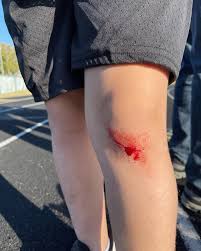
Most of the nurses’ calls are about nosebleeds, which we average about five a week at home. The primary culprit? Wrestling that breaks out in my living room every afternoon from 3 to 8 p.m. But nosebleeds are just the beginning. We’ve also had incidents involving mysterious goose eggs, rope collisions, bee stings, and the full spectrum of scraped knees. In short, all the classic “boy things,” as the medical textbooks no doubt describe them.

In a strange way, I’m almost grateful that these incidents happen at school. When he was younger, I used to worry about taking him out in public, fearing that someone might call Child Protective Services after seeing his collection of bruises. But then my babysitter, having witnessed his Thompson head in action, became my unofficial alibi. Now, with the school nurse meticulously documenting every bump and scrape, I have a veritable archive proving that my child is uniquely qualified to injure himself in ways previously thought impossible.

My son is a marvel of perpetual motion. He arrived seven weeks early—clearly in a hurry—and has been moving at top speed ever since. He is, quite literally, the kid who saved me. After losing our little girl and enduring a rough patch in our marriage, I found myself in a dark place. His arrival was a lifeline, pulling me back into the world. This isn’t something he needs to know right now, but it’s why I look at him with a mixture of joy, gratitude, and mild terror every time he launches himself off the couch.

He also seems to run at a constant boil. Teachers frequently report that he rolls up his pant legs in the dead of winter because he’s “too hot.” He eats like a linebacker preparing for the Super Bowl—constantly, enthusiastically, and with no discernible impact on his weight, which has remained unchanged since 2023. I suspect he may be part hummingbird.

He’s one of the reasons I run. I know he’s proud of me, and I want to keep it that way. I work out and eat right not just for myself, but to show him that this is what you do: you keep moving, you take care of yourself, and you try to outrun the flying soccer balls of life.

I can’t wait to see what the future holds for him. I suspect it will involve a lot of movement, a few more nosebleeds, and maybe a Nobel Prize in physics for discovering new ways to collide with inanimate objects. Until then, I’m just over the moon to be his mama—even if it means keeping the school nurse on speed dial.