
Running from MRI Season: Another Lap Around the Track

Since 2022, I’ve had a standing date with an MRI machine every year—my own personal Groundhog Day, except instead of a rodent predicting the weather, it’s a giant magnet peering into my brain and predicting, well, me. The scans always show the same old stroke souvenirs (thanks for the memories, 2022!), but otherwise, things have been reassuringly uneventful until last week.

This year’s MRI landed on Juneteenth, which, if nothing else, makes for a memorable calendar entry. Normally, I handle my time in “the cage” with the stoicism of a runner at mile 18—uncomfortable, yes, but nothing I can’t power through. But this time, I had a hunch things would be different. Not fear, exactly. More like that feeling you get in the last quarter-mile of a race when you know something’s off with your stride. You’re not sure what, but you know.

A few hours later, the results dropped, and—cue the dramatic music—my hunch was right. White Matter Hyperintensity. Left frontal lobe. The start of Small Vessel Disease—a phrase that hovers ominously, hinting at the possibility of dementia down the road, like those balloon ladies at the back of a marathon, always just behind you, no matter how hard you push. But honestly, I wasn’t surprised. My body has been sending up distress flares for months, and I’ve been logging the symptoms like a runner logs miles:

  • Vision doing its own thing
  • Words playing hide-and-seek in my brain
  • Short-term memory that’s, well, short
  • Blood pressure so low it could limbo under a garden hose (88/56, if you’re keeping score)
  • Insomnia that only Trazodone can tame
  • Mood swings that make Boston’s Heartbreak Hill look like a bunny slope
  • Depression and anxiety, the unwelcome running buddies
  • Heart rate dropping to 49 bpm—elite marathoner numbers, but without the medals
  • Dizzy spells and vision blackouts whenever I stand up (or, you know, attempt yoga)
  • 15 pounds lost in 2 months (if only it were from marathon training)
  • Balance so wobbly, I could be running on cobblestones in Rome

It’s been a slow, sneaky build—like overtraining, but without the endorphin highs. At one point, I was convinced I had early-onset Parkinson’s. I talked to my therapist, journaled about it, and notified not one, not two, but four doctors. The collective medical response? Order another MRI. (Doctors, it turns out, are like race marshals: quick to hand you a cup of water, but not so quick to notice you’re limping.)

Yesterday, my neurologist’s PA emailed me: “No new signs of stroke!”—complete with a cheery smiley face. I suppose that’s meant to be reassuring, but when you’re the one living with the symptoms (and the new MRI findings), it feels a bit like being told, “Great job, you finished the race!” when you know you took a wrong turn at mile 10.

So here I am, left to manage the aftermath. I’m the one who can’t remember which kid I’m yelling for, or why there’s pizza on the wall, or how to explain to my husband that the three-year-old’s culinary experiments are not, in fact, a sign of genius. Losing your train of thought all day is exhausting—like being stuck in an endless training cycle with no taper in sight. No finish line, no medal, just more laps.

And that’s the real question, isn’t it? If you already know what the race result will be, is it worth running? I’m not saying I won’t toe the start line. Runners are stubborn like that. But knowing the suffering ahead, you do wonder: Is it worth it?

Maybe that’s the point. We run not because we know the outcome, but because we don’t. Because every mile, every scan, every day is a chance to surprise ourselves. And sometimes, even when the course is tough and the finish line is uncertain, you just keep running from everything—if only to see what’s around the next bend to scare the hell out of you.

Running from Reality: A Midlife Meander Through the Absurd

Let’s talk about expectations. When you’re knee-high to a grasshopper, do you envision yourself, decades later, as a 42-year-old survivor of both a stroke and the relentless existential dread that comes with being a modern human? Do you foresee a domestic landscape populated by a nine-year-old space expert (who knows more about black holes than I do about, well, anything), a six-year-old bottomless pit of a child (whose digestive system operates with the efficiency of a garbage disposal), a three-year-old dictator (who probably runs a tighter ship than most Fortune 500 CEOs), and a husband whose devotion to wrestling occasionally surpasses even his fondness for his long-suffering wife?

No? Me neither.

Life, as they say, has a way of rearranging the furniture. It presents you with a neatly packed suitcase of dreams and aspirations, then promptly throws it off a speeding train. You’re left standing on the platform, blinking in confusion, surrounded by scattered socks and a crumpled map of the world as you thought it would be.

And so, one finds oneself at an… interesting juncture. Not ungrateful, mind you. Gratitude is a very important thing and I practice it daily. But also not… entirely thrilled. Frankly, some days, the sheer weight of it all—the demands, the responsibilities, the unrelenting cacophony of tiny voices—can feel like trying to swallow a particularly dense and thorny cactus.

This, dear reader, is where the running comes in.

Because when life serves up a generous helping of the unexpected, you have two choices: you either roll over and play dead, or you lace up your sneakers and attempt to outrun the encroaching sense of… something. What that something is, I’m still trying to figure out. Midlife crisis? Existential angst? The lingering effects of neurological trauma? Probably a delightful cocktail of all three, shaken, not stirred.

Now, about that cactus. You could try to stomach it whole and learn to appreciate its unique flavor profile (a flavor that, I suspect, closely resembles despair). Or, you could opt for a slightly more palatable solution. Which is, in my case, a small, round, Lexapro-shaped lifesaver. Remember that thorny cactus? Well, this little pill helps to smooth down the spikes. Not a cure, mind you. More of a… temporary truce.

The reality, as I’m slowly coming to accept, is that some days the chatter in my head resembles a flock of startled parrots engaged in a heated debate about the merits of various brands of birdseed. Other days, it’s more like a swarm of angry bees, buzzing furiously around a nest of anxieties. Saturdays, in particular, can be perilous. With the structure of the workweek stripped away, and the schedule blissfully (or terrifyingly) sparse, there’s simply too much time to think. Too much time to ruminate. Too much time to engage in the delightful pastime of self-loathing.

The medication has quieted the noise, and the relief is palpable. But it’s also… unsettling. I’m calmer. Less anxious. Something I haven’t felt in years. It feels a little like wearing someone else’s skin.

Here’s the kicker: I’m still trying to figure out who “I” am now. The stroke, the medication, the relentless march of time—they’ve all conspired to create a somewhat… unfamiliar version of myself. I don’t quite recognize myself. I haven’t been myself in about three years now, and I’m still trying to figure out where the trail leads. Am I back to myself? Am I a new version? Am I just out here, aimlessly running?

But this, surprisingly, is a happy post. Because in the midst of all this uncertainty, there’s a glimmer of something resembling hope. A sense of relief. The freedom to breathe, even if the air feels a little… different.

And, dear reader, you’re getting to witness it all unfold. As I stumble and fumble my way through this new normal, as I tentatively piece together the fragments of my former self, I’m sharing it all with you. You’re getting the real-time, uncensored, occasionally-slightly-medicated revelation of me. Aren’t you just thrilled? I know I am. Mostly. Well, sometimes. Okay, maybe only on Tuesdays. But still… progress!

Now, if you’ll excuse me, I have a three-year-old dictator to appease. And a five-mile run to “escape” into. Wish me luck. I have a feeling I’m going to need it.

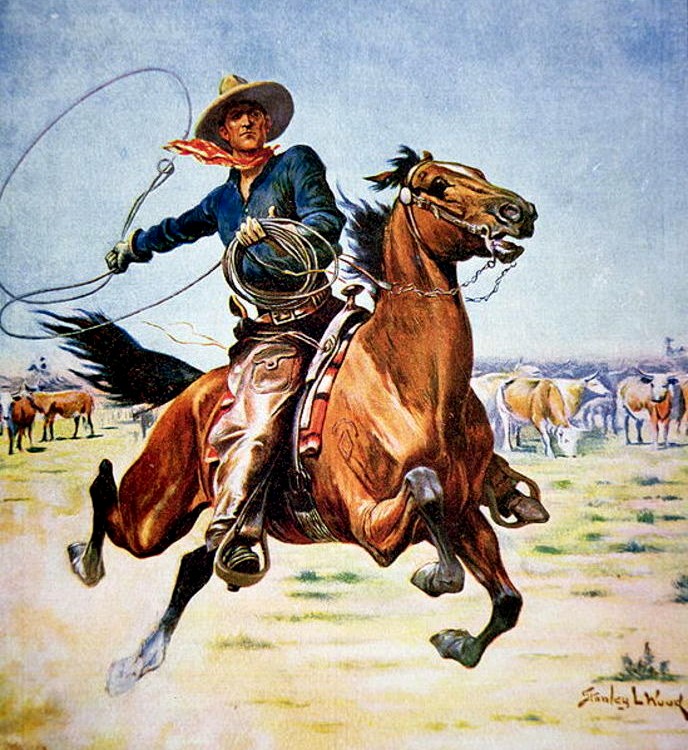
Running Back to the Saddle

In the crisp autumn air of Indianapolis, with leaves crunching underfoot and the promise of adventure hanging thick as morning fog, I found myself standing at the starting line of the Indianapolis Half Marathon. It was October 2023, and I was about to embark on a 13.1-mile journey through the heart of the Hoosier capital, a feat that seemed as improbable as finding a cowboy riding a horse down Broadway in New York City.

You see, dear reader, this wasn’t just any race for me. Oh no, this was my first major foray into the world of competitive shuffling since a rather inconvenient stroke had decided to pop by for an extended stay in my brain. Here I was, a former college athlete who once squatted small cars for breakfast, now questioning whether I could manage a brisk walk to the corner store without keeling over.

But let me tell you about the ingenious decision I made, one that would make even the most seasoned race veteran nod in approval. I splurged on the opportunity to start my day in the hallowed halls of the Indiana State House. Picture it: while other poor souls were huddled outside like penguins in a snowstorm, I was stretching my questionable limbs in the warm embrace of democracy, munching on a breakfast that didn’t come wrapped in tinfoil. It was a stroke of brilliance if you’ll pardon the pun.

As I waddled to the starting line, a mere stone’s throw from my cozy State House sanctuary, I couldn’t help but feel a twinge of panic. Had I trained enough? Was I still the same person who had once pushed out babies with the ease of a vending machine dispensing snacks? The identity crisis loomed larger than the giant timing clock ticking away mercilessly above our heads.

The race began, and to my utter astonishment, I found myself running. Not the graceful gazelle-like strides of my youth, mind you, but a determined shuffle that would make any powerwalker proud. For five glorious miles, I was unstoppable. That is until my right shoe decided it had had enough of this foolishness and came untied.

Now, dear reader, picture if you will, a somewhat disheveled woman bent over a curb, fingers swollen to the size of small sausages, attempting to tie a shoelace. It was a sight so pitiful that a kind stranger took pity and performed the task for me. I briefly considered asking them to carry me the rest of the way, but my pride (what was left of it) wouldn’t allow it.

The next few miles were a blur of monotony, broken only by the occasional cheer from a spectator who had clearly mistaken me for someone else. But as we approached mile 10, something magical happened. We found ourselves running alongside the race’s overachievers – those annoyingly fit individuals who were already finishing. It was both inspiring and mildly infuriating.

As I crossed the finish line, my boys waiting with expressions that were equal parts pride and “can we go home now?”, I wanted to shout from the rooftops about my triumph over adversity. But instead, I settled for an internal victory dance, and the knowledge that I had, indeed, proven something to myself.

In the end, as I hobbled what felt like another half marathon to reach our parked car, I realized that toughness comes in many forms. Sometimes it’s squatting small buildings, and sometimes it’s putting one foot in front of the other when your brain has other ideas. And since that realization has landed me in therapy, well, at least I have plenty to talk about.

Running from my Birthday

Ah, birthdays. Those peculiar annual rituals where we’re expected to celebrate the inexorable march towards our own mortality with cake and forced merriment. For most, it’s a day of joyous reflection and an excuse to indulge in socially acceptable gluttony. For me, it’s become a rather more complicated affair, thanks to a mischievous little cerebrovascular event that decided to gatecrash my party just as I was about to hit the big 3-9.

Picture, if you will, a scene of impending festivity. Balloons at the ready, candles poised for their fiery demise, and a cake so laden with sugar it could send a hummingbird into diabetic shock. But instead of blowing out candles, I found myself blowing bubbles in a hospital bed, my brain having decided to take an impromptu vacation without so much as a postcard.

The next few days passed in a haze of confusion and medical jargon, as if I’d suddenly been dropped into an episode of ER, but with significantly less George Clooney and a lot more bewildered mumbling. By the time I resurfaced, I felt compelled to inform my long-suffering husband that “something was definitely wrong.” I imagine his response was along the lines of, “You don’t say, dear. I thought lying comatose in a hospital was your new hobby.”

Now, birthdays and I have a relationship that’s about as warm and fuzzy as a cactus in a snowstorm. The stroke merely added an extra layer of complexity to our already strained association. It’s as if my birthday has become a sort of morbid anniversary, a day when I’m supposed to simultaneously celebrate my continued existence and mourn the person I used to be. It’s like trying to have a party in a funhouse mirror maze – disorienting, slightly nauseating, and with an unsettling sense that you’re not quite who you thought you were.

I’m well aware that my attitude towards this annual milestone is about as cheerful as a wet weekend in Miami. But when you’ve spent over a year cataloging your deficits like some sort of neurological accountant, it’s hard to muster enthusiasm for party hats and noisemakers.

And let’s not forget the baby – my third little bundle of joy, who had the misfortune of being born just 6 weeks before his mother decided to audition for a medical drama. I missed out on all those precious newborn moments – the sleepless nights, the endless diaper changes, the spit-up on every clean shirt. It’s enough to make a person weep, or at least wish for a time machine and a neurologist on speed dial.

So here I am, forever 39, stuck in a perpetual loop of birthday ambivalence. It’s a day that serves as a stark reminder of what was lost, what was gained, and the peculiar journey of rediscovering oneself post-stroke. But who knows? Perhaps one day I’ll embrace the occasion with the enthusiasm of a labrador at a tennis ball factory. Until then, I’ll be here, blowing out candles and silently thanking my stubborn brain for sticking around for another year of this bizarre adventure we call life.