Running from MRI Season: Another Lap Around the Track

Since 2022, I’ve had a standing date with an MRI machine every year—my own personal Groundhog Day, except instead of a rodent predicting the weather, it’s a giant magnet peering into my brain and predicting, well, me. The scans always show the same old stroke souvenirs (thanks for the memories, 2022!), but otherwise, things have been reassuringly uneventful until last week.

This year’s MRI landed on Juneteenth, which, if nothing else, makes for a memorable calendar entry. Normally, I handle my time in “the cage” with the stoicism of a runner at mile 18—uncomfortable, yes, but nothing I can’t power through. But this time, I had a hunch things would be different. Not fear, exactly. More like that feeling you get in the last quarter-mile of a race when you know something’s off with your stride. You’re not sure what, but you know.

A few hours later, the results dropped, and—cue the dramatic music—my hunch was right. White Matter Hyperintensity. Left frontal lobe. The start of Small Vessel Disease—a phrase that hovers ominously, hinting at the possibility of dementia down the road, like those balloon ladies at the back of a marathon, always just behind you, no matter how hard you push. But honestly, I wasn’t surprised. My body has been sending up distress flares for months, and I’ve been logging the symptoms like a runner logs miles:

  • Vision doing its own thing
  • Words playing hide-and-seek in my brain
  • Short-term memory that’s, well, short
  • Blood pressure so low it could limbo under a garden hose (88/56, if you’re keeping score)
  • Insomnia that only Trazodone can tame
  • Mood swings that make Boston’s Heartbreak Hill look like a bunny slope
  • Depression and anxiety, the unwelcome running buddies
  • Heart rate dropping to 49 bpm—elite marathoner numbers, but without the medals
  • Dizzy spells and vision blackouts whenever I stand up (or, you know, attempt yoga)
  • 15 pounds lost in 2 months (if only it were from marathon training)
  • Balance so wobbly, I could be running on cobblestones in Rome

It’s been a slow, sneaky build—like overtraining, but without the endorphin highs. At one point, I was convinced I had early-onset Parkinson’s. I talked to my therapist, journaled about it, and notified not one, not two, but four doctors. The collective medical response? Order another MRI. (Doctors, it turns out, are like race marshals: quick to hand you a cup of water, but not so quick to notice you’re limping.)

Yesterday, my neurologist’s PA emailed me: “No new signs of stroke!”—complete with a cheery smiley face. I suppose that’s meant to be reassuring, but when you’re the one living with the symptoms (and the new MRI findings), it feels a bit like being told, “Great job, you finished the race!” when you know you took a wrong turn at mile 10.

So here I am, left to manage the aftermath. I’m the one who can’t remember which kid I’m yelling for, or why there’s pizza on the wall, or how to explain to my husband that the three-year-old’s culinary experiments are not, in fact, a sign of genius. Losing your train of thought all day is exhausting—like being stuck in an endless training cycle with no taper in sight. No finish line, no medal, just more laps.

And that’s the real question, isn’t it? If you already know what the race result will be, is it worth running? I’m not saying I won’t toe the start line. Runners are stubborn like that. But knowing the suffering ahead, you do wonder: Is it worth it?

Maybe that’s the point. We run not because we know the outcome, but because we don’t. Because every mile, every scan, every day is a chance to surprise ourselves. And sometimes, even when the course is tough and the finish line is uncertain, you just keep running from everything—if only to see what’s around the next bend to scare the hell out of you.

Running from Compression Socks

Let’s begin, as Bill Bryson might, with a confession: I have never been particularly good at moderation. This is a story about legs, socks, and the peculiar lengths to which one will go to avoid being ordinary—told with the sort of self-effacing candor that would make even Len Testa pause mid-spreadsheet.

In college, I played volleyball for four years. Not the “I’ll just jog around and maybe spike a ball” kind of volleyball, but the “I would like my lower legs to feel as if they might detonate at any moment” variety. My post-game shuffle was less “athlete’s swagger” and more “recently escaped from a bear trap.” Eventually, a kindly doctor at the Cleveland Clinic diagnosed me with Compartment Syndrome, which, for the uninitiated, is a condition where the pressure in your leg compartments (there are four, in case you’re keeping score) is supposed to be a modest 1-10. Mine, ever the overachiever, clocked in at a robust 32.

Surgery ensued. For a while, my legs behaved, but my final year was spent rationing my steps like a Victorian miser with his last candle—saving every ounce of leg function for game time. After graduation, my legs, apparently satisfied with their dramatic performance, retired from pain altogether. I have not heard a peep from them since.

Fast forward three years, circa 2008. I decided to start running. This was a calculated risk, since I was fairly certain my legs would recall their old grievances and revolt. But as it turns out, it wasn’t the running that bothered them—it was the jumping. Also, possibly the squatting of 225 pounds and leg pressing 550, but who’s counting? (Me. I was counting. Repeatedly. Because, as you will see, I have a pathological need to prove my toughness.)

Since then, I’ve collected an assortment of race bibs: countless 5Ks, two 10Ks, seven half marathons, and four full marathons. My legs, stoic as ever, have remained silent. I am, as the kids say, “blessed.”

Now, about socks. When I first entered the running world, I noticed a proliferation of tall socks. Not just any socks, but socks that looked like they’d been engineered by NASA and sponsored by a pharmaceutical company. Compression socks, they called them. Supposedly, they reduced muscle vibration and improved blood flow. I, of course, scoffed. I didn’t even wear tall socks for volleyball, and that was the style. Compression socks, I decided, were for the faint of heart, the weak of calf, the people who did not squat 225 pounds for fun.

I have a toxic trait: I must do everything the hard way, just to prove I am tougher than, well, you. Natural childbirth, three times, no drugs? Check. Running for nearly two decades without compression socks? Double check. My “toughness klout” was off the charts.

Until today.

A recent visit to the neurologist (because apparently, one cannot simply coast on bravado forever) resulted in a prescription not for medication, but for hydration, more salt, and—horror of horrors—compression socks. Apparently, my blood pressure has decided to set up camp at 88/53, which is the circulatory equivalent of a sloth on a hammock.

So here I am, scrolling through Amazon, contemplating which shade of compression sock best complements existential dread. My toughness score? Plummeting. My fashion sense? Questionable at best. How, I wonder, does one make compression socks look good in the summer? If you have ideas, please share. Perhaps this is the nudge I need to start running again—this time with a tight, textured addition to my ensemble.

Because if there’s anything I’ve learned, it’s that you can run from a lot of things. But you can’t outrun the need for a good pair of socks.

Running from the Indestructable Seven-Year-Old

There are certain inevitabilities in life: death, taxes, and the school nurse calling me at least three times a week. It’s become so routine that I half expect her to start our conversations with, “Hi, it’s me again,” as if we’re old friends catching up over coffee rather than discussing my seven-year-old son’s latest misadventure.

The calls always come around lunchtime, which is no coincidence. Recess follows lunch, and my son’s face—blessed with the classic Thompson head, which is, let’s be honest, a bit larger than the industry standard—seems to act as a homing beacon for any airborne object within a fifty-foot radius. If there’s a stray basketball, a rogue frisbee, or a meteorite hurtling toward Earth, you can bet it will make a beeline for his forehead.

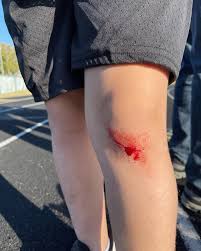
Most of the nurses’ calls are about nosebleeds, which we average about five a week at home. The primary culprit? Wrestling that breaks out in my living room every afternoon from 3 to 8 p.m. But nosebleeds are just the beginning. We’ve also had incidents involving mysterious goose eggs, rope collisions, bee stings, and the full spectrum of scraped knees. In short, all the classic “boy things,” as the medical textbooks no doubt describe them.

In a strange way, I’m almost grateful that these incidents happen at school. When he was younger, I used to worry about taking him out in public, fearing that someone might call Child Protective Services after seeing his collection of bruises. But then my babysitter, having witnessed his Thompson head in action, became my unofficial alibi. Now, with the school nurse meticulously documenting every bump and scrape, I have a veritable archive proving that my child is uniquely qualified to injure himself in ways previously thought impossible.

My son is a marvel of perpetual motion. He arrived seven weeks early—clearly in a hurry—and has been moving at top speed ever since. He is, quite literally, the kid who saved me. After losing our little girl and enduring a rough patch in our marriage, I found myself in a dark place. His arrival was a lifeline, pulling me back into the world. This isn’t something he needs to know right now, but it’s why I look at him with a mixture of joy, gratitude, and mild terror every time he launches himself off the couch.

He also seems to run at a constant boil. Teachers frequently report that he rolls up his pant legs in the dead of winter because he’s “too hot.” He eats like a linebacker preparing for the Super Bowl—constantly, enthusiastically, and with no discernible impact on his weight, which has remained unchanged since 2023. I suspect he may be part hummingbird.

He’s one of the reasons I run. I know he’s proud of me, and I want to keep it that way. I work out and eat right not just for myself, but to show him that this is what you do: you keep moving, you take care of yourself, and you try to outrun the flying soccer balls of life.

I can’t wait to see what the future holds for him. I suspect it will involve a lot of movement, a few more nosebleeds, and maybe a Nobel Prize in physics for discovering new ways to collide with inanimate objects. Until then, I’m just over the moon to be his mama—even if it means keeping the school nurse on speed dial.

Running from Walking: A Staggering Return

Space Mountain Lighted Tunnel- Property of Joe Penniston

Let’s be honest: calling this a “running blog” is a bit like calling a toaster a “bread spa.” Yes, the original idea was to chronicle my athletic exploits, but if you’ve been around for more than five minutes, you know it’s mostly a catalogue of my minor health crises, parental misadventures, and the occasional existential whinge. Still, that was always the point. This is my corner of the internet, and if I want to use it to document my slow-motion journey back to fitness (and sanity), so be it. Besides, writing is cheaper than therapy and, crucially, doesn’t require insurance approval.

Tomorrow marks the start of my latest “running” adventure. I say “running” in the same way one might describe a sloth’s commute as “parkour.” The cardiologist has finally given me the green light to exercise, and I am positively itching to get started. There is, however, a catch: thanks to my heart medication, my blood pressure and heart rate now behave with the wild unpredictability of a British queue-steady, polite, and not prone to sudden excitement. So, running is out. Walking is in. Very, very slow walking.

To be clear, I’m not talking about the brisk, purposeful stride of someone late for a train. No, my current pace is more “lost tourist at EPCOT after three churros.” My stamina, as previously discussed, is somewhere between “elderly tortoise” and “houseplant.” But everyone starts somewhere. This is less “couch to 5K” and more “couch to mailbox and back, possibly with a nap.” Still, as any seasoned training plan will tell you, progress is not linear. Sometimes you ebb, sometimes you flow. Right now, I am ebbing so hard I might be mistaken for a receding tide.

Complicating matters, I am also attempting to plan a Walt Disney World weekend for my son’s 10th birthday. For the uninitiated, a day at Disney is less a vacation and more an endurance event. You will walk 10-12 miles a day, minimum, most of it spent dodging strollers and wondering if you should have taken out a second mortgage for a Dole Whip. If I don’t get my stamina up, I’ll be lucky to make it past the first popcorn cart on Main Street, USA.

The good news is that my family loves the outdoors. We hike, we walk, we play. My kids are at that magical age where they still think I’m fun and not just a mobile wallet with opinions. I’m grateful for the chance to join in this summer, even if my role is less “intrepid leader” and more “caboose with snacks.”

So, what’s the moral here? I’m looking ahead, not back. The tunnel isn’t dark; there’s light all the way through, and I’m confident I’ll be back on the running side before long. For now, I’ll take it one slow, meandering step at a time. After all, every journey starts with a single step-even if that step is followed by a sit-down and a long, thoughtful sigh.

In the immortal words of all good writers (and exasperated parents everywhere): onward, slowly, and with snacks.

Running from Dinner

Being a mom is, to put it mildly, like being the CEO of a company where the employees are perpetually confused, demanding, and prone to losing their shoes. It’s not that being a dad isn’t hard—dads have their own set of challenges—but moms are expected to know everything. We’re the keepers of the appointments, the grocery lists, and the precise location of every sock in the house. We’re also tasked with feeding everyone dinner every single day (as if hunger weren’t enough of a problem without adding meal planning to it) and ensuring there’s always underwear for the foreseeable future. Honestly, it’s a wonder we don’t just throw in the towel and declare cereal as an acceptable dinner option every night. Thank goodness my kids like cereal.

And yet, my responsibilities don’t stop with the kids. Oh no, I also worry about my husband’s stuff. Did his co-workers like him today? Does his boss think he’s doing a good job? Did he remember his coffee mug this morning? These are not things I need to worry about, but I do anyway because apparently my brain has decided it’s a good idea to run on overdrive at all times. The result? Exhaustion. Most days I’m so drained I can fall asleep before my kids do—though, admittedly, the stroke hasn’t helped matters in that department. By 8 p.m., I’m done for, and I’ve stopped pretending otherwise.

As if all that weren’t enough, volleyball has added a new layer of mental gymnastics to my life. Coaching requires brainpower—lots of it—and that makes my already pronounced exhaustion even more pronounced. It’s as though life decided to hand me a wrench and then gleefully watch me try to juggle it along with everything else.

And can we talk about dinner for a moment? Who decided moms need to be responsible for answering all food-related questions? “What’s for dinner?” “Do we have ketchup?” “Why don’t we have ketchup?” How am I supposed to remember if there’s another bottle in the pantry when you inhaled the last one like it was oxygen? The whole thing is absurd.

This is why running is my ultimate sanctuary. It allows me to escape the chaotic landscape of my mind—a realm cluttered with endless lists, nagging reminders, and mental post-it notes that seem to multiply like rabbits on caffeine. For a blissful stretch of time, I get to silence the cacophony of thoughts and simply be. It’s a liberating experience that reminds me I still possess a semblance of sanity.

And when I return home, something magical happens. The tasks that once loomed like Mount Everest now seem like mere speed bumps. Running is hard, yes, but it’s a reminder that if I can conquer the road, I can conquer anything life throws at me. Plus, it’s the ultimate multitasking tool: I can listen to podcasts, push kids in strollers, run with the dog, and rack up my steps all at once. It’s efficiency at its finest—a symphony of productivity and peace.

So here’s my conclusion: running is not just a survival tool for moms; it’s a lifeline. It’s not just exercise; it’s therapy, a sanity-saver, and a reminder that we’re capable of more than we ever thought possible. Vote for me in 2028, and I’ll make sure cereal dinners and mandatory running become the pillars of a new national wellness policy. Together, we can create a world where moms can thrive, one run at a time!

Running from the Schedule

Anyone who has ever taken up running knows that a training plan has the uncanny ability to commandeer your calendar with the precision of a military operation. Suddenly, your weeks are peppered with 40-minute cross-training sessions, midweek 3-milers, and those dreaded Sunday long runs. It’s a relentless march of miles and minutes that feels both necessary and slightly masochistic. The irony, of course, is that while sticking to the schedule is meant to prepare you for race day, it can also leave you feeling like you’ve aged a decade in the process.

Take, for example, one particularly ill-fated 14-mile long run I endured. It was one of those runs where everything that could go wrong did—legs like lead, lungs on strike, and a general sense that the universe was conspiring against me. For three weeks afterward, I agonized over it, convinced that my marathon (still months away) was doomed because of this single bad outing. Spoiler alert: it wasn’t. But try telling that to my overthinking brain at the time.

Of course, running isn’t the only thing vying for space on my calendar these days. No, the real chaos begins when you add in my children’s baseball practices (two per kid per week), their games (sometimes three per kid per week), my volleyball coaching schedule (up to four games a week plus practices), dentist appointments, and—oh yes—a looming heart surgery. Somewhere in this maelstrom of activity is a vague hope of eating dinner, doing laundry, and remembering which parent needs the van for chauffeuring duties. It’s less “organized chaos” and more “chaos with occasional bursts of organization.”

Preparation, I’ve learned, is key to surviving this whirlwind. Theoretically, anyway. In practice, I’m hit or miss. Some nights I manage to do things my future self will thank me for—like setting up the coffee maker so all it needs is a flick of the switch in the morning. Other nights I collapse into bed with the vague hope that tomorrow will sort itself out (it rarely does).

With my April 25th surgery looming ever closer, I’m trying to lean into this whole “being prepared” thing more than usual. My post-surgery self will undoubtedly appreciate it—and so will my husband, mom, and aunt, who are poised to pick up the slack if I don’t get my act together. They’re lovely people but probably not thrilled at the prospect of navigating the fallout from my lack of planning.

In the end, though, life—like running—isn’t about perfection. It’s about putting one foot in front of the other and hoping you don’t trip over your own shoelaces along the way. And if all else fails? There’s always coffee waiting for me in the morning… assuming I remembered to set it up.

Running from the Weather

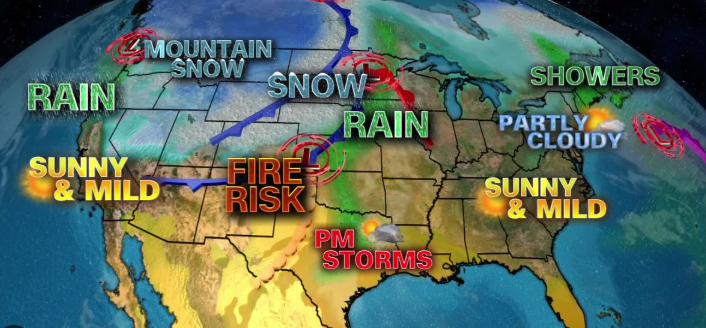
Spring has arrived—or so it claims. Here in the Midwest, spring is less of a season and more of an elaborate prank. It starts with what I like to call “false spring,” a tantalizing glimpse of warmth and sunshine that lasts just long enough to trick you into packing away your winter coat. Then comes “fake spring,” followed by “pseudo-spring,” and finally, the inevitable return of winter—twice. Just when you think you’ve survived the last winter, another one sneaks in like an uninvited guest at a party. And let’s not forget the grand finale: construction season. But that’s a rant for another day.

The weather here is so indecisive it could run for office. One minute it’s 77 degrees and sunny, and two hours later it’s snowing sideways. It’s like living inside a weather app that can’t make up its mind. For runners, this is nothing short of a nightmare. Dressing for an outdoor run becomes an exercise in meteorological guesswork: hand warmers and a sock hat? Or shorts and a tank top? Either way, you’re probably wrong.

Races this time of year are no better. You start bundled up like an arctic explorer but occasionally get faked out by a rogue warm day that leaves you sweating buckets by mile five. By December or January, though, it’s time to flee south for races—because while Ohio may have bipolar weather, at least Florida has the decency to pick a season and stick with it (mostly).

Take my marathon experiences in Florida as proof that even “consistent” weather can be wildly unpredictable:

  • January 2010: The Coldest Marathon Ever™. My hair literally froze during the race—it was 32 degrees at the start, which was fine because I’d trained in similar conditions. But by mile 20, my knee gave out, forcing me to walk half a mile. The cold was so brutal I had to start running again just to avoid freezing solid like some tragic runner-shaped ice sculpture. It took me two days to thaw out properly.
  • January 2012: The Temperature That Never Was. This race felt like running inside a vacuum—there was no discernible temperature at all, just an eerie neutrality that left me wondering if I’d accidentally entered some kind of weatherless dimension.
  • January 2014: Heat Advisories Galore. In my infinite wisdom, I wore all black and tights for this race—a decision that seemed fine until the temperature hit 90 degrees by hour five (yes, I’m slow). By then, it was hotter than blue blazes, and I spent the last few miles questioning every life choice that had led me to this moment.

So no, it’s not just Ohio—weather chaos can strike anywhere. My advice? Always have gloves handy. Being cold is infinitely worse than being too warm (though I say this as someone on blood thinners, so take my bias with a grain of salt). Overdressing beats underdressing every time—unless you’re running in 90-degree heat while wearing tights, but let’s not dwell on my poor judgment.

Spring may be unreliable, but running through its ups and downs teaches you resilience. After all, if we can survive spring weather every year without losing our minds entirely, we can survive anything!

Running from April Fools

I am, it seems, eternally surrounded by boys. Not just metaphorically, mind you—literally. They’re everywhere. I have three sons of my own, a husband who occasionally behaves like a fourth, and now, as if the universe thought I needed more chaos in my life, I’m coaching a boys’ volleyball team this spring. It’s as though some cosmic force has decided that my life’s soundtrack should be an endless loop of the word poop. Truly, the frequency with which I hear that word on any given day is enough to make even the most patient saint consider early retirement.

But here’s the thing about boys: they’re surprisingly easy to manage once you crack the code. Sure, they’re loud, messy, and occasionally baffling creatures, but they’re also refreshingly straightforward. Over the years, I’ve made a few observations about living in this testosterone-fueled circus. Consider this your guide to boy-wrangling:

1. They’re Predictable (Mostly)

Boys don’t tend to be particularly devious. They’re not plotting elaborate schemes or engaging in Machiavellian mind games. If you know where the dangers lie—sharp corners, precariously stacked objects, or that one kid who thinks he’s invincible—you can usually keep them in one piece. It’s less about strategy and more about constant vigilance, like living with a pack of hyperactive puppies.

2. The Five-Second Rule is Irrelevant

If it’s edible (or even vaguely resembles food), they’ll eat it. Dropped it on the floor? No problem. Found it under the couch? Even better! Boys have stomachs of steel and appetites that defy logic. I once saw one of mine eat half a sandwich he’d forgotten in his backpack for two days without so much as a second thought—or a stomachache.

3. They Speak First, Think Later

If there’s a filter between their brains and their mouths, it’s either malfunctioning or nonexistent. This habit is particularly grating to any girl within earshot, who will inevitably roll her eyes and mutter something about how boys are hopeless. And honestly? She’s not wrong.

4. Rocks Are Their Currency

I don’t know how or why this happens, but boys collect rocks as though they’re precious gemstones. You’ll find them everywhere—backpacks, pockets, jars, under couch cushions. Sometimes they’re special because they’re “shiny” or “cool,” but more often than not, they’re just regular old rocks that somehow hold immense sentimental value.

5. Practical Jokes Are Their Love Language

In my house, pranks are as essential as oxygen. As I sit here writing this from work, there is packing tape stretched across every doorway in my home—a delightful surprise left by my little April Fools enthusiasts. My mom has already reported that one of them walked straight into it (the irony is not lost on me). By the time I get home at 5:30 p.m., I fully expect to find at least one child tangled in tape like a fly caught in a spiderweb. This is my life.

And yet, despite the chaos—the noise, the messes, the endless supply of rocks—I wouldn’t trade it for anything. Life with boys is unpredictable and exhausting but also wildly entertaining. They keep me on my toes and remind me daily that laughter really is the best medicine… even if it’s occasionally at my own expense.

So here’s to boys: messy, lovable tornadoes of energy who will forever keep me guessing—and forever keep me laughing (even if it’s through gritted teeth).

This, folks, is why we run. I realize that April Fools’ Day is a metaphor for life itself—full of unexpected twists and turns, some humorous, others not so much. But running gives me the clarity to navigate these challenges with a bit more grace and a lot more humor. So, on this April Fools’ Day, I’ll keep running—both from the pranks and towards a clearer mind. After all, this is why we run: to find our footing in a world that’s always trying to trip us up.

Running from Reality: A Midlife Meander Through the Absurd

Let’s talk about expectations. When you’re knee-high to a grasshopper, do you envision yourself, decades later, as a 42-year-old survivor of both a stroke and the relentless existential dread that comes with being a modern human? Do you foresee a domestic landscape populated by a nine-year-old space expert (who knows more about black holes than I do about, well, anything), a six-year-old bottomless pit of a child (whose digestive system operates with the efficiency of a garbage disposal), a three-year-old dictator (who probably runs a tighter ship than most Fortune 500 CEOs), and a husband whose devotion to wrestling occasionally surpasses even his fondness for his long-suffering wife?

No? Me neither.

Life, as they say, has a way of rearranging the furniture. It presents you with a neatly packed suitcase of dreams and aspirations, then promptly throws it off a speeding train. You’re left standing on the platform, blinking in confusion, surrounded by scattered socks and a crumpled map of the world as you thought it would be.

And so, one finds oneself at an… interesting juncture. Not ungrateful, mind you. Gratitude is a very important thing and I practice it daily. But also not… entirely thrilled. Frankly, some days, the sheer weight of it all—the demands, the responsibilities, the unrelenting cacophony of tiny voices—can feel like trying to swallow a particularly dense and thorny cactus.

This, dear reader, is where the running comes in.

Because when life serves up a generous helping of the unexpected, you have two choices: you either roll over and play dead, or you lace up your sneakers and attempt to outrun the encroaching sense of… something. What that something is, I’m still trying to figure out. Midlife crisis? Existential angst? The lingering effects of neurological trauma? Probably a delightful cocktail of all three, shaken, not stirred.

Now, about that cactus. You could try to stomach it whole and learn to appreciate its unique flavor profile (a flavor that, I suspect, closely resembles despair). Or, you could opt for a slightly more palatable solution. Which is, in my case, a small, round, Lexapro-shaped lifesaver. Remember that thorny cactus? Well, this little pill helps to smooth down the spikes. Not a cure, mind you. More of a… temporary truce.

The reality, as I’m slowly coming to accept, is that some days the chatter in my head resembles a flock of startled parrots engaged in a heated debate about the merits of various brands of birdseed. Other days, it’s more like a swarm of angry bees, buzzing furiously around a nest of anxieties. Saturdays, in particular, can be perilous. With the structure of the workweek stripped away, and the schedule blissfully (or terrifyingly) sparse, there’s simply too much time to think. Too much time to ruminate. Too much time to engage in the delightful pastime of self-loathing.

The medication has quieted the noise, and the relief is palpable. But it’s also… unsettling. I’m calmer. Less anxious. Something I haven’t felt in years. It feels a little like wearing someone else’s skin.

Here’s the kicker: I’m still trying to figure out who “I” am now. The stroke, the medication, the relentless march of time—they’ve all conspired to create a somewhat… unfamiliar version of myself. I don’t quite recognize myself. I haven’t been myself in about three years now, and I’m still trying to figure out where the trail leads. Am I back to myself? Am I a new version? Am I just out here, aimlessly running?

But this, surprisingly, is a happy post. Because in the midst of all this uncertainty, there’s a glimmer of something resembling hope. A sense of relief. The freedom to breathe, even if the air feels a little… different.

And, dear reader, you’re getting to witness it all unfold. As I stumble and fumble my way through this new normal, as I tentatively piece together the fragments of my former self, I’m sharing it all with you. You’re getting the real-time, uncensored, occasionally-slightly-medicated revelation of me. Aren’t you just thrilled? I know I am. Mostly. Well, sometimes. Okay, maybe only on Tuesdays. But still… progress!

Now, if you’ll excuse me, I have a three-year-old dictator to appease. And a five-mile run to “escape” into. Wish me luck. I have a feeling I’m going to need it.

Running Back to the Saddle

In the crisp autumn air of Indianapolis, with leaves crunching underfoot and the promise of adventure hanging thick as morning fog, I found myself standing at the starting line of the Indianapolis Half Marathon. It was October 2023, and I was about to embark on a 13.1-mile journey through the heart of the Hoosier capital, a feat that seemed as improbable as finding a cowboy riding a horse down Broadway in New York City.

You see, dear reader, this wasn’t just any race for me. Oh no, this was my first major foray into the world of competitive shuffling since a rather inconvenient stroke had decided to pop by for an extended stay in my brain. Here I was, a former college athlete who once squatted small cars for breakfast, now questioning whether I could manage a brisk walk to the corner store without keeling over.

But let me tell you about the ingenious decision I made, one that would make even the most seasoned race veteran nod in approval. I splurged on the opportunity to start my day in the hallowed halls of the Indiana State House. Picture it: while other poor souls were huddled outside like penguins in a snowstorm, I was stretching my questionable limbs in the warm embrace of democracy, munching on a breakfast that didn’t come wrapped in tinfoil. It was a stroke of brilliance if you’ll pardon the pun.

As I waddled to the starting line, a mere stone’s throw from my cozy State House sanctuary, I couldn’t help but feel a twinge of panic. Had I trained enough? Was I still the same person who had once pushed out babies with the ease of a vending machine dispensing snacks? The identity crisis loomed larger than the giant timing clock ticking away mercilessly above our heads.

The race began, and to my utter astonishment, I found myself running. Not the graceful gazelle-like strides of my youth, mind you, but a determined shuffle that would make any powerwalker proud. For five glorious miles, I was unstoppable. That is until my right shoe decided it had had enough of this foolishness and came untied.

Now, dear reader, picture if you will, a somewhat disheveled woman bent over a curb, fingers swollen to the size of small sausages, attempting to tie a shoelace. It was a sight so pitiful that a kind stranger took pity and performed the task for me. I briefly considered asking them to carry me the rest of the way, but my pride (what was left of it) wouldn’t allow it.

The next few miles were a blur of monotony, broken only by the occasional cheer from a spectator who had clearly mistaken me for someone else. But as we approached mile 10, something magical happened. We found ourselves running alongside the race’s overachievers – those annoyingly fit individuals who were already finishing. It was both inspiring and mildly infuriating.

As I crossed the finish line, my boys waiting with expressions that were equal parts pride and “can we go home now?”, I wanted to shout from the rooftops about my triumph over adversity. But instead, I settled for an internal victory dance, and the knowledge that I had, indeed, proven something to myself.

In the end, as I hobbled what felt like another half marathon to reach our parked car, I realized that toughness comes in many forms. Sometimes it’s squatting small buildings, and sometimes it’s putting one foot in front of the other when your brain has other ideas. And since that realization has landed me in therapy, well, at least I have plenty to talk about.