Running from 6-7

In a world where you can be anything, be kind—until they say “6-7,” and then, well, all bets are off. That’s my new motto, etched into my boy-mom soul with the same grim permanence as a Sharpie stain on a couch cushion. You know the original saying, the one that sounds like it was dreamed up by someone whose biggest household crisis was a slightly wilted ficus? Mine’s been battle-tested in the trenches of a home where survival sometimes feels like the main event.

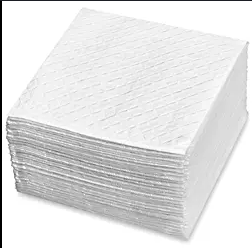
Picture this: I’m in the thick of what I call the “keeping them alive” phase of parenting three boys—Cub, Oz, and Wynn, my little whirlwinds of testosterone and poor impulse control. It’s not hyperbole. These kids have elevated “6-7” (you know, that endlessly clever knockoff of the world’s dumbest joke) to a kind of tribal chant. Say it once? Adorable. Twice? Tolerable. By the 47th time before breakfast, I’m wondering if the neighbors would hear a scream or just assume it’s the dog again. Being a boy mom isn’t for the faint of heart; it’s for those who’ve stared down a fart joke epidemic and lived to tell the tale. Poop? Fart? Endless variations on bodily functions? I’ve banned those words so often I sound like a malfunctioning parrot: “Quit saying it! Napkin! Napkin exists for a reason!”

And don’t get me started on selective hearing. You can deliver a State of the Union address about bedtime, and it bounces off them like rain on a raincoat—yet whisper “ice cream” from the next room, and they’re there faster than a Disney Lightning Lane Premier Pass holder. Dinner tables? Forget Norman Rockwell; ours is a spill zone of biblical proportions. Ketchup arcing through the air like a poorly aimed missile, milk pooling mysteriously under chairs—it’s inevitable, like taxes or that one sock vanishing in the dryer. The shirts? Always, always stained, not from heroic spills but from the casual genius of wiping grubby hands right across the chest, napkin be damned. I’ve done laundry loads that could fill a Laundromat, each one a testament to why paper towels were invented.

Then there’s the trail of abandoned gear—water bottles sprouting like mushrooms in every corner of town, jackets draped over bleachers from wrestling meets to soccer fields as if we’re auditioning for a lost-and-found world record. We’ve left behind more Owalas than a hydration influencer. It’s chaos, pure and operatic, the kind that would send a lesser soul fleeing for the hills. But here’s the magic: amid the “6-7” choruses and the perpetual crumbs, there’s this ferocious joy in it. These boys are my tornadoes, my glorious messes, and somehow, in the eye of the storm, I wouldn’t trade a single stained shirt for all the quiet in the world. Kind until 6-7 hits critical mass—then mama roars. Be kind out there, friends. Or at least napkin-adjacent.

Running from Elves

There are holiday traditions no one asked for and yet, like Aunt Linda’s fruitcake, they appear every year anyway. The weight gain, the mandatory family gatherings, the office party with that one co-worker who treats the mistletoe like a binding legal contract. But towering above them all, in a tiny polyester outfit, is the most dreaded tradition of all: the Elf on the Shelf.

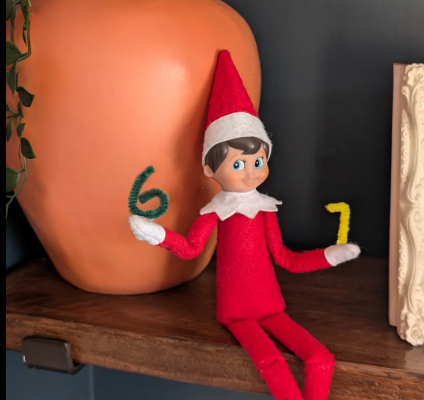
This is the year the elf went from “whimsically impish” to “kid-sized federal parole officer.” I have had it up to my eyeballs with this smug little narc. At one point, he went missing for two days, which sounds dramatic until you realize he was just hitchhiking to work in my backpack, because I was too exhausted to stage yet another whimsical overnight scene involving dental floss, flour, and a crime-scene-level cleanup.

Christmas really wrung me out this year. I flirted with the idea of putting the tree up before Thanksgiving, but only in the same way people say they “might run a marathon someday” while eating nachos. By mid-December, the decorations, the gifts for co-workers, the gifts for children and extended family, the holiday baking, and the festive obligation to appear merry at all times all merged into one long, glitter-covered to-do list that I trudged through like a mall Santa on December 24th.

As of today, December 26th, the tree is coming down, the lights are going back into their natural tangled state, and every piece of decor is being evicted to the attic until further notice. Less stuff, less visual noise, fewer things silently screaming for attention from every flat surface. Overstimulation is my default setting these days; between the stroke fallout and regular life, my brain processes “holiday cheer” about as well as a dial-up modem processes streaming video, and last night it all bottlenecked into an ugly, paralyzing cry on the couch.

So here’s the moral, from one frazzled human to the world: be kind to your mom. All of this holiday magic is powered by a tired person who is probably one Elf misstep away from a nervous breakdown. Be kind to everyone, really, because even if nothing “big” is going wrong, the endless pressure of “all the things” can be enough to send someone sliding into the new year held together with tape, tinsel, and a questionable amount of peppermint mocha.

Running from Homework

I am raising a seven-year-old liar. At least, that’s what it feels like. Between the nights spent at the hospital with my mother—which stretched endlessly past eight o’clock—and juggling what should be the simple act of parenting, I discovered last week was, in every sense, a total wash.

I’d been assuming my husband was heroically managing the usual domestic parade of dishes, dinners, and homework. Reasonable, right? I should’ve known better.

It all came unraveling yesterday morning. Trying to look like the archetype of attentive motherhood, I pulled out Oz’s school folder—a thick bundle of papers and promises—and, harried and late for work, I deposited it on the couch with lofty intentions of review come evening.

Evening arrived with the sorts of surprises mothers dread. Eight homework assignments? Not one completed? The embarrassment was real and immediate. An apology email swiftly dispatched to the teacher affirmed my commitment to better vigilance.

But the real kicker came at 8:45 p.m., following football practice and a pit stop at the hospital. Forty pages—yes, forty—of untouched math lay glaring at me from his book. Forty! Bewilderment quickly morphed into quiet fury. Was it the seven-year-old, or perhaps the 46-year-old husband who had let us down?

So here I am, recalibrating our life’s schedule to accommodate this newfound mountain of homework. I’ve searched for a mantra to soothe my frazzled soul. It boils down to this: a woman’s work is never done, and if you want something done right, you must do it yourself.

The inevitable conclusion? I’ll be relearning second grade every night for the foreseeable future.

Running from Labor Day

September, already?

Honestly, I don’t know how we got here. Somewhere between Memorial Day and Labor Day, time slipped out the back door without so much as a goodbye. One moment I was dutifully buying sunscreen and popsicles, and the next thing I know, we’re knee-deep in sharpened pencils, lopsided backpacks, and the collapse of all illusions that summer still has any life left in it.

Labor Day, for us, was extravagantly uneventful. We made no plans—unless you consider “trying to stop the children from recreating scenes out of a medieval torture manual in the living room” to be plans. Which, in fairness, it probably is. My children have acquired a new pastime: exacting as much physical and emotional damage on one another as possible, all before noon. The soundtrack to this, of course, is a relentless chorus of shrieking, crying, and at least one nosebleed (always the middle child, who, bless him, seems doomed to a life of collateral damage). We have thus far managed to avoid the emergency room, but I can practically feel it penciled onto the horizon of future weekends.

Naturally, the boys would have been perfectly content to spend the entire three days motionless in front of the TV, embalmed in potato-chip crumbs. But, because we are excellent parents—or at least stubborn ones—we forced them outdoors. They ran half-heartedly around the block in under five minutes, returned looking betrayed, and then managed to ask for snacks roughly every three minutes until bedtime. Forty-six snack requests in an afternoon. I did the math.

Now, I like to imagine myself as calm, patient, and capable of handling these miniature crises with grace. This is a delusion. At the tenth spilled cup of juice or the eighth announcement that last week’s “favorite meal of all time” is now “too disgusting to even look at,” something inside me snaps. It’s usually at this point that my husband, recognizing danger, quietly slides into the scene like a diplomatic envoy, defending my honor and ushering me away before I declare dinner a lost cause and start packing my bags for Monaco.

And so here we are: September. A new school year, a new season, and new opportunities to relearn multiplication tables, lose library books, and discover that my children’s capacity for whining is in fact infinite. Still, I’m clinging to the lofty goal of keeping my head—and occasionally even my sense of humor—through it all.

Here’s to a month of beginnings, cooler heads, and hopefully fewer nosebleeds.

Running from MRI Season: Another Lap Around the Track

Since 2022, I’ve had a standing date with an MRI machine every year—my own personal Groundhog Day, except instead of a rodent predicting the weather, it’s a giant magnet peering into my brain and predicting, well, me. The scans always show the same old stroke souvenirs (thanks for the memories, 2022!), but otherwise, things have been reassuringly uneventful until last week.

This year’s MRI landed on Juneteenth, which, if nothing else, makes for a memorable calendar entry. Normally, I handle my time in “the cage” with the stoicism of a runner at mile 18—uncomfortable, yes, but nothing I can’t power through. But this time, I had a hunch things would be different. Not fear, exactly. More like that feeling you get in the last quarter-mile of a race when you know something’s off with your stride. You’re not sure what, but you know.

A few hours later, the results dropped, and—cue the dramatic music—my hunch was right. White Matter Hyperintensity. Left frontal lobe. The start of Small Vessel Disease—a phrase that hovers ominously, hinting at the possibility of dementia down the road, like those balloon ladies at the back of a marathon, always just behind you, no matter how hard you push. But honestly, I wasn’t surprised. My body has been sending up distress flares for months, and I’ve been logging the symptoms like a runner logs miles:

  • Vision doing its own thing
  • Words playing hide-and-seek in my brain
  • Short-term memory that’s, well, short
  • Blood pressure so low it could limbo under a garden hose (88/56, if you’re keeping score)
  • Insomnia that only Trazodone can tame
  • Mood swings that make Boston’s Heartbreak Hill look like a bunny slope
  • Depression and anxiety, the unwelcome running buddies
  • Heart rate dropping to 49 bpm—elite marathoner numbers, but without the medals
  • Dizzy spells and vision blackouts whenever I stand up (or, you know, attempt yoga)
  • 15 pounds lost in 2 months (if only it were from marathon training)
  • Balance so wobbly, I could be running on cobblestones in Rome

It’s been a slow, sneaky build—like overtraining, but without the endorphin highs. At one point, I was convinced I had early-onset Parkinson’s. I talked to my therapist, journaled about it, and notified not one, not two, but four doctors. The collective medical response? Order another MRI. (Doctors, it turns out, are like race marshals: quick to hand you a cup of water, but not so quick to notice you’re limping.)

Yesterday, my neurologist’s PA emailed me: “No new signs of stroke!”—complete with a cheery smiley face. I suppose that’s meant to be reassuring, but when you’re the one living with the symptoms (and the new MRI findings), it feels a bit like being told, “Great job, you finished the race!” when you know you took a wrong turn at mile 10.

So here I am, left to manage the aftermath. I’m the one who can’t remember which kid I’m yelling for, or why there’s pizza on the wall, or how to explain to my husband that the three-year-old’s culinary experiments are not, in fact, a sign of genius. Losing your train of thought all day is exhausting—like being stuck in an endless training cycle with no taper in sight. No finish line, no medal, just more laps.

And that’s the real question, isn’t it? If you already know what the race result will be, is it worth running? I’m not saying I won’t toe the start line. Runners are stubborn like that. But knowing the suffering ahead, you do wonder: Is it worth it?

Maybe that’s the point. We run not because we know the outcome, but because we don’t. Because every mile, every scan, every day is a chance to surprise ourselves. And sometimes, even when the course is tough and the finish line is uncertain, you just keep running from everything—if only to see what’s around the next bend to scare the hell out of you.

Running from Carl D. Perkins

If you spend enough time around Career Tech Education, you’ll inevitably hear about something called Perkins Funds. The name alone sounds like it should come with a monocle and a top hat, but in reality, it’s the federal government’s way of making sure schools have the resources to prepare students for the workforce—provided, of course, that you follow a series of rules so intricate they make assembling IKEA furniture look like a warm-up jog.

Here’s the catch: if you don’t spend every penny of your Perkins Funds, you have to send the leftovers back to the government. No pressure or anything—just the knowledge that any unspent funds could shrink next year’s allowance. It’s a bit like carbo-loading before a marathon and then being told you can’t run unless you finish every last noodle. Waste not, want not, or in this case, spend not, receive not.

Which brings me to this week’s adventure. I’ve just discovered we have $3,300 in Perkins Funds that needs to be spent by Tuesday. It’s Friday. All the administrators have taken the day off, presumably to avoid frantic emails from people like me. I’m left alone, clutching a calculator and a list of approved expenses, trying to make sense of it all. It’s like lining up for a race only to realize you’re the only one who showed up—and the course map is missing.

Why am I telling you this? Because this is exactly what running and training feel like half the time. You make a plan, you think you’ve got it all sorted, and then—surprise!—you find yourself scrambling to adjust when things don’t go as expected. Maybe you discover you’re short on gels the night before a long run. Maybe you realize you’ve misread your training plan and you’re supposed to do intervals, not an easy jog. Or maybe, just maybe, you’re standing in the kitchen at 10 p.m. trying to figure out if peanut butter counts as a recovery meal.

In both running and Perkins Funds management, the key is adaptability. You have to keep moving, even when the path isn’t clear and the finish line seems to be moving farther away. Sometimes you run with a crowd; sometimes you’re the only one on the track. Either way, you just keep putting one foot in front of the other, hoping you’ll cross the line with nothing left in the tank—or in the budget.

So here’s to spending every last cent, running every last mile, and embracing the chaos that comes with both. If nothing else, you’ll have a good story to tell at the finish.

Running from The Myth of the School Employee’s Endless Summer

People have this charming idea that if you work at a school, your summer is a three-month hammock nap punctuated only by sunscreen reapplication and the occasional ice cream cone. “Must be nice to get summers off!” they say, with that peculiar blend of envy and disbelief usually reserved for lottery winners and people who actually enjoy running hills.

Let’s set the record straight: I am not a teacher. I am not an administrator. I am, in fact, one of those mysterious school employees who keeps the place running while everyone else is off recharging their batteries. My “summer break” is less “European vacation” and more “please submit your vacation request in triplicate.” The only break I get is the one I schedule myself—and even then, I’m more likely to spend it cleaning up after my family’s daily reenactment of Lord of the Flies.

But here’s the twist: while my colleagues are off, I get to enjoy a school that’s blissfully empty. The pace slows down. The urgent requests evaporate. The phone stops ringing. It’s like the difference between race day and a solo long run: during the year, it’s all adrenaline and chaos, but in the summer, it’s just me, my thoughts, and a spreadsheet that I’m desperately trying to make interesting. (Spoiler: it’s still a spreadsheet.)

Some days, I’m the only soul in the building. And honestly? I love it. There’s a certain meditative joy in moving at your own pace, with no one breathing down your neck or asking if you’ve “got a minute.” You work, you eat lunch, you work some more, and then you go home. It’s the workday equivalent of an easy recovery run—no pressure, no competition, just steady progress and the satisfaction of ticking off the miles (or, in my case, the tasks).

Home, of course, is a different story. Carnage is a good word, and I stand by it. DIY projects in various states of completion, children’s shoes multiplying like rabbits, dirty dishes forming geological strata, and the ever-present frisbee perched on the roof like some sort of suburban gargoyle. But that’s summer at home: a little chaos, a lot of noise, and the sweet reward of snowcones and late bedtimes.

So, I get my quiet miles in during the day—those peaceful, solitary stretches where it’s just me and the hum of the copier—and by 4 p.m., I’m ready to lace up and tackle the wild interval workout that is family life in summer.

Running, working, living—it’s all about finding your pace, embracing the quiet when you can, and knowing that, sooner or later, you’ll be sprinting again. And maybe, just maybe, you’ll finally get that frisbee off the roof.

Running from Friendship

I don’t have many friends. This is not a cry for help, nor is it a prelude to a heartwarming tale of self-discovery. It’s just a fact, like “I don’t like olives” or “I have never understood the appeal of jazzercise.” The friends I do have are scattered across the country like confetti after a parade—Kansas, North Carolina, California, Colorado, Wisconsin—each one safely insulated from the risk of spontaneous coffee invitations. Not a single one in Ohio, despite the fact that I live here, which is either a testament to my introversion or to the enduring mystery of Ohio itself.

Now, some might say this sounds lonely, and perhaps it is, but I find it oddly comforting. It’s a bit like running solo before dawn: the world is quiet, the air is crisp, and there’s nobody around to judge your pace, your playlist, or the fact that you’ve stopped to walk for the third time in a mile. I avoid judgment the way most runners avoid hills—by plotting elaborate routes and, if necessary, faking an injury.

I’m not what you’d call a “social” person. Every friend I’ve made has been through the forced proximity of work or some shared task. I’ve never met anyone in a bar and thought, “This is the beginning of a beautiful friendship.” My friendships are more like aid stations on a marathon course: you’re thrown together by circumstance, you exchange a few words, maybe a cup of Gatorade, and then you’re off again, each of you running your own race.

I am, I suspect, a high-maintenance friend, which is why I try to keep a low profile. Most of my friends are older than me—sometimes by decades. My best friend Greg is creeping toward 70, which is perfect because neither of us is likely to suggest skydiving or a spontaneous road trip to Burning Man. What I want is a friend who will sit on the porch with me at 7:30 a.m., sipping coffee after I’ve already done three loads of laundry. Or someone who’ll go to Disney World and not ride anything, just people-watch and critique the churros. I want friends who understand that sometimes, the best part of getting together is knowing you can leave whenever you want, no explanations required.

And food—let’s talk about food. If there’s a tub of cookie dough, and I eat three-quarters of it, I expect nothing but silent admiration. Or at the very least, discretion.

At the end of the day, I just want to be comfortable. And that, I think, is why my circle is so small. Not many people make me feel at ease, and after a few too many disappointments, I’ve learned to stick with the ones who do. The people I keep close are consistent, reliable, and utterly nonjudgmental. I like the person I am around them, which, when you think about it, is a rare and wonderful thing.

In running, as in friendship, it’s not about the size of your group or the speed of your splits. It’s about finding your pace, your people, and your own version of comfort—whether that’s a sunrise run, a quiet porch, or a spoon and a tub of cookie dough. And if you’re lucky, you get to do it all without anyone asking why you’re walking again.

Running from the Last Day of School

Today is the day every child has circled in red on their mental calendar since September: the Last Day of School. It’s also the day every parent greets with a mixture of dread and existential panic. Not because we don’t want to spend time with our delightful offspring (I mean, we love them, right?), but because the thought of keeping them entertained for the next 100 days is the parenting equivalent of running an ultra-marathon with a backpack full of snacks and a hydration pack filled with cold coffee.

Summer vacation, you see, is not for the faint of heart. It requires the strategic planning of a NASA launch, the logistical coordination of a Disney World vacation, and the snack budget of a minor league baseball team. If you haven’t spent March, April, and most of May quietly panicking about camp sign-ups and wondering if you can buy Goldfish crackers in bulk, you’re simply not doing it right.

Let’s talk numbers. The average child will ask for a snack approximately every 47 minutes during the summer months. Multiply that by three children, factor in the “snack inflation” effect (where a snack is never quite enough), and you’ll find yourself at Costco, staring at a pallet of granola bars, wondering if you should just buy two. Camps are another story: they’re expensive, fill up faster than a Taylor Swift concert, and getting both my 9-year-old and 7-year-old into the same camp, at the same time, is a feat of scheduling wizardry that would make even Len Testa proud.

Now, here’s the real twist: I work all summer. My husband, a teacher, gets to stay home with the kids. This means I can plan every minute of their day with color-coded charts, Pinterest-worthy snack carts (parental approval required, because my middle child would subsist on nothing but snacks if left unchecked), and lists of wholesome activities. But, much like planning a perfect marathon route, I have absolutely no control over whether anyone actually follows the plan. I am the race director who sets up the course, only to watch the runners veer off in search of ice cream.

As a kid, I was never a fan of summer. I liked the reliable routine of school, the thrill of learning, and the predictability of lunch at 11:57 a.m. Summer meant my mom would lock us out of the house until lunchtime, and my dad would sign me up for every volleyball camp in the continental United States. I loved volleyball, but as the perennial “new kid,” making friends was about as easy as running a 5K in flip-flops.

My kids, on the other hand, are thrilled. They’re not yet at the age where sleeping until noon is a competitive sport, but TV, video games, water balloons, and swimming are all firmly on the agenda. Meanwhile, I’ll be working, shuttling to baseball every night, and dodging the daily messes that seem to multiply like rabbits in the summer heat.

And honestly? That’s just fine by me. Because if running has taught me anything, it’s that you don’t have to enjoy every mile—sometimes, you just have to keep moving forward, one snack break at a time.

Running from the Muppets

There is a certain point in every parent’s life when you realize all control of the van’s DVD player has been lost. It’s not your device anymore. It’s not even really a DVD player. It’s a shrine, a sacred altar to whatever cinematic obsession currently holds your children in its sticky, juice-box-stained thrall. At present, our family’s rolling temple is dedicated to The Muppet Movie.

I’ll admit, the relentless singing sometimes makes me want to drive directly into a banana cream pie. But- and this is important- I never have to worry about language, violence, or awkward “explanations” prompted by the screen. The worst thing that might happen is someone gets hit with a pie, and honestly, if that’s the price of peace, I’ll take it. Waka waka!

There was a time, not so long ago (okay, it was the 1980s and 90s, which, depending on your age, is either “yesterday” or “back when dinosaurs roamed the earth”), when the Muppets were everywhere. They were on TV, in movies, on lunchboxes, and, if lucky, at your birthday party in the form of a slightly unsettling Kermit cake. These days, the Muppet spotlight has dimmed a bit. Sure, Sesame Street is still going strong, teaching kids the alphabet and the importance of sharing cookies, but the Muppets themselves? They’re more like old friends you don’t see very often, but who always make you smile when you do.

Relating to the Muppets as an adult is, in my opinion, a rite of passage. If you can’t fall asleep humming “Rainbow Connection,” you might want to check your pulse. There’s something deeply comforting about knowing that, no matter how complicated life gets, there’s a frog out there who just wants to play the banjo and dream about rainbows.

Here’s a confession: I often find myself at work or wandering the aisles of the grocery store, and I’ll spot someone who looks uncannily like a Muppet. Not in a mean way-more in the sense that there’s a little Fozzie Bear or Gonzo in all of us. It’s a private game I play to amuse myself while buying what feels like the seventh gallon of milk this month. Honestly, at this point, I should probably just buy a cow and cut out the middleman. (If only the HOA would allow livestock. Spoilsports.)

Back to the Muppets: their weekly variety show was a masterclass in wholesome chaos, joy, and the sort of jokes that make you groan and giggle at the same time. Watching them now, I find myself longing for a simpler time, when the biggest problem was whether Miss Piggy would karate-chop someone before or after the closing number.

I can’t promise my kids won’t memorize every Muppet joke ever written. In fact, I’m counting on it. The world could use a few more people who know how to deliver a punchline and aren’t afraid of a little pie in the face. The Muppets still make me happy every time I see them, and I hope-truly hope-that long after I’m gone, they’ll still be delighting my grandkids and great-grandkids. Because if there’s one thing the world will always need, it’s a little more laughter, a little more kindness, and a whole lot more waka waka.

So here’s to the Muppets, the banjo-playing frogs, the pie-throwing bears, and the dreamers in all of us. May your DVD players be ever stocked, your milk supply never run dry, and your life always have a little bit of Rainbow Connection.