
I think we put too little emphasis on hope.
We talk a great deal about happiness, as though it were a destination with reasonably priced parking. We pursue it, measure it, write books about it, and occasionally suspect that everyone else has found it without thinking to send us the address.
But hope gets rather less attention. It tends to stand quietly in the background while happiness poses for photographs.
Having occupied a fair assortment of emotional territories—joy, sorrow, depression, anxiety, and those peculiar stretches when you are technically fine but would prefer not to answer any follow-up questions—I have come to think we may have this backward.
Happiness is wonderful. I recommend it whenever available. But hope is what you reach for when happiness is nowhere to be found.
Consider what an astonishing thing it is to have even a little.
You are sitting in a doctor’s office, on a chair that was clearly selected by someone who would never have to sit in it, and you hear the word cancer. After that, much of the conversation seems to take place underwater. There are unfamiliar terms, possible treatments, things to schedule. Then the doctor tells you that, in your case, there is a sixty percent chance of remission.
You hold on to that sentence.
It is not a promise, and you know it. You will have questions later, probably in the car, and then again at three in the morning. But there is a chance that treatment will work. Before you leave, you ask what happens next. You take out your calendar.
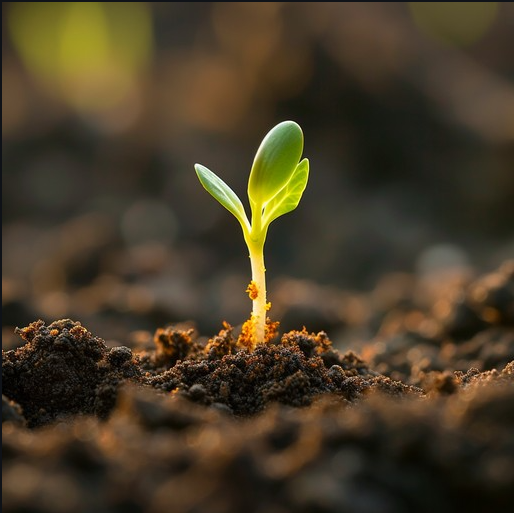
Or consider a seed.
You put a tiny, unpromising object into some dirt and begin supplying it with water, which, described plainly, sounds less like gardening than a small error in judgment. For days, nothing happens. You inspect the dirt. You adjust its position in the sunlight. You inspect it again, in case something substantial has occurred in the previous eleven minutes.
Then, one morning, there is a green stem.
It is barely anything. A little bent thing, carrying a speck of soil on its head. Yet you find yourself leaning over it with ridiculous tenderness. You planted something, and it grew. Now you are thinking about leaves, perhaps flowers, possibly tomatoes, although it would be sensible not to get ahead of yourself.
You get ahead of yourself anyway.
Or you are in a delivery room, and things have gone terribly wrong. There are too many people moving quickly, and no one has time to explain quite enough. You watch their faces. You wait for a sound.
Then your baby cries.
That is all. A cry—and suddenly you can breathe again. There may still be things to worry about, people to consult, a long night ahead. But you have heard your child announce, with considerable indignation, that they are here.
You had not realized how badly you needed to hear someone complain.
And then there is the altogether different business of meeting someone.
Out of all the people going about their lives, buying toothpaste and forgetting passwords, here is one whose company makes you reluctant to go home. They say something interesting. You make them laugh. You discover that you want to know their opinion of things you have never previously required anyone’s opinion about.
You talk on the phone for hours, despite having spent much of your adult life regarding an unexpected phone call as a minor act of aggression.
Afterward, you replay the conversation. You wonder whether they will call again. For the first time in a while, next Thursday seems potentially significant.
What strikes me is how much of our lives we entrust to these small beginnings. We plant things. We agree to treatment. We make room for people we have only just met. We go to bed after a dreadful day and set an alarm.
I don’t mean that hope makes any of this easy. I have been anxious enough, and low enough, to know that a person cannot always summon it on command. Being told to “have hope” can be about as useful as being told to be taller. Sometimes we need someone to sit beside us for a while, without instructions or an improving anecdote.
But when hope does come—even tentatively—it changes what we are able to imagine. We can picture an afternoon when we feel better. A garden in June. Bringing the baby home. A second date that goes well enough to justify a third.
The trouble may still be there. We may still be frightened. Yet we begin to take an interest in what happens next.
I have often thought that if you have hope, you have everything. Perhaps that is too grand a claim. There are days when you also need money, medical care, a decent meal, and someone willing to deal with the insurance company.
Still, I understand what I mean by it. When I have been at my lowest, hope has been the thing that made me willing to try again, even before I felt ready.
Sometimes it has amounted to very little: one encouraging conversation, one better morning, one reason to put my shoes on and leave the house.
But I have come to respect very little.
You can grow quite a lot from a seed.

