Running from Little Green Men

As a self-proclaimed Walt Disney World expert—meaning I can tell you the exact number of churros you can eat before you lose the will to live—one of my favorite corners of the parks is Toy Story Land. Nestled in Disney’s Hollywood Studios (which, let’s be honest, will always be MGM Studios to those of us who remember the Backlot Tour and the inexplicable presence of a Golden Girls house), this is the place where you get to be a toy for the day. It’s all giant building blocks, oversized board game pieces, and a healthy dose of nostalgia. It’s like stepping into your childhood, only with more sunscreen and slightly more expensive snacks.

Now, as a parent, my mission is to bring a little of that magic home, specifically, to the boys’ bathroom. Yes, you heard me: I am attempting to transform the most utilitarian room in the house into a Toy Story-themed wonderland. I have plans. Big plans. Beadboard! Wallpaper! Window coverings! Hanging monkeys! (The plastic kind, not the real ones. I’m not that ambitious.) I want it to be colorful, kid-friendly, and the kind of place where you half-expect Woody to pop out from behind the shower curtain and remind you to wash your hands.

But here’s the thing: the only thing standing between me and this Pixar-inspired paradise is, well, me. And a lack of power tools. And possibly a healthy fear of accidentally nailing my own foot to the floor.

What I really want—what I yearn for—is a mitre saw. And a jigsaw. And a nail gun. I want to be the kind of person who uses phrases like “orbital sander” in casual conversation and actually knows what it means. I want home projects to be my hobby, not just something I watch on YouTube with a mixture of awe and mild terror.

But here’s the secret Disney never tells you: learning something new, whether it’s how to wield a nail gun or how to navigate Genie+, is a lot like training for a marathon.

Stay with me here. When you decide to run a marathon (or, in my case, when you decide to run away from everything and end up in a marathon by accident), you don’t just lace up your shoes and jog 26.2 miles. You start small. You run a block. You wheeze. You Google “can you die from running?” You keep going. Over time, you get a little stronger, a little faster, and a little more confident that you won’t collapse in a heap by mile two.

Learning a new skill—like transforming a bathroom into Andy’s room, or figuring out how to use a mitre saw without losing a finger—is the same way. It’s about taking baby steps. You watch a video. You read an article. You buy a tool and stare at it for a week, wondering if you need a permit just to plug it in. You make mistakes. You learn. You get a little better. Eventually, you’re not just surviving—you’re thriving. Or at least you’re not actively endangering yourself or others.

So, as I stand in the doorway of the boys’ bathroom, armed with nothing but enthusiasm and a vague idea of how wallpaper works, I remind myself: this is my marathon. There will be setbacks. There will be questionable design choices. There will almost certainly be paint on the ceiling. But with each small step, I’m getting closer to creating a space that’s as magical as Toy Story Land—minus the crowds and the $6 sodas.

And who knows? Maybe someday I’ll be the kind of person who can say “orbital sander” with confidence. Or at least with fewer power tool-related injuries.

Until then, I’ll keep running from everything—except my dreams of a Toy Story bathroom.

Have you tackled a Disney-inspired home project? Or survived a marathon (literal or metaphorical)? Share your stories below! And if you have tips for using a mitre saw, please send help.

Running from the Last Day of School

Today is the day every child has circled in red on their mental calendar since September: the Last Day of School. It’s also the day every parent greets with a mixture of dread and existential panic. Not because we don’t want to spend time with our delightful offspring (I mean, we love them, right?), but because the thought of keeping them entertained for the next 100 days is the parenting equivalent of running an ultra-marathon with a backpack full of snacks and a hydration pack filled with cold coffee.

Summer vacation, you see, is not for the faint of heart. It requires the strategic planning of a NASA launch, the logistical coordination of a Disney World vacation, and the snack budget of a minor league baseball team. If you haven’t spent March, April, and most of May quietly panicking about camp sign-ups and wondering if you can buy Goldfish crackers in bulk, you’re simply not doing it right.

Let’s talk numbers. The average child will ask for a snack approximately every 47 minutes during the summer months. Multiply that by three children, factor in the “snack inflation” effect (where a snack is never quite enough), and you’ll find yourself at Costco, staring at a pallet of granola bars, wondering if you should just buy two. Camps are another story: they’re expensive, fill up faster than a Taylor Swift concert, and getting both my 9-year-old and 7-year-old into the same camp, at the same time, is a feat of scheduling wizardry that would make even Len Testa proud.

Now, here’s the real twist: I work all summer. My husband, a teacher, gets to stay home with the kids. This means I can plan every minute of their day with color-coded charts, Pinterest-worthy snack carts (parental approval required, because my middle child would subsist on nothing but snacks if left unchecked), and lists of wholesome activities. But, much like planning a perfect marathon route, I have absolutely no control over whether anyone actually follows the plan. I am the race director who sets up the course, only to watch the runners veer off in search of ice cream.

As a kid, I was never a fan of summer. I liked the reliable routine of school, the thrill of learning, and the predictability of lunch at 11:57 a.m. Summer meant my mom would lock us out of the house until lunchtime, and my dad would sign me up for every volleyball camp in the continental United States. I loved volleyball, but as the perennial “new kid,” making friends was about as easy as running a 5K in flip-flops.

My kids, on the other hand, are thrilled. They’re not yet at the age where sleeping until noon is a competitive sport, but TV, video games, water balloons, and swimming are all firmly on the agenda. Meanwhile, I’ll be working, shuttling to baseball every night, and dodging the daily messes that seem to multiply like rabbits in the summer heat.

And honestly? That’s just fine by me. Because if running has taught me anything, it’s that you don’t have to enjoy every mile—sometimes, you just have to keep moving forward, one snack break at a time.

Running from Design

I have big dreams for my home. Not the kind of dreams that involve marble countertops or a kitchen island the size of an aircraft carrier, but the sort that, if achieved, would allow me to walk into my living room and not immediately trip over a pile of shoes, a sticky patch of mystery goo, or a rogue action figure. My interior design style, much like my running pace, varies wildly depending on the day, the weather, and whether or not I’ve had coffee. But I don’t think it’s bad. And besides, the only person who visits with any regularity is my mom, and she’s legally obligated to say nice things.

Recently, my parents’ friends—who, judging by the amount of furniture I’ve inherited, must be living in an empty box by now—offered me a rug. It’s colorful. Very colorful. The kind of colorful that makes you question whether your brown couch (also from said friends) will ever recover from the shock. After two hours of rearranging furniture, which, by the way, is the closest I’ve come to cross-training in months, the rug was down. And, to my surprise, it looked… good. Not “featured in a magazine” good, but “I won’t trip over it in the dark” good.

This minor victory inspired a cascade of home improvement ambitions. I ordered artwork. I mapped out a board and batten wall. I even dusted off the nail gun I bought four months ago—still in its box, like a race medal I haven’t quite earned yet. There are, of course, a few obstacles:

  1. Power Tools: I have never operated anything more complicated than a blender. And that was only because I needed a post-run smoothie.
  2. Blood Thinners: When your blood is basically water, the prospect of wielding a nail gun becomes a high-stakes game of “Will it blend?”
  3. Spousal Support: My husband, bless him, is many things. Handy is not one of them. As my 3-year-old says, “They’re mommy’s tools!” He got the sports gene, not the construction gene.

I know the hardware store will cut boards for me, but the idea of asking for help makes me break out in a cold sweat. I can run a marathon, but apparently, I cannot ask a stranger to cut a piece of wood without fearing I’ll be mistaken for someone making a Pinterest craft gone wrong. (Not today, sir. Not today.)

Why am I doing this? Because, much like running, home improvement is a marathon, not a sprint. It’s a slow, steady process that involves planning, perseverance, and the occasional detour through the land of “What was I thinking?” My living room is rarely clean enough to be proud of—three boys see to that—but I want to create a space that makes me feel accomplished, even if the soundtrack is Phineas and Ferb singing about ‘S’winter’ and the floor is a minefield of Legos.

I’m thinking of documenting the process, because if running has taught me anything, it’s that progress is worth recording. Every training run, every new mile, every tiny improvement adds up. So too with home projects: getting the rug, moving the couch, and planning out the board and batten wall is, by my estimation, about 27% of the project. (Give or take. Len Testa would probably have a spreadsheet for this. Who am I kidding? I have a spreadsheet for this!)

We all have to start somewhere. Whether it’s the first mile of a marathon or the first nail in a wall, the important thing is to keep moving forward—preferably without stepping on anything sticky.

Sometimes, what you’re running from is just a living room in desperate need of a makeover. And sometimes, you run right into a home you’re proud of.

Running from Compression Socks

Let’s begin, as Bill Bryson might, with a confession: I have never been particularly good at moderation. This is a story about legs, socks, and the peculiar lengths to which one will go to avoid being ordinary—told with the sort of self-effacing candor that would make even Len Testa pause mid-spreadsheet.

In college, I played volleyball for four years. Not the “I’ll just jog around and maybe spike a ball” kind of volleyball, but the “I would like my lower legs to feel as if they might detonate at any moment” variety. My post-game shuffle was less “athlete’s swagger” and more “recently escaped from a bear trap.” Eventually, a kindly doctor at the Cleveland Clinic diagnosed me with Compartment Syndrome, which, for the uninitiated, is a condition where the pressure in your leg compartments (there are four, in case you’re keeping score) is supposed to be a modest 1-10. Mine, ever the overachiever, clocked in at a robust 32.

Surgery ensued. For a while, my legs behaved, but my final year was spent rationing my steps like a Victorian miser with his last candle—saving every ounce of leg function for game time. After graduation, my legs, apparently satisfied with their dramatic performance, retired from pain altogether. I have not heard a peep from them since.

Fast forward three years, circa 2008. I decided to start running. This was a calculated risk, since I was fairly certain my legs would recall their old grievances and revolt. But as it turns out, it wasn’t the running that bothered them—it was the jumping. Also, possibly the squatting of 225 pounds and leg pressing 550, but who’s counting? (Me. I was counting. Repeatedly. Because, as you will see, I have a pathological need to prove my toughness.)

Since then, I’ve collected an assortment of race bibs: countless 5Ks, two 10Ks, seven half marathons, and four full marathons. My legs, stoic as ever, have remained silent. I am, as the kids say, “blessed.”

Now, about socks. When I first entered the running world, I noticed a proliferation of tall socks. Not just any socks, but socks that looked like they’d been engineered by NASA and sponsored by a pharmaceutical company. Compression socks, they called them. Supposedly, they reduced muscle vibration and improved blood flow. I, of course, scoffed. I didn’t even wear tall socks for volleyball, and that was the style. Compression socks, I decided, were for the faint of heart, the weak of calf, the people who did not squat 225 pounds for fun.

I have a toxic trait: I must do everything the hard way, just to prove I am tougher than, well, you. Natural childbirth, three times, no drugs? Check. Running for nearly two decades without compression socks? Double check. My “toughness klout” was off the charts.

Until today.

A recent visit to the neurologist (because apparently, one cannot simply coast on bravado forever) resulted in a prescription not for medication, but for hydration, more salt, and—horror of horrors—compression socks. Apparently, my blood pressure has decided to set up camp at 88/53, which is the circulatory equivalent of a sloth on a hammock.

So here I am, scrolling through Amazon, contemplating which shade of compression sock best complements existential dread. My toughness score? Plummeting. My fashion sense? Questionable at best. How, I wonder, does one make compression socks look good in the summer? If you have ideas, please share. Perhaps this is the nudge I need to start running again—this time with a tight, textured addition to my ensemble.

Because if there’s anything I’ve learned, it’s that you can run from a lot of things. But you can’t outrun the need for a good pair of socks.

Running from Neurological Oddities

There are few things more humbling than spending your lunch hour watching videos of yourself learning to walk, talk, and generally function like a human being again. Today, I found myself rewatching the TikToks I posted during my stroke recovery—a sort of highlight reel of my greatest hits and near-misses, all set to whatever pop song was trending in 2022.

I was, if I may say so, impressively strong back then. Not because I was aspiring to be some inspirational poster child, but because, frankly, I had no other option. I chronicled everything: therapy sessions, daily triumphs, the occasional existential dread about the future. It’s all there, preserved in 60-second bursts for posterity—and, apparently, for my own forgetful self.

What struck me most was how much I’d forgotten. For example, I completely blanked on how much my body temperature regulation went haywire. I’m always cold, which is a fun little bonus when you’re also on blood thinners. I also forgot that I lost nerve sensation on my right side. My brain, ever the improviser, now guesses if something is hot or cold based on what my left side is feeling. If you hand me a mug of coffee and I grab it with my right hand, I couldn’t tell you if it’s piping hot or ice cold. It’s like living with a thermostat that’s been installed by a committee of squirrels.

Showers are a particularly surreal experience. If the water hits only my right side, I have no idea if I’m about to be poached or frozen. It’s weird, I know. But then again, the human body is basically a collection of weirdnesses held together by hope and duct tape.

Another delightful quirk: my sense of hunger has left the building. It’s been three years since the stroke, and my appetite is still on vacation. The cruel irony is that, while I don’t actually feel hungry, I still exhibit all the classic symptoms of hanger. My husband can attest to this, usually from a safe distance. Imagine being grumpy, irritable, and irrationally upset, but having no idea why—sort of like a toddler, but with a driver’s license.

Cognitive symptoms are another fun surprise party that my brain likes to throw, usually when I least expect it. Take last night, for example: I sat through a baseball game and froze my tukis off, and my brain responded by turning into a malfunctioning computer. The cold, combined with the sensory overload of the crowd, left me unable to think straight for the rest of the evening. I couldn’t find words, couldn’t remember which pedal was the brake, and brushing my kids’ teeth felt like assembling IKEA furniture without instructions.

Once I get my muscle memory going, I’m usually fine. But sometimes, just remembering how to start is like trying to recall the plot of a dream you had three years ago.

While I’m not exactly running marathons these days, walking and exercise in general have become my secret weapons. They help me feel sharper, more focused, and a little more like the version of myself I remember. Finding tools and routines that work for me is empowering—proof that, even when your brain is throwing curveballs, you can still swing for the fences.

The trick, I’ve learned, is being honest with myself about how I’m feeling. Denial is tempting, but the worst lies are always the ones we tell ourselves. So I keep walking, keep laughing, and keep sharing—even if it’s just with my future self over lunch.

In the end, recovery is less about “getting back to normal” and more about discovering a new normal, quirks and all. And if that means my right hand is forever confused about coffee temperature, well, at least it keeps life interesting.

Running from the Indestructable Seven-Year-Old

There are certain inevitabilities in life: death, taxes, and the school nurse calling me at least three times a week. It’s become so routine that I half expect her to start our conversations with, “Hi, it’s me again,” as if we’re old friends catching up over coffee rather than discussing my seven-year-old son’s latest misadventure.

The calls always come around lunchtime, which is no coincidence. Recess follows lunch, and my son’s face—blessed with the classic Thompson head, which is, let’s be honest, a bit larger than the industry standard—seems to act as a homing beacon for any airborne object within a fifty-foot radius. If there’s a stray basketball, a rogue frisbee, or a meteorite hurtling toward Earth, you can bet it will make a beeline for his forehead.

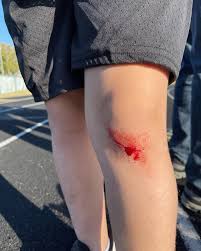
Most of the nurses’ calls are about nosebleeds, which we average about five a week at home. The primary culprit? Wrestling that breaks out in my living room every afternoon from 3 to 8 p.m. But nosebleeds are just the beginning. We’ve also had incidents involving mysterious goose eggs, rope collisions, bee stings, and the full spectrum of scraped knees. In short, all the classic “boy things,” as the medical textbooks no doubt describe them.

In a strange way, I’m almost grateful that these incidents happen at school. When he was younger, I used to worry about taking him out in public, fearing that someone might call Child Protective Services after seeing his collection of bruises. But then my babysitter, having witnessed his Thompson head in action, became my unofficial alibi. Now, with the school nurse meticulously documenting every bump and scrape, I have a veritable archive proving that my child is uniquely qualified to injure himself in ways previously thought impossible.

My son is a marvel of perpetual motion. He arrived seven weeks early—clearly in a hurry—and has been moving at top speed ever since. He is, quite literally, the kid who saved me. After losing our little girl and enduring a rough patch in our marriage, I found myself in a dark place. His arrival was a lifeline, pulling me back into the world. This isn’t something he needs to know right now, but it’s why I look at him with a mixture of joy, gratitude, and mild terror every time he launches himself off the couch.

He also seems to run at a constant boil. Teachers frequently report that he rolls up his pant legs in the dead of winter because he’s “too hot.” He eats like a linebacker preparing for the Super Bowl—constantly, enthusiastically, and with no discernible impact on his weight, which has remained unchanged since 2023. I suspect he may be part hummingbird.

He’s one of the reasons I run. I know he’s proud of me, and I want to keep it that way. I work out and eat right not just for myself, but to show him that this is what you do: you keep moving, you take care of yourself, and you try to outrun the flying soccer balls of life.

I can’t wait to see what the future holds for him. I suspect it will involve a lot of movement, a few more nosebleeds, and maybe a Nobel Prize in physics for discovering new ways to collide with inanimate objects. Until then, I’m just over the moon to be his mama—even if it means keeping the school nurse on speed dial.

Running from Survivor

It’s that time of year. Boys volleyball season, with its endless shuttling of knee pads and water bottles, finally came to a close. In theory, this should usher in a period of serene evenings, perhaps spent reading or reacquainting oneself with the concept of “free time.” In practice, of course, it means baseball season, along with the inevitable parade of rainouts, reschedules, and the existential dread of finding a dry pair of socks, in my new pasttime.

It’s a rare and beautiful thing to have a night free from kid activities. Last night was that unicorn. My volleyball banquet was scheduled, but with only nine kids on the team, I knew it would be a brisk affair. Add to that the fact that it was being held at one of our favorite pizza joints, and you’ve got yourself a classic case of parental efficiency: dinner and a show, all in one. As the old saying goes, it’s like killing two birds with one stone—if only to address the surplus of birds and the chronic shortage of stones in modern suburban life.

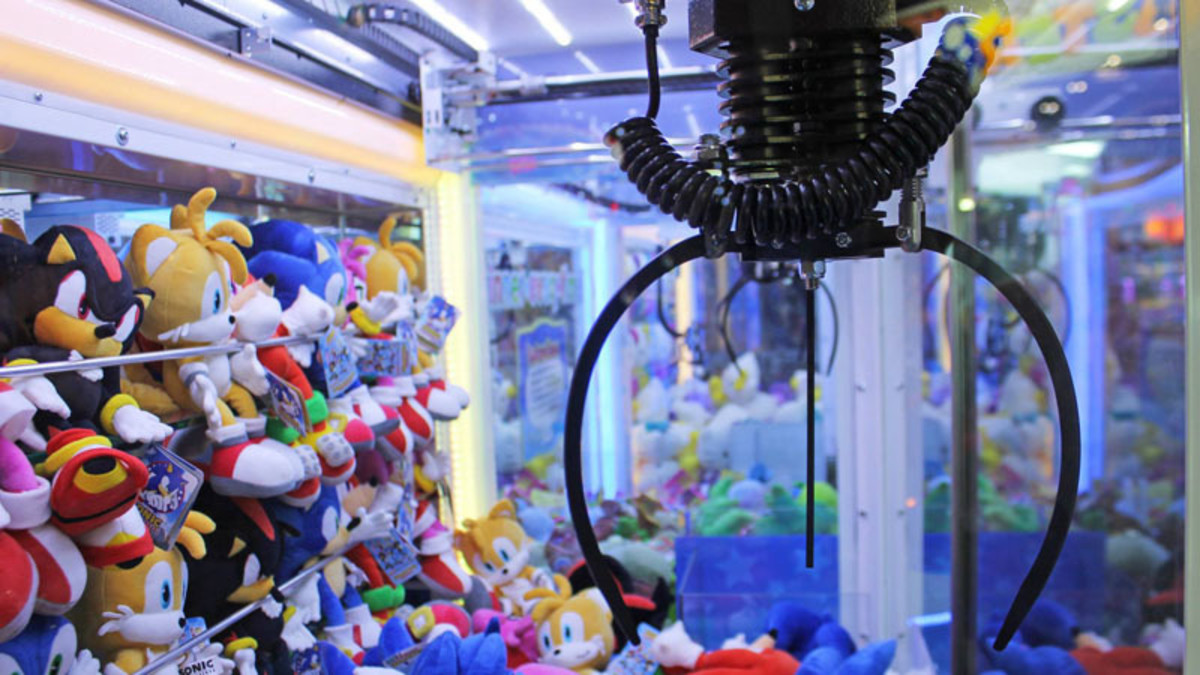
Now, the true genius—or perhaps the greatest folly—of this particular pizza place is its game room. It’s a room that seems to operate on the same principle as a Vegas casino: bright lights, no clocks, and the faint but persistent hope that you might leave richer than you arrived. My children, who can barely muster the patience to chew their food, will spend approximately three seconds eating and the next ninety minutes in a frenzied search for quarters. They always find them, somehow, and proceed to invest them in the pursuit of prizes destined to become tomorrow’s vacuum fodder.

At one point during the evening, I did what every responsible parent must: I went to check on the boys. To my mild horror—but not, I must stress, my surprise—I discovered Wynn, my three-year-old, perched atop the claw machine. The thing is at least six feet tall, and how he got up there remains one of those mysteries best left to the ages, like Stonehenge or how socks disappear in the laundry. Was I shocked? No. Embarrassed? A little. Mostly, I was just grateful he hadn’t tried to operate the thing from the inside.

This, I should mention, is not a one-off event. I have been blessed—if that’s the word—with three natural-born climbers. Fences, grocery store shelves, the interior of the refrigerator—if it can be scaled, my children have summited it. At this point, I’m barely even scarred, physically or emotionally. I’ve reached a state of parental Zen where I simply accept that gravity is more of a suggestion than a law.

After your third child, you find that your threshold for shock is dramatically reduced. It’s actually quite liberating. Parenting becomes a little like an episode of Survivor: Expect the Unexpected. Everyone is inexplicably covered in sand, sleep is a distant memory, and someone is always searching for an idol—or, in our case, the missing TV remote. There’s constant strategizing, alliances form and dissolve over who gets the last breadstick, and you half-expect Jeff Probst to step out from behind the soda fountain and narrate your every move.

In the end, you’re just trying to outwit, outplay, and outlast—at least until bedtime. And if you can do it with a slice of pizza in hand and only minor embarrassment at your child’s climbing exploits, you’re doing just fine.

So here’s to the end of volleyball, the beginning of baseball, and the eternal quest for a quiet night. May your pizza always be hot, your quarters plentiful, and your children safely on the ground—at least most of the time.

Running from the Muppets

There is a certain point in every parent’s life when you realize all control of the van’s DVD player has been lost. It’s not your device anymore. It’s not even really a DVD player. It’s a shrine, a sacred altar to whatever cinematic obsession currently holds your children in its sticky, juice-box-stained thrall. At present, our family’s rolling temple is dedicated to The Muppet Movie.

I’ll admit, the relentless singing sometimes makes me want to drive directly into a banana cream pie. But- and this is important- I never have to worry about language, violence, or awkward “explanations” prompted by the screen. The worst thing that might happen is someone gets hit with a pie, and honestly, if that’s the price of peace, I’ll take it. Waka waka!

There was a time, not so long ago (okay, it was the 1980s and 90s, which, depending on your age, is either “yesterday” or “back when dinosaurs roamed the earth”), when the Muppets were everywhere. They were on TV, in movies, on lunchboxes, and, if lucky, at your birthday party in the form of a slightly unsettling Kermit cake. These days, the Muppet spotlight has dimmed a bit. Sure, Sesame Street is still going strong, teaching kids the alphabet and the importance of sharing cookies, but the Muppets themselves? They’re more like old friends you don’t see very often, but who always make you smile when you do.

Relating to the Muppets as an adult is, in my opinion, a rite of passage. If you can’t fall asleep humming “Rainbow Connection,” you might want to check your pulse. There’s something deeply comforting about knowing that, no matter how complicated life gets, there’s a frog out there who just wants to play the banjo and dream about rainbows.

Here’s a confession: I often find myself at work or wandering the aisles of the grocery store, and I’ll spot someone who looks uncannily like a Muppet. Not in a mean way-more in the sense that there’s a little Fozzie Bear or Gonzo in all of us. It’s a private game I play to amuse myself while buying what feels like the seventh gallon of milk this month. Honestly, at this point, I should probably just buy a cow and cut out the middleman. (If only the HOA would allow livestock. Spoilsports.)

Back to the Muppets: their weekly variety show was a masterclass in wholesome chaos, joy, and the sort of jokes that make you groan and giggle at the same time. Watching them now, I find myself longing for a simpler time, when the biggest problem was whether Miss Piggy would karate-chop someone before or after the closing number.

I can’t promise my kids won’t memorize every Muppet joke ever written. In fact, I’m counting on it. The world could use a few more people who know how to deliver a punchline and aren’t afraid of a little pie in the face. The Muppets still make me happy every time I see them, and I hope-truly hope-that long after I’m gone, they’ll still be delighting my grandkids and great-grandkids. Because if there’s one thing the world will always need, it’s a little more laughter, a little more kindness, and a whole lot more waka waka.

So here’s to the Muppets, the banjo-playing frogs, the pie-throwing bears, and the dreamers in all of us. May your DVD players be ever stocked, your milk supply never run dry, and your life always have a little bit of Rainbow Connection.

Running to the Land

If you’re a Disney World devotee, you likely have a favorite ride-perhaps even a meticulously ranked list, one per park, cross-referenced by time of day and snack proximity. True Disney adults, of course, go further: we have favorite smells (hello, Rome burning!), napping nooks, people-watching perches, and secret fireworks vantage points. But let’s not get ahead of ourselves.

For reasons I can’t entirely explain, EPCOT has always tugged at me. Maybe it’s the park’s age-just a hair older than I am, thank you very much-or maybe it’s the sense of breathing room. Unlike the sometimes claustrophobic press of the Magic Kingdom, EPCOT’s pavilions and wide walkways feel positively expansive. With an average of over 32,800 visitors a day, that extra elbow room is not just a nicety, it’s a necessity.

After a few years of health challenges, my days of braving the big, fast, and wildly spinning rides are behind me (not that I ever queued up for Mission: SPACE with gusto). Add in the lingering side effects of a stroke, and the fun of thrill rides is replaced by the fun of not needing a nap in the First Aid station.

But one attraction has always been my EPCOT North Star: Living with the Land.

Nestled in The Land pavilion- an architectural marvel of glass and angles since 1982- Living with the Land is a gentle, 15-minute boat ride that glides you through both a classic Disney dark ride and working greenhouses. It’s a hybrid: part animatronic diorama, part science fair, part “please let me live here” greenhouse tour.

The ride begins with a float through recreated biomes: tropical forests, arid deserts, and sweeping prairies, all narrated with a soothing cadence that could lull even the most caffeinated park-goer into a state of Zen. There are 35 audio-animatronics, but the real stars are the living, growing crops and the innovative farming techniques on display.

You’ll see:

  • The Tropics Greenhouse, with rice, sugar cane, and bananas under a 60-foot dome.
  • The Aquacell, where tilapia and catfish swim in tanks, part of Disney’s sustainable aquaculture.
  • The Temperate Greenhouse, showcasing intercropping and specialized irrigation.
  • The Production Greenhouse, where tons of tomatoes, peppers, and lettuce are grown for use right in EPCOT’s restaurants-including the rotating Garden Grill and the quick-service favorite, Sunshine Seasons, both just steps away.
  • The Creative House, where crops dangle from trellises or float in air, suggesting a future where farming might take place on space stations or, at the very least, in your living room.

If you’re craving more, the Behind the Seeds walking tour offers a closer look at these agricultural marvels for a modest fee.

The Land pavilion itself is a microcosm of EPCOT’s mission: education, innovation, and a dash of whimsy. Alongside Living with the Land, you’ll find Soarin’ Around the World-a hang-gliding simulator that’s the pavilion’s most popular draw-and Awesome Planet, a 10-minute film narrated by Ty Burrell that’s equal parts documentary and pep talk for the planet.

And if you need sustenance, Sunshine Seasons is a food court that’s a cut above, with many ingredients harvested mere yards from your tray. For a more leisurely meal, the Garden Grill serves up family-style platters and character hugs, all while the restaurant gently rotates above the Living with the Land ride path.

Living with the Land is rarely more than a walk-on-unless you’ve arrived on a major holiday or during a torrential Florida downpour, in which case, welcome to the club. With a capacity of 1,600 riders per hour (16 boats, 40 guests each), the line moves quickly, and the ride’s nearly 15-minute duration offers a blissful respite from the Florida sun.

EPCOT welcomed nearly 12 million visitors in 2023, and yet, Living with the Land remains a tranquil corner of the park, a place where science, sustainability, and storytelling float along in perfect harmony.

If Disney ever dares to change it, you’ll find me at the entrance, picket sign in hand, ready to defend my favorite boat ride. Until then, you’ll find me in the greenhouse, dreaming of tomatoes and quietly plotting my next nap spot.

Running through the Grocery Gauntlet

If you ever want to test the limits of optimism, try doing a weekly grocery order for a family of five. Statistically, you’re not alone. According to the USDA, the average American family of five spends between $939 and $1,520 a month on groceries, with some families reporting totals as high as $1,600. That’s enough to make you wonder if everyone else is eating caviar for breakfast or just feeding their children gold-plated Pop-Tarts.

Now, I’ll admit, my own grocery budget is a bit of an outlier. I aim for under $500 a month, which, if you believe the experts, puts me somewhere between “frugal genius” and “possible magician.” Yet, despite my best efforts, my cupboards are always full, but never with anything that can be thrown in the air fryer and called dinner. In fact, my idea of a home-cooked meal is whatever can be heated at 400 degrees for 12 minutes or less.

Here’s the thing: even when I do muster the energy to cook, my kids treat my culinary efforts with the enthusiasm usually reserved for dental appointments. The return on investment for dinner prep is, frankly, abysmal. And to add insult to injury, we’re rarely home to eat anything anyway. The average U.S. household wastes 6.2 cups of food per week-enough to fill 360 takeout containers per year-and I’m fairly certain my fridge is personally responsible for half of that statistic. If there were a frequent flyer program for spoiled leftovers, I’d be platinum status.

Despite all this, I find myself at the store every week, buying essentials like Pull-Ups, toilet paper, and enough snack-size chip bags to supply a small army. It’s never a one-and-done trip; it’s a perpetual scavenger hunt. And yes, I use coupons, rebate apps, and weekly flyers like a seasoned bargain hunter. I seldom buy name brands, but I don’t think our generic mac and cheese is the reason my children are staging a hunger strike.

Food waste is a national pastime: 30–40% of food in the U.S. ends up in the trash, costing households up to $1,500 a year. If saving money is the top motivator for reducing waste (as 82% of Americans claim), then why does my fridge look like a science experiment gone wrong by Thursday? Maybe it’s because, like 87% of households, we’re guilty of letting perfectly edible food sit until it’s past its prime. Or maybe it’s because we’re never home. Between baseball, wrestling, football, and the occasional “dinner” of granola bars and bologna sandwiches, our kitchen is more museum than restaurant.

I know my grocery bill will inevitably rise as my boys get older. They’re wrestlers, which means half the year is spent cutting weight, and the other half is spent eating like they’re preparing for hibernation. Statistically, teenage boys can consume up to 3,000 calories a day, which means my $500 budget may soon be as outdated as my expired yogurt.

We don’t have pets, so at least I’m not feeding a small zoo. Eating out is a rare treat- maybe two or three times a month, and even then, it’s usually pizza. According to the Bureau of Labor Statistics, the average American household spends nearly $3,000 a year on eating out, but I can assure you, we are not average in this department.

So, what’s the secret? Am I under-spending, or just under-cooking? Should I be eating better, or am I simply not spending enough to keep up with the Joneses and their well-stocked air fryers? All I know is, my waistline doesn’t seem to agree with my modest grocery bill, and my fridge remains a monument to good intentions and wasted leftovers.

If there’s a Nobel Prize for creative couponing and food waste, I’d like to be considered. Until then, I’ll keep shopping, keep saving, and keep wondering why there’s never anything for dinner.

Statistics cited from the USDA, Bureau of Labor Statistics, and MITRE-Gallup food waste survey.