
Running from Bad Days

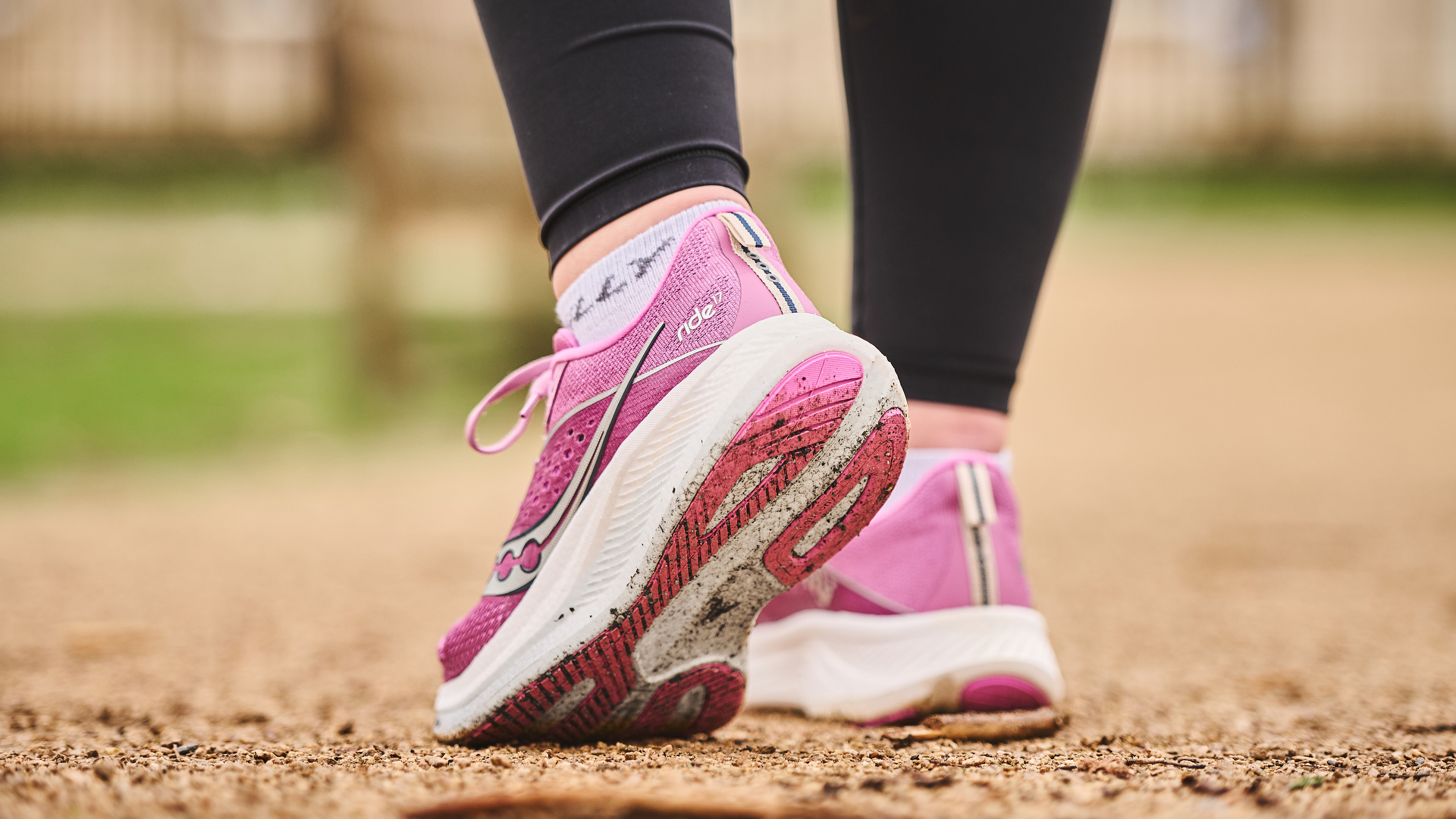
Credit: Philip Barker

Let’s be honest—some days, the only thing I’m running from is my own brain. I’d love to tell you that every morning I leap out of bed, tie my shoes with the vigor of a caffeinated squirrel, and hit the pavement with the grace of a gazelle. But, in reality, some days I’m more like a confused sloth, wondering how I ended up in a world where people voluntarily run for fun.

Like any reasonably constructed human, I have good days and bad days. Lately, though, my bad days have been stacking up like the laundry pile I keep promising to fold. And these aren’t just “I spilled coffee on my shirt” bad days. We’re talking about the kind of days where my brain seems to have misplaced the instruction manual for “feeling things.” I’m already on Prozac, which is supposed to help, but sometimes it feels like my mental fog has a two-week vacation policy and is determined to use every last hour.

Nothing is technically wrong. My life, on paper, is pretty much the deluxe package: a husband who does more than his fair share (I suspect he’s angling for sainthood), a job I genuinely enjoy, and kids who are thriving—although one of them is determined to taste-test every inanimate object on earth. We have everything we need and a few things we really don’t (looking at you, bread maker). The only things on my wish list are a Disney World annual pass, an endless supply of Reese’s peanut butter cups, and perhaps a set of Apple earbuds that haven’t been personally waxed by yours truly.

Yet, for almost two years now, I’ve been wrapped in this emotional bubble wrap. Sometimes I wonder if it’ll ever pop. But here’s where running comes in—because, as any runner knows, not every run is a runner’s high. Some runs are just… runs. Some are spectacular, some are slogfests, and some are so bad you wonder if you accidentally put your shoes on the wrong feet.

But the thing is, you keep going. You remember how good it feels to cross a finish line, even if you’re the last one there and the volunteers have already started packing up the water table. You remember that not every mile is easy, but every mile counts. Running, like life, is about moving forward—even if it’s at a pace that would make a tortoise look like Usain Bolt.

I know my brain isn’t quite the same as it used to be. I’m only in year three of figuring it out, and if I’ve learned anything from running, it’s that progress isn’t always linear. Some days you sprint, some days you crawl, and some days you just stand there and wonder how you got so much sand in your shoes.

But it will get better. After all, if my three-year-old can enthusiastically lick every cart we grab at the grocery store and still greet each day with the energy of a puppy on espresso, maybe I can keep moving forward too. Maybe we all can.

So here’s to the good runs and the bad ones, the finish lines and the false starts. And if all else fails, there’s always next year’s Disney pass, a bag of Reese’s, and the hope that tomorrow’s run will be just a little bit lighter.

Running from Compression Socks

Let’s begin, as Bill Bryson might, with a confession: I have never been particularly good at moderation. This is a story about legs, socks, and the peculiar lengths to which one will go to avoid being ordinary—told with the sort of self-effacing candor that would make even Len Testa pause mid-spreadsheet.

In college, I played volleyball for four years. Not the “I’ll just jog around and maybe spike a ball” kind of volleyball, but the “I would like my lower legs to feel as if they might detonate at any moment” variety. My post-game shuffle was less “athlete’s swagger” and more “recently escaped from a bear trap.” Eventually, a kindly doctor at the Cleveland Clinic diagnosed me with Compartment Syndrome, which, for the uninitiated, is a condition where the pressure in your leg compartments (there are four, in case you’re keeping score) is supposed to be a modest 1-10. Mine, ever the overachiever, clocked in at a robust 32.

Surgery ensued. For a while, my legs behaved, but my final year was spent rationing my steps like a Victorian miser with his last candle—saving every ounce of leg function for game time. After graduation, my legs, apparently satisfied with their dramatic performance, retired from pain altogether. I have not heard a peep from them since.

Fast forward three years, circa 2008. I decided to start running. This was a calculated risk, since I was fairly certain my legs would recall their old grievances and revolt. But as it turns out, it wasn’t the running that bothered them—it was the jumping. Also, possibly the squatting of 225 pounds and leg pressing 550, but who’s counting? (Me. I was counting. Repeatedly. Because, as you will see, I have a pathological need to prove my toughness.)

Since then, I’ve collected an assortment of race bibs: countless 5Ks, two 10Ks, seven half marathons, and four full marathons. My legs, stoic as ever, have remained silent. I am, as the kids say, “blessed.”

Now, about socks. When I first entered the running world, I noticed a proliferation of tall socks. Not just any socks, but socks that looked like they’d been engineered by NASA and sponsored by a pharmaceutical company. Compression socks, they called them. Supposedly, they reduced muscle vibration and improved blood flow. I, of course, scoffed. I didn’t even wear tall socks for volleyball, and that was the style. Compression socks, I decided, were for the faint of heart, the weak of calf, the people who did not squat 225 pounds for fun.

I have a toxic trait: I must do everything the hard way, just to prove I am tougher than, well, you. Natural childbirth, three times, no drugs? Check. Running for nearly two decades without compression socks? Double check. My “toughness klout” was off the charts.

Until today.

A recent visit to the neurologist (because apparently, one cannot simply coast on bravado forever) resulted in a prescription not for medication, but for hydration, more salt, and—horror of horrors—compression socks. Apparently, my blood pressure has decided to set up camp at 88/53, which is the circulatory equivalent of a sloth on a hammock.

So here I am, scrolling through Amazon, contemplating which shade of compression sock best complements existential dread. My toughness score? Plummeting. My fashion sense? Questionable at best. How, I wonder, does one make compression socks look good in the summer? If you have ideas, please share. Perhaps this is the nudge I need to start running again—this time with a tight, textured addition to my ensemble.

Because if there’s anything I’ve learned, it’s that you can run from a lot of things. But you can’t outrun the need for a good pair of socks.

Running from Neurological Oddities

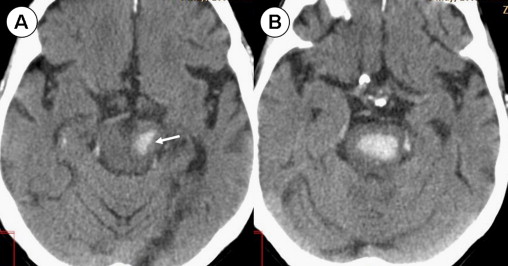
There are few things more humbling than spending your lunch hour watching videos of yourself learning to walk, talk, and generally function like a human being again. Today, I found myself rewatching the TikToks I posted during my stroke recovery—a sort of highlight reel of my greatest hits and near-misses, all set to whatever pop song was trending in 2022.

I was, if I may say so, impressively strong back then. Not because I was aspiring to be some inspirational poster child, but because, frankly, I had no other option. I chronicled everything: therapy sessions, daily triumphs, the occasional existential dread about the future. It’s all there, preserved in 60-second bursts for posterity—and, apparently, for my own forgetful self.

What struck me most was how much I’d forgotten. For example, I completely blanked on how much my body temperature regulation went haywire. I’m always cold, which is a fun little bonus when you’re also on blood thinners. I also forgot that I lost nerve sensation on my right side. My brain, ever the improviser, now guesses if something is hot or cold based on what my left side is feeling. If you hand me a mug of coffee and I grab it with my right hand, I couldn’t tell you if it’s piping hot or ice cold. It’s like living with a thermostat that’s been installed by a committee of squirrels.

Showers are a particularly surreal experience. If the water hits only my right side, I have no idea if I’m about to be poached or frozen. It’s weird, I know. But then again, the human body is basically a collection of weirdnesses held together by hope and duct tape.

Another delightful quirk: my sense of hunger has left the building. It’s been three years since the stroke, and my appetite is still on vacation. The cruel irony is that, while I don’t actually feel hungry, I still exhibit all the classic symptoms of hanger. My husband can attest to this, usually from a safe distance. Imagine being grumpy, irritable, and irrationally upset, but having no idea why—sort of like a toddler, but with a driver’s license.

Cognitive symptoms are another fun surprise party that my brain likes to throw, usually when I least expect it. Take last night, for example: I sat through a baseball game and froze my tukis off, and my brain responded by turning into a malfunctioning computer. The cold, combined with the sensory overload of the crowd, left me unable to think straight for the rest of the evening. I couldn’t find words, couldn’t remember which pedal was the brake, and brushing my kids’ teeth felt like assembling IKEA furniture without instructions.

Once I get my muscle memory going, I’m usually fine. But sometimes, just remembering how to start is like trying to recall the plot of a dream you had three years ago.

While I’m not exactly running marathons these days, walking and exercise in general have become my secret weapons. They help me feel sharper, more focused, and a little more like the version of myself I remember. Finding tools and routines that work for me is empowering—proof that, even when your brain is throwing curveballs, you can still swing for the fences.

The trick, I’ve learned, is being honest with myself about how I’m feeling. Denial is tempting, but the worst lies are always the ones we tell ourselves. So I keep walking, keep laughing, and keep sharing—even if it’s just with my future self over lunch.

In the end, recovery is less about “getting back to normal” and more about discovering a new normal, quirks and all. And if that means my right hand is forever confused about coffee temperature, well, at least it keeps life interesting.