Running from the Toddler

Ah, motherhood. That grand, mysterious adventure that begins with nine months of discomfort, followed by a brief stint as a conveyor belt for tiny humans and culminates in the realization that your life is now entirely dictated by someone who can’t tie their own shoes. The remarkable thing about this whole process is how quickly we forget the pain—the swollen ankles, the sleepless nights, the moment you realized your bladder had been demoted to a trampoline. It’s as if nature has thoughtfully provided us with a mental delete button. But then, just when you think you’ve moved on, along comes the age of three to remind you that perhaps you haven’t forgotten quite enough.

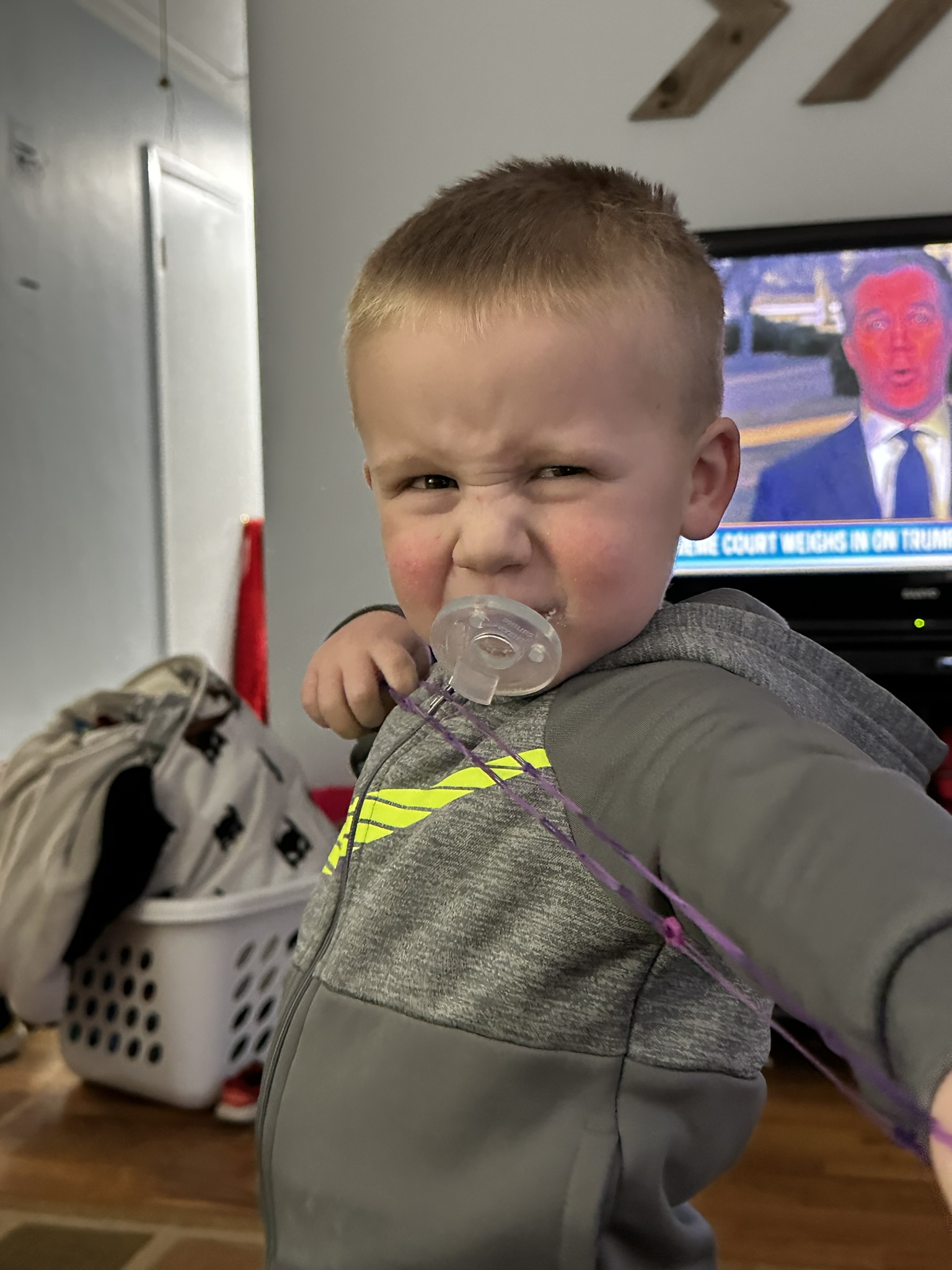
Now, people often talk about the “terrible twos,” which is misleading. Two is merely an amuse-bouche of chaos compared to the full buffet of madness that awaits at three. Three is when your cherubic toddler transforms into a pint-sized dictator with an alarming grasp of language and an uncanny ability to manipulate adults. They don’t just demand hot dogs; they demand them with conviction. They don’t just want you to play; they want you to be exactly the Transformer they’ve assigned while they prance about as Slinky Dog. And heaven help you if you don’t queue up their favorite show for the 87th time—an oversight that will be met with outrage worthy of a United Nations summit.

I can say with confidence that I despise three-year-olds—my own included. It’s not personal; it’s just that they’ve perfected the art of being simultaneously exhausting and infuriating. They refuse naps, despite being visibly more tired than a marathon runner at mile 26. They develop peculiar preferences for things like milk cups, which they express in cryptic proclamations like, “That’s more like it!”—a phrase so bizarre it makes you wonder if you’re raising an eccentric Victorian aristocrat.

But let me assure you, it doesn’t stop at three. Oh no, seven and nine have their own unique horrors. Seven-year-olds seem to think sibling rivalry is an Olympic sport, and nine-year-olds have mastered the fine art of being insufferably smug while still needing help with basic hygiene. If I had a dollar for every time I’ve shouted “Keep your hands to yourself!” I’d be lounging on a private island right now, sipping cocktails and marveling at my fortune.

This is why I run—not metaphorically or figuratively—but literally. Running is my escape from the madness, my chance to pound out my frustrations on the pavement while fantasizing about a world where children come with mute buttons. Lexapro helps, but even modern pharmaceuticals have their limits when faced with preschoolers who think they’re ready to govern small nations.

Still, hope glimmers faintly on the horizon: preschool starts in the fall. Surely someone else can deal with his boundless energy and insatiable curiosity for a few hours each day. Until then, I’ll be here—dodging demands for hot dogs and Transformer reenactments—counting down the days until sanity returns (or at least takes a brief holiday).

Running from the Schedule

Anyone who has ever taken up running knows that a training plan has the uncanny ability to commandeer your calendar with the precision of a military operation. Suddenly, your weeks are peppered with 40-minute cross-training sessions, midweek 3-milers, and those dreaded Sunday long runs. It’s a relentless march of miles and minutes that feels both necessary and slightly masochistic. The irony, of course, is that while sticking to the schedule is meant to prepare you for race day, it can also leave you feeling like you’ve aged a decade in the process.

Take, for example, one particularly ill-fated 14-mile long run I endured. It was one of those runs where everything that could go wrong did—legs like lead, lungs on strike, and a general sense that the universe was conspiring against me. For three weeks afterward, I agonized over it, convinced that my marathon (still months away) was doomed because of this single bad outing. Spoiler alert: it wasn’t. But try telling that to my overthinking brain at the time.

Of course, running isn’t the only thing vying for space on my calendar these days. No, the real chaos begins when you add in my children’s baseball practices (two per kid per week), their games (sometimes three per kid per week), my volleyball coaching schedule (up to four games a week plus practices), dentist appointments, and—oh yes—a looming heart surgery. Somewhere in this maelstrom of activity is a vague hope of eating dinner, doing laundry, and remembering which parent needs the van for chauffeuring duties. It’s less “organized chaos” and more “chaos with occasional bursts of organization.”

Preparation, I’ve learned, is key to surviving this whirlwind. Theoretically, anyway. In practice, I’m hit or miss. Some nights I manage to do things my future self will thank me for—like setting up the coffee maker so all it needs is a flick of the switch in the morning. Other nights I collapse into bed with the vague hope that tomorrow will sort itself out (it rarely does).

With my April 25th surgery looming ever closer, I’m trying to lean into this whole “being prepared” thing more than usual. My post-surgery self will undoubtedly appreciate it—and so will my husband, mom, and aunt, who are poised to pick up the slack if I don’t get my act together. They’re lovely people but probably not thrilled at the prospect of navigating the fallout from my lack of planning.

In the end, though, life—like running—isn’t about perfection. It’s about putting one foot in front of the other and hoping you don’t trip over your own shoelaces along the way. And if all else fails? There’s always coffee waiting for me in the morning… assuming I remembered to set it up.

Running From the Beat of My Own Heart

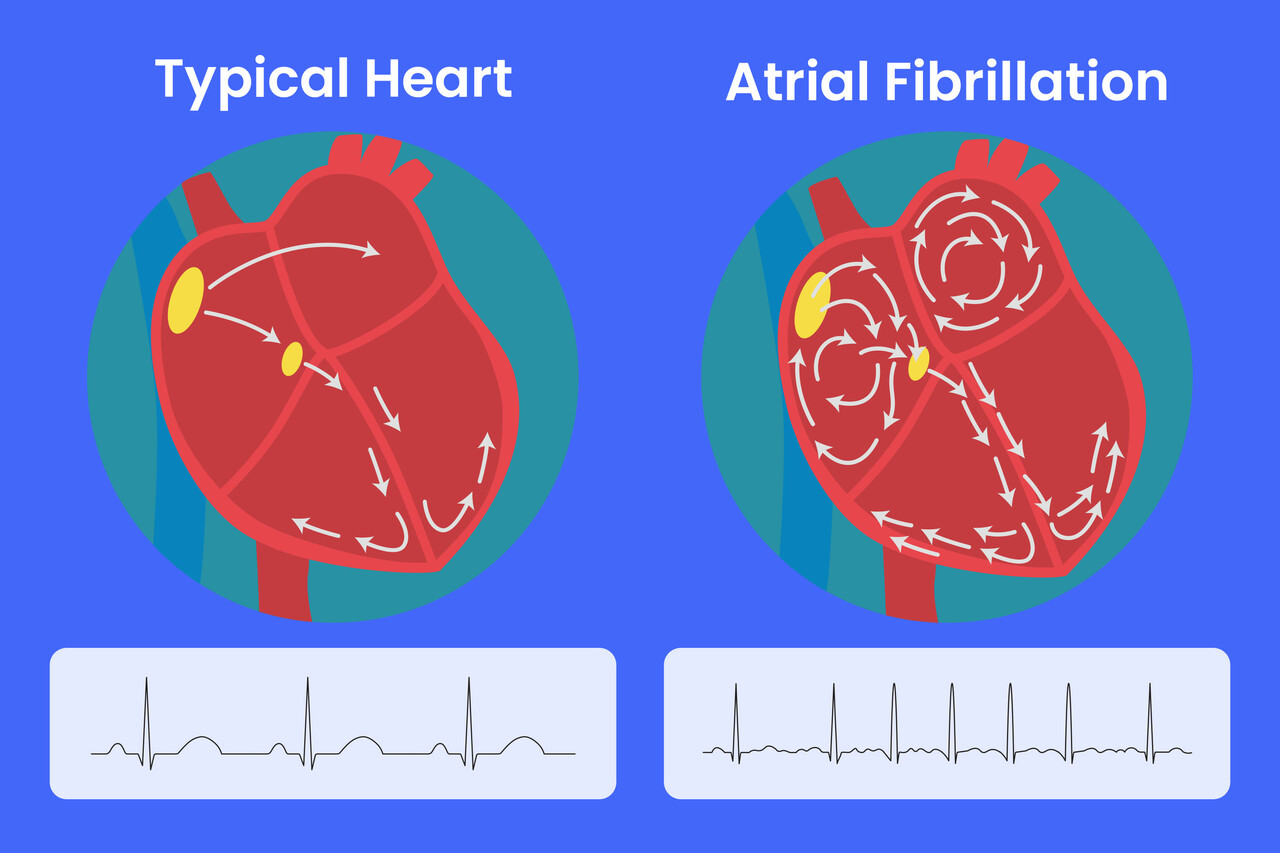
On an otherwise unremarkable Sunday in January, my heart decided it was auditioning for a drum solo in a heavy metal band. It was beating so erratically that I half-expected it to start flashing neon lights. Thankfully, I had my trusty Apple Watch, which promptly informed me that I was in atrial fibrillation—or AFib, as the cool kids call it. Never having experienced this particular thrill ride before, I did what any self-respecting adult would do: I called my mom. Naturally, she dispatched my dad, who happens to be a physician, to come and assess the situation.

Meanwhile, my husband was an hour away at a wrestling meet with our son, leaving me at home with a seven-year-old and a three-year-old. The idea of dragging them to the ER was laughable—imagine trying to explain to triage why one child is climbing the IV stand while the other is attempting to commandeer the defibrillator.

Dad arrived but couldn’t make heads or tails of my heart’s newfound jazz improvisation. He stuck around for a bit to make sure I didn’t keel over, and since the chaotic rhythm eventually subsided, I decided to spend the rest of the afternoon lying low on the couch. It was not exactly how I’d envisioned my weekend.

Hours later, when my husband finally returned home, my heart decided it wasn’t done with its antics. This time, it felt like it was attempting to launch me into orbit with its out-of-sync throbbing. Dad came back for Round Two of “What Is My Daughter’s Heart Doing Now?” and after 20 minutes of watching my pulse behave like a malfunctioning metronome, he declared it was time for the ER.

The car ride was a blur of breathlessness and sheer terror. I’d read enough about AFib to know it wasn’t something you wanted to mess around with—another stroke and cardiac arrest weren’t exactly on my bucket list. By the time we arrived at the hospital (mercifully empty), they whisked me straight into triage for an EKG. My heart rate was doing its best impression of a roller coaster: up, down, loop-de-loop.

In no time, I found myself hooked up to an array of machines that beeped ominously, as though auditioning for a sci-fi movie soundtrack. My heart rate settled at a steady 135 beats per minute but occasionally dropped into the 70s just to keep the nurses on their toes. Eventually, they dosed me with medication that calmed things down enough for me to be admitted.

And let me tell you, there’s no lonelier place on Earth than a hospital room at night. My husband went home to stay with the kids—it was Martin Luther King Jr. Day the next morning, so at least there wasn’t school to worry about—but that left me alone with nothing but my thoughts and an endless parade of nurses interrupting any attempt at sleep.

After three days of tests and sleepless nights, the verdict was in: my AFib wasn’t caused by anything as fixable as diet or exercise but rather by an electrical glitch in my heart. The solution? A cardiac ablation scheduled for the end of the month—because nothing says “fun” like heart surgery.

In the meantime, I’ve been navigating life on new medication while trying not to panic every time my heart skips a beat. Running—my beloved escape—has taken a backseat to teaching my kids how to dial 911 and writing a will (just in case). It’s a strange limbo: part fear of what’s next and part determination to savor every moment until then.

Perhaps this is where all those miles I’ve run have led me—not away from problems but straight into their arms. It feels unfair sometimes, like my body has betrayed me after years of taking care of it. But until someone invents an alternative to living, I’ll keep showing up for this messy, unpredictable life.

Running from the Weather

Spring has arrived—or so it claims. Here in the Midwest, spring is less of a season and more of an elaborate prank. It starts with what I like to call “false spring,” a tantalizing glimpse of warmth and sunshine that lasts just long enough to trick you into packing away your winter coat. Then comes “fake spring,” followed by “pseudo-spring,” and finally, the inevitable return of winter—twice. Just when you think you’ve survived the last winter, another one sneaks in like an uninvited guest at a party. And let’s not forget the grand finale: construction season. But that’s a rant for another day.

The weather here is so indecisive it could run for office. One minute it’s 77 degrees and sunny, and two hours later it’s snowing sideways. It’s like living inside a weather app that can’t make up its mind. For runners, this is nothing short of a nightmare. Dressing for an outdoor run becomes an exercise in meteorological guesswork: hand warmers and a sock hat? Or shorts and a tank top? Either way, you’re probably wrong.

Races this time of year are no better. You start bundled up like an arctic explorer but occasionally get faked out by a rogue warm day that leaves you sweating buckets by mile five. By December or January, though, it’s time to flee south for races—because while Ohio may have bipolar weather, at least Florida has the decency to pick a season and stick with it (mostly).

Take my marathon experiences in Florida as proof that even “consistent” weather can be wildly unpredictable:

  • January 2010: The Coldest Marathon Ever™. My hair literally froze during the race—it was 32 degrees at the start, which was fine because I’d trained in similar conditions. But by mile 20, my knee gave out, forcing me to walk half a mile. The cold was so brutal I had to start running again just to avoid freezing solid like some tragic runner-shaped ice sculpture. It took me two days to thaw out properly.
  • January 2012: The Temperature That Never Was. This race felt like running inside a vacuum—there was no discernible temperature at all, just an eerie neutrality that left me wondering if I’d accidentally entered some kind of weatherless dimension.
  • January 2014: Heat Advisories Galore. In my infinite wisdom, I wore all black and tights for this race—a decision that seemed fine until the temperature hit 90 degrees by hour five (yes, I’m slow). By then, it was hotter than blue blazes, and I spent the last few miles questioning every life choice that had led me to this moment.

So no, it’s not just Ohio—weather chaos can strike anywhere. My advice? Always have gloves handy. Being cold is infinitely worse than being too warm (though I say this as someone on blood thinners, so take my bias with a grain of salt). Overdressing beats underdressing every time—unless you’re running in 90-degree heat while wearing tights, but let’s not dwell on my poor judgment.

Spring may be unreliable, but running through its ups and downs teaches you resilience. After all, if we can survive spring weather every year without losing our minds entirely, we can survive anything!

Running from April Fools

I am, it seems, eternally surrounded by boys. Not just metaphorically, mind you—literally. They’re everywhere. I have three sons of my own, a husband who occasionally behaves like a fourth, and now, as if the universe thought I needed more chaos in my life, I’m coaching a boys’ volleyball team this spring. It’s as though some cosmic force has decided that my life’s soundtrack should be an endless loop of the word poop. Truly, the frequency with which I hear that word on any given day is enough to make even the most patient saint consider early retirement.

But here’s the thing about boys: they’re surprisingly easy to manage once you crack the code. Sure, they’re loud, messy, and occasionally baffling creatures, but they’re also refreshingly straightforward. Over the years, I’ve made a few observations about living in this testosterone-fueled circus. Consider this your guide to boy-wrangling:

1. They’re Predictable (Mostly)

Boys don’t tend to be particularly devious. They’re not plotting elaborate schemes or engaging in Machiavellian mind games. If you know where the dangers lie—sharp corners, precariously stacked objects, or that one kid who thinks he’s invincible—you can usually keep them in one piece. It’s less about strategy and more about constant vigilance, like living with a pack of hyperactive puppies.

2. The Five-Second Rule is Irrelevant

If it’s edible (or even vaguely resembles food), they’ll eat it. Dropped it on the floor? No problem. Found it under the couch? Even better! Boys have stomachs of steel and appetites that defy logic. I once saw one of mine eat half a sandwich he’d forgotten in his backpack for two days without so much as a second thought—or a stomachache.

3. They Speak First, Think Later

If there’s a filter between their brains and their mouths, it’s either malfunctioning or nonexistent. This habit is particularly grating to any girl within earshot, who will inevitably roll her eyes and mutter something about how boys are hopeless. And honestly? She’s not wrong.

4. Rocks Are Their Currency

I don’t know how or why this happens, but boys collect rocks as though they’re precious gemstones. You’ll find them everywhere—backpacks, pockets, jars, under couch cushions. Sometimes they’re special because they’re “shiny” or “cool,” but more often than not, they’re just regular old rocks that somehow hold immense sentimental value.

5. Practical Jokes Are Their Love Language

In my house, pranks are as essential as oxygen. As I sit here writing this from work, there is packing tape stretched across every doorway in my home—a delightful surprise left by my little April Fools enthusiasts. My mom has already reported that one of them walked straight into it (the irony is not lost on me). By the time I get home at 5:30 p.m., I fully expect to find at least one child tangled in tape like a fly caught in a spiderweb. This is my life.

And yet, despite the chaos—the noise, the messes, the endless supply of rocks—I wouldn’t trade it for anything. Life with boys is unpredictable and exhausting but also wildly entertaining. They keep me on my toes and remind me daily that laughter really is the best medicine… even if it’s occasionally at my own expense.

So here’s to boys: messy, lovable tornadoes of energy who will forever keep me guessing—and forever keep me laughing (even if it’s through gritted teeth).

This, folks, is why we run. I realize that April Fools’ Day is a metaphor for life itself—full of unexpected twists and turns, some humorous, others not so much. But running gives me the clarity to navigate these challenges with a bit more grace and a lot more humor. So, on this April Fools’ Day, I’ll keep running—both from the pranks and towards a clearer mind. After all, this is why we run: to find our footing in a world that’s always trying to trip us up.

Running from Responsibility

Why does it always seem like it’s Monday? It’s a question that has haunted humanity since we first tethered ourselves to the tyranny of calendars. Personally, I don’t mind Mondays all that much. They bring with them a sort of comforting predictability—a return to routine, which, for someone like me, feels like slipping into a well-worn pair of slippers. Mondays are orderly, structured, and oddly satisfying. But Sundays? Sundays are the existential dread of the week—a slow-motion car crash of anxiety and obligation.

Let’s talk about Sundays. Sundays are the day that whispers in your ear, “You’re not relaxing; you’re procrastinating.” They’re the day when you’re supposed to unwind but instead find yourself mentally preparing for Monday. It’s as if Sunday exists solely to remind you of all the things you haven’t done yet. And heaven forbid there’s something scheduled on a Sunday—then the entire weekend becomes collateral damage. You can forget about enjoying Saturday because Sunday’s looming shadow will consume it whole.

Not that relaxation is really an option in my house. I live with three small boys who seem to have made it their life’s mission to turn every moment into a scene from an action movie—minus the stunt doubles. One is hurling rocks at his brother while another is testing the tensile strength of our front picture window with water balloons. Meanwhile, the third is pedaling his bike at breakneck speed around every driveway in the neighborhood, narrowly avoiding a tennis ball launched by one of his accomplices. It’s chaos on six legs, and I’m the hapless referee trying to prevent this circus from devolving into outright anarchy.

Then there’s my youngest, who has developed an obsession with Spider-Man so intense it borders on method acting. Every night as I wrestle him into his Spidey pajamas (the cleanest pair I can find), he fixes me with a look of grave concern and asks, “What’s happening to me?” It’s as though he genuinely believes the pajamas might trigger a radioactive spider bite and transform him into a web-slinging vigilante before bedtime.

But back to Sundays—the day that seems determined to ruin itself. They’re always gloomy, aren’t they? The sky turns gray as if even nature has decided it can’t be bothered with cheerfulness. There’s laundry to do, coffee never seems strong enough, and every task feels like an uphill battle against time itself. Sundays are not just for the birds; they’re for the grumpy, caffeine-deprived humans who wish they could fast-forward straight to Monday.

And then there are Sunday long runs—the supposed panacea for the weekend’s lethargy. But let’s be honest, they’re more like a double-edged sword. On one hand, they offer a fleeting sense of accomplishment and a brief respite from the chaos that ensues when three miniature humans are left unattended for more than five minutes. On the other hand, they have a peculiar way of making Sundays even more unbearable.

Spend more than an hour pounding the pavement, and you’ll find yourself wondering if the rest of the day has been irreparably damaged. It’s as if the clock itself has been warped by your exertions, stretching out the hours into an endless expanse of exhaustion and obligation. You return home, drenched in sweat and feeling like you’ve been put through a wringer, only to be greeted by the unrelenting demands of laundry, meal prep, and refereeing the ongoing battle between your offspring.

The irony is that long runs are meant to clear your head and invigorate your spirit. But on Sundays, they seem to have the opposite effect. The rest of the day becomes a blur of fatigue and anxiety, with every task feeling like a Herculean challenge. You’re left wondering if the temporary high of endorphins was worth the subsequent crash into the abyss of Sunday blues.

And don’t even get me started on the Spider-Man obsessed youngest, who, upon seeing you stumble through the door, sweat-drenched and limping, will look at you with an air of deep concern and ask, “What’s happening to you?” It’s as though he suspects that the long run has somehow triggered a transformation into a superhero, albeit one who’s lost his cape and can barely make it to the couch.

So yes, give me Mondays or give me death. Mondays may be mundane, but at least they don’t pretend to be something they’re not. They don’t lure you in with promises of relaxation only to slap you with a laundry list of chores and existential angst. Mondays are honest—they show up with their spreadsheets and schedules and say, “Let’s get on with it.” And honestly? That suits me just fine.

Running from Reality: A Midlife Meander Through the Absurd

Let’s talk about expectations. When you’re knee-high to a grasshopper, do you envision yourself, decades later, as a 42-year-old survivor of both a stroke and the relentless existential dread that comes with being a modern human? Do you foresee a domestic landscape populated by a nine-year-old space expert (who knows more about black holes than I do about, well, anything), a six-year-old bottomless pit of a child (whose digestive system operates with the efficiency of a garbage disposal), a three-year-old dictator (who probably runs a tighter ship than most Fortune 500 CEOs), and a husband whose devotion to wrestling occasionally surpasses even his fondness for his long-suffering wife?

No? Me neither.

Life, as they say, has a way of rearranging the furniture. It presents you with a neatly packed suitcase of dreams and aspirations, then promptly throws it off a speeding train. You’re left standing on the platform, blinking in confusion, surrounded by scattered socks and a crumpled map of the world as you thought it would be.

And so, one finds oneself at an… interesting juncture. Not ungrateful, mind you. Gratitude is a very important thing and I practice it daily. But also not… entirely thrilled. Frankly, some days, the sheer weight of it all—the demands, the responsibilities, the unrelenting cacophony of tiny voices—can feel like trying to swallow a particularly dense and thorny cactus.

This, dear reader, is where the running comes in.

Because when life serves up a generous helping of the unexpected, you have two choices: you either roll over and play dead, or you lace up your sneakers and attempt to outrun the encroaching sense of… something. What that something is, I’m still trying to figure out. Midlife crisis? Existential angst? The lingering effects of neurological trauma? Probably a delightful cocktail of all three, shaken, not stirred.

Now, about that cactus. You could try to stomach it whole and learn to appreciate its unique flavor profile (a flavor that, I suspect, closely resembles despair). Or, you could opt for a slightly more palatable solution. Which is, in my case, a small, round, Lexapro-shaped lifesaver. Remember that thorny cactus? Well, this little pill helps to smooth down the spikes. Not a cure, mind you. More of a… temporary truce.

The reality, as I’m slowly coming to accept, is that some days the chatter in my head resembles a flock of startled parrots engaged in a heated debate about the merits of various brands of birdseed. Other days, it’s more like a swarm of angry bees, buzzing furiously around a nest of anxieties. Saturdays, in particular, can be perilous. With the structure of the workweek stripped away, and the schedule blissfully (or terrifyingly) sparse, there’s simply too much time to think. Too much time to ruminate. Too much time to engage in the delightful pastime of self-loathing.

The medication has quieted the noise, and the relief is palpable. But it’s also… unsettling. I’m calmer. Less anxious. Something I haven’t felt in years. It feels a little like wearing someone else’s skin.

Here’s the kicker: I’m still trying to figure out who “I” am now. The stroke, the medication, the relentless march of time—they’ve all conspired to create a somewhat… unfamiliar version of myself. I don’t quite recognize myself. I haven’t been myself in about three years now, and I’m still trying to figure out where the trail leads. Am I back to myself? Am I a new version? Am I just out here, aimlessly running?

But this, surprisingly, is a happy post. Because in the midst of all this uncertainty, there’s a glimmer of something resembling hope. A sense of relief. The freedom to breathe, even if the air feels a little… different.

And, dear reader, you’re getting to witness it all unfold. As I stumble and fumble my way through this new normal, as I tentatively piece together the fragments of my former self, I’m sharing it all with you. You’re getting the real-time, uncensored, occasionally-slightly-medicated revelation of me. Aren’t you just thrilled? I know I am. Mostly. Well, sometimes. Okay, maybe only on Tuesdays. But still… progress!

Now, if you’ll excuse me, I have a three-year-old dictator to appease. And a five-mile run to “escape” into. Wish me luck. I have a feeling I’m going to need it.

Running Back to the Saddle

In the crisp autumn air of Indianapolis, with leaves crunching underfoot and the promise of adventure hanging thick as morning fog, I found myself standing at the starting line of the Indianapolis Half Marathon. It was October 2023, and I was about to embark on a 13.1-mile journey through the heart of the Hoosier capital, a feat that seemed as improbable as finding a cowboy riding a horse down Broadway in New York City.

You see, dear reader, this wasn’t just any race for me. Oh no, this was my first major foray into the world of competitive shuffling since a rather inconvenient stroke had decided to pop by for an extended stay in my brain. Here I was, a former college athlete who once squatted small cars for breakfast, now questioning whether I could manage a brisk walk to the corner store without keeling over.

But let me tell you about the ingenious decision I made, one that would make even the most seasoned race veteran nod in approval. I splurged on the opportunity to start my day in the hallowed halls of the Indiana State House. Picture it: while other poor souls were huddled outside like penguins in a snowstorm, I was stretching my questionable limbs in the warm embrace of democracy, munching on a breakfast that didn’t come wrapped in tinfoil. It was a stroke of brilliance if you’ll pardon the pun.

As I waddled to the starting line, a mere stone’s throw from my cozy State House sanctuary, I couldn’t help but feel a twinge of panic. Had I trained enough? Was I still the same person who had once pushed out babies with the ease of a vending machine dispensing snacks? The identity crisis loomed larger than the giant timing clock ticking away mercilessly above our heads.

The race began, and to my utter astonishment, I found myself running. Not the graceful gazelle-like strides of my youth, mind you, but a determined shuffle that would make any powerwalker proud. For five glorious miles, I was unstoppable. That is until my right shoe decided it had had enough of this foolishness and came untied.

Now, dear reader, picture if you will, a somewhat disheveled woman bent over a curb, fingers swollen to the size of small sausages, attempting to tie a shoelace. It was a sight so pitiful that a kind stranger took pity and performed the task for me. I briefly considered asking them to carry me the rest of the way, but my pride (what was left of it) wouldn’t allow it.

The next few miles were a blur of monotony, broken only by the occasional cheer from a spectator who had clearly mistaken me for someone else. But as we approached mile 10, something magical happened. We found ourselves running alongside the race’s overachievers – those annoyingly fit individuals who were already finishing. It was both inspiring and mildly infuriating.

As I crossed the finish line, my boys waiting with expressions that were equal parts pride and “can we go home now?”, I wanted to shout from the rooftops about my triumph over adversity. But instead, I settled for an internal victory dance, and the knowledge that I had, indeed, proven something to myself.

In the end, as I hobbled what felt like another half marathon to reach our parked car, I realized that toughness comes in many forms. Sometimes it’s squatting small buildings, and sometimes it’s putting one foot in front of the other when your brain has other ideas. And since that realization has landed me in therapy, well, at least I have plenty to talk about.

Running from my Birthday

Ah, birthdays. Those peculiar annual rituals where we’re expected to celebrate the inexorable march towards our own mortality with cake and forced merriment. For most, it’s a day of joyous reflection and an excuse to indulge in socially acceptable gluttony. For me, it’s become a rather more complicated affair, thanks to a mischievous little cerebrovascular event that decided to gatecrash my party just as I was about to hit the big 3-9.

Picture, if you will, a scene of impending festivity. Balloons at the ready, candles poised for their fiery demise, and a cake so laden with sugar it could send a hummingbird into diabetic shock. But instead of blowing out candles, I found myself blowing bubbles in a hospital bed, my brain having decided to take an impromptu vacation without so much as a postcard.

The next few days passed in a haze of confusion and medical jargon, as if I’d suddenly been dropped into an episode of ER, but with significantly less George Clooney and a lot more bewildered mumbling. By the time I resurfaced, I felt compelled to inform my long-suffering husband that “something was definitely wrong.” I imagine his response was along the lines of, “You don’t say, dear. I thought lying comatose in a hospital was your new hobby.”

Now, birthdays and I have a relationship that’s about as warm and fuzzy as a cactus in a snowstorm. The stroke merely added an extra layer of complexity to our already strained association. It’s as if my birthday has become a sort of morbid anniversary, a day when I’m supposed to simultaneously celebrate my continued existence and mourn the person I used to be. It’s like trying to have a party in a funhouse mirror maze – disorienting, slightly nauseating, and with an unsettling sense that you’re not quite who you thought you were.

I’m well aware that my attitude towards this annual milestone is about as cheerful as a wet weekend in Miami. But when you’ve spent over a year cataloging your deficits like some sort of neurological accountant, it’s hard to muster enthusiasm for party hats and noisemakers.

And let’s not forget the baby – my third little bundle of joy, who had the misfortune of being born just 6 weeks before his mother decided to audition for a medical drama. I missed out on all those precious newborn moments – the sleepless nights, the endless diaper changes, the spit-up on every clean shirt. It’s enough to make a person weep, or at least wish for a time machine and a neurologist on speed dial.

So here I am, forever 39, stuck in a perpetual loop of birthday ambivalence. It’s a day that serves as a stark reminder of what was lost, what was gained, and the peculiar journey of rediscovering oneself post-stroke. But who knows? Perhaps one day I’ll embrace the occasion with the enthusiasm of a labrador at a tennis ball factory. Until then, I’ll be here, blowing out candles and silently thanking my stubborn brain for sticking around for another year of this bizarre adventure we call life.

Running from my Superpowers

In the curious realm of parental entertainment, my 6-year-old has developed a penchant for a game called “This or That,” a sort of pint-sized Sophie’s Choice, if you will. The rules are simple: choose between two options, each more absurd than the last. Would you rather consume earthworms for superhuman abilities or possess ocular laser beams? The latter, naturally, unless one harbors a particular fondness for soil-dwelling invertebrates.

During a recent expedition to the Ohio State Fair – a veritable cornucopia of deep-fried delights and livestock beauty pageants – we found ourselves embroiled in this peculiar pastime for what felt like several geological epochs. As we navigated the labyrinth of exhibits, dodging the occasional overzealous turkey leg enthusiast, the topic of superpowers inevitably arose. Flight versus strength, the age-old conundrum that has puzzled philosophers and comic book aficionados alike.

By some cosmic coincidence, we soon stumbled upon a children’s exhibit where young visitors could declare their superpower of choice. My offspring, clearly well-versed in the art of snap decisions, were ready to stake their claims in the pantheon of imaginary abilities.

Oz, ever the speed demon, declared himself the Usain Bolt of the prepubescent set. Wynn, apparently fancying himself a pint-sized Hercules, opted for strength. But it was Cub, our resident boy wonder, who threw us a curveball worthy of a major league pitcher. With the solemnity of a Supreme Court Justice, he proclaimed his superpower to be “brains.”

Now, Cub’s intellectual prowess is no secret. The lad’s cranium practically hums with cognitive activity. But in the cruel world of childhood social dynamics, being the smartest kid in the room is about as popular as a ferret in a sack race. It’s a predicament I know all too well, having spent my formative years as the class brainiac, a role that’s about as comfortable as a corset made of cacti.

Since my unfortunate tango with a stroke, my own cerebral circuitry has been performing a rather unorthodox cha-cha. The thoughts in my head and the words from my mouth seem to be engaged in an endless game of telephone, with predictably garbled results. However, this neurological rewiring has bestowed upon me an unexpected gift: a finely-tuned hogwash detector that would make even the most seasoned carnival barker quake in his boots.

It’s taken some time to adjust to this new superpower, but I must say, it’s far more useful than any gadget you might find in the pages of a Sharper Image catalog. Though I do sometimes miss the days when I could string together a sentence without feeling like I was solving a particularly vexing crossword puzzle, there’s something to be said for being able to spot nonsense at fifty paces. In the grand game of “This or That,” I’ll take my newfound bullshit radar over laser eyes any day of the week.

As I pondered the peculiar phenomenon of superpowers, it occurred to me that we’re all walking around with our own unique brand of extraordinary ability, like a vast collection of human Swiss Army knives, each with a different set of improbable gadgets. The real trick, of course, is figuring out what your particular superpower might be. Is it the ability to fall asleep instantly on long-haul flights? Perhaps you’re blessed with the uncanny knack of always choosing the fastest-moving queue at the supermarket. Or maybe you possess the otherworldly talent of being able to predict rain by the throbbing of your left knee.

Whatever it may be, there’s something truly magical about witnessing someone else’s superpower in action. It’s like stumbling upon a secret garden or finding a trap door in your living room that leads to Narnia. These hidden talents are rarely on display for the general public, tucked away like family heirlooms or embarrassing childhood photographs. But when you do get a glimpse, it’s as though you’ve been granted access to a sliver of that person’s very essence, a fleeting peek behind the curtain of their soul. These moments of witnessing raw talent in action are to be cherished, like finding a four-leaf clover or spotting a double rainbow.

As for my own brood of pint-sized superheroes, I count myself fortunate that they’ve already identified their unique talents at such a tender age. While I’m still grappling with the intricacies of my newfound bullshit detector, they’re out there embracing their powers with the enthusiasm of a labrador at a tennis ball factory. It’s a reminder that sometimes the most extraordinary abilities are found in the most ordinary of places – even in a household where the primary superpower seems to be the ability to generate laundry at an alarming rate.

In the end, perhaps the real superpower is recognizing and appreciating the extraordinary in others. And if that’s the case, well, I might just be ready to don a cape and tights myself. Though on second thought, perhaps I’ll stick to admiring from afar. Lycra, after all, is not particularly forgiving on a middle-aged frame.