Running from my Identity

To know where you are going, you first have to know where you are. This is a truth so obvious it feels like something Confucius might have muttered after a particularly satisfying lunch, but it’s also a truth I’ve been grappling with lately. Somehow, I’ve managed to stumble from 2014 to 2025 with all the grace and clarity of someone trying to find their glasses while wearing them on their head. The years have passed in a blur, and the culprit, I suspect, is motherhood—a phenomenon that seems to simultaneously rob you of your sanity while gifting you moments so absurdly wonderful they make you question whether sanity was ever necessary in the first place.

Let me be clear: I love my kids. I love them so much that if licking them were socially acceptable, I’d be first in line. They are hilarious little creatures, full of quirks and chaos. But—and here’s the part where I feel compelled to duck for cover—I wouldn’t do it again if given the chance. Not because they aren’t delightful (they are), but because motherhood is less a journey and more an endurance test disguised as a Hallmark card. Since their arrival, sleep has become a distant memory, like an old friend who moved away and stopped returning your calls. Eleven years without sleep—imagine that. It’s not just inconvenient; it’s practically a science experiment.

The funny thing is that while my life seemed to unravel in the wake of parenthood, my children somehow stitched me back together in ways I didn’t expect. After my stroke—a terrifying event that left me questioning everything about myself—they reminded me of who I was, or at least who I could still be. Depression has since taken its toll on my fragile brain, leaving me feeling like a poorly assembled IKEA shelf: functional but precariously balanced.

And so here I am, pondering reinvention—a word that sounds far more glamorous than it feels. Reinventing oneself is tricky business when you’re not entirely sure where you stand to begin with. How can you chart a course forward if you don’t even know your starting point? It’s like trying to navigate with a map of Narnia when what you really need is Google Maps.

The truth is, I don’t always like myself. In fact, most days I feel like a terrible person—a sentiment that’s both exhausting and oddly comforting in its consistency. Misunderstood? Certainly. But also deeply flawed in ways that make me wonder if reinvention is even possible or if I’m simply destined to muddle along as I am.

Still, there’s something oddly liberating about acknowledging all this messiness—the sleepless nights, the existential crises, the moments of joy so profound they make your heart ache. Life isn’t tidy; it’s a sprawling, chaotic narrative full of plot twists and questionable character development. And maybe that’s okay. Maybe knowing where you are—messy and imperfect as it may be—is enough to start figuring out where you’re going next.

Running from Dinner

Being a mom is, to put it mildly, like being the CEO of a company where the employees are perpetually confused, demanding, and prone to losing their shoes. It’s not that being a dad isn’t hard—dads have their own set of challenges—but moms are expected to know everything. We’re the keepers of the appointments, the grocery lists, and the precise location of every sock in the house. We’re also tasked with feeding everyone dinner every single day (as if hunger weren’t enough of a problem without adding meal planning to it) and ensuring there’s always underwear for the foreseeable future. Honestly, it’s a wonder we don’t just throw in the towel and declare cereal as an acceptable dinner option every night. Thank goodness my kids like cereal.

And yet, my responsibilities don’t stop with the kids. Oh no, I also worry about my husband’s stuff. Did his co-workers like him today? Does his boss think he’s doing a good job? Did he remember his coffee mug this morning? These are not things I need to worry about, but I do anyway because apparently my brain has decided it’s a good idea to run on overdrive at all times. The result? Exhaustion. Most days I’m so drained I can fall asleep before my kids do—though, admittedly, the stroke hasn’t helped matters in that department. By 8 p.m., I’m done for, and I’ve stopped pretending otherwise.

As if all that weren’t enough, volleyball has added a new layer of mental gymnastics to my life. Coaching requires brainpower—lots of it—and that makes my already pronounced exhaustion even more pronounced. It’s as though life decided to hand me a wrench and then gleefully watch me try to juggle it along with everything else.

And can we talk about dinner for a moment? Who decided moms need to be responsible for answering all food-related questions? “What’s for dinner?” “Do we have ketchup?” “Why don’t we have ketchup?” How am I supposed to remember if there’s another bottle in the pantry when you inhaled the last one like it was oxygen? The whole thing is absurd.

This is why running is my ultimate sanctuary. It allows me to escape the chaotic landscape of my mind—a realm cluttered with endless lists, nagging reminders, and mental post-it notes that seem to multiply like rabbits on caffeine. For a blissful stretch of time, I get to silence the cacophony of thoughts and simply be. It’s a liberating experience that reminds me I still possess a semblance of sanity.

And when I return home, something magical happens. The tasks that once loomed like Mount Everest now seem like mere speed bumps. Running is hard, yes, but it’s a reminder that if I can conquer the road, I can conquer anything life throws at me. Plus, it’s the ultimate multitasking tool: I can listen to podcasts, push kids in strollers, run with the dog, and rack up my steps all at once. It’s efficiency at its finest—a symphony of productivity and peace.

So here’s my conclusion: running is not just a survival tool for moms; it’s a lifeline. It’s not just exercise; it’s therapy, a sanity-saver, and a reminder that we’re capable of more than we ever thought possible. Vote for me in 2028, and I’ll make sure cereal dinners and mandatory running become the pillars of a new national wellness policy. Together, we can create a world where moms can thrive, one run at a time!

Running from Volleyball

In the summer of 2020, during what I like to call the “Tiger King Era”—a time when the world collectively decided that binge-watching eccentric zoo owners was the best way to cope with a pandemic—I made a monumental decision. I left my volleyball coaching job at Fort Hays State University. To be clear, I hated every thought of leaving, but Covid had done something strange to our family’s perspective. It was as if the virus had snuck into our comfort zone and whispered, “Time to shake things up.” And so, we did.

Since then, life has been a bit like a carnival ride operated by someone with a questionable grasp of mechanics. Baby? Check. Stroke? Check. Cross-country move? Oh, absolutely. Any one of these events could have been enough to send us spiraling, but we managed to survive all of them—barely—and emerged stronger and more resilient than ever. Problems that once seemed enormous were suddenly reduced to mere inconveniences. It’s amazing how life-altering chaos can recalibrate your sense of scale.

Fast forward to Ohio in the spring of 2023, where I found myself presented with an opportunity to coach volleyball at my high school alma mater. Nostalgia aside, I knew I wasn’t ready—not physically, not mentally, not even logistically. My job demanded too much of me, and my family needed even more. So I shelved the idea and carried on.

Then came 2024, and with it another twist: a co-worker asked me if I’d consider coaching a boys’ volleyball team in spring 2025. I hesitated but said I’d think about it. My new job required far less brainpower (a blessing), and for the first time in years, the timing felt right to get back on the court.

But fate had other plans—or perhaps it just enjoys being dramatic. On December 28th, my mom woke up with a shattered scapula for no apparent reason (a condition I’ve dubbed “spontaneous broken wing syndrome”). A week later, my dad decided to test his snow blower’s blade sharpness with his fingertip—a decision that ended predictably poorly. As if that weren’t enough, my husband Chas tore his calf muscle while skipping in a preschool gym class (yes, skipping). By January 19th, my own heart joined the rebellion, landing me in the hospital for three days with AFib/Atrial Flutter. At this point, quitting seemed like the most logical option—but somehow, I couldn’t bring myself to say no.

And thank goodness for that stubborn streak. Once I started coaching again, it was as if my brain had rediscovered an old friend it didn’t know it missed. The rhythm of practices, the camaraderie of the team—it all felt wonderfully familiar. Boys are easier to coach than girls (as anyone who’s read my other posts will know), but they require persistence—a trait I’ve learned is key both on and off the court. We’re not great yet; we’re young and learning. But every day brings progress that makes the effort worthwhile.

The moral of this chaotic tale? Sometimes you have to dive into something you’re convinced you can’t do—post-stroke or otherwise—and prove yourself wrong. It’s terrifying but deeply satisfying to discover what you’re still capable of achieving. And who knows? Maybe persistence really is the secret ingredient for surviving life’s carnival ride—even when it feels like it’s spinning out of control.

Running from the Toddler

Ah, motherhood. That grand, mysterious adventure that begins with nine months of discomfort, followed by a brief stint as a conveyor belt for tiny humans and culminates in the realization that your life is now entirely dictated by someone who can’t tie their own shoes. The remarkable thing about this whole process is how quickly we forget the pain—the swollen ankles, the sleepless nights, the moment you realized your bladder had been demoted to a trampoline. It’s as if nature has thoughtfully provided us with a mental delete button. But then, just when you think you’ve moved on, along comes the age of three to remind you that perhaps you haven’t forgotten quite enough.

Now, people often talk about the “terrible twos,” which is misleading. Two is merely an amuse-bouche of chaos compared to the full buffet of madness that awaits at three. Three is when your cherubic toddler transforms into a pint-sized dictator with an alarming grasp of language and an uncanny ability to manipulate adults. They don’t just demand hot dogs; they demand them with conviction. They don’t just want you to play; they want you to be exactly the Transformer they’ve assigned while they prance about as Slinky Dog. And heaven help you if you don’t queue up their favorite show for the 87th time—an oversight that will be met with outrage worthy of a United Nations summit.

I can say with confidence that I despise three-year-olds—my own included. It’s not personal; it’s just that they’ve perfected the art of being simultaneously exhausting and infuriating. They refuse naps, despite being visibly more tired than a marathon runner at mile 26. They develop peculiar preferences for things like milk cups, which they express in cryptic proclamations like, “That’s more like it!”—a phrase so bizarre it makes you wonder if you’re raising an eccentric Victorian aristocrat.

But let me assure you, it doesn’t stop at three. Oh no, seven and nine have their own unique horrors. Seven-year-olds seem to think sibling rivalry is an Olympic sport, and nine-year-olds have mastered the fine art of being insufferably smug while still needing help with basic hygiene. If I had a dollar for every time I’ve shouted “Keep your hands to yourself!” I’d be lounging on a private island right now, sipping cocktails and marveling at my fortune.

This is why I run—not metaphorically or figuratively—but literally. Running is my escape from the madness, my chance to pound out my frustrations on the pavement while fantasizing about a world where children come with mute buttons. Lexapro helps, but even modern pharmaceuticals have their limits when faced with preschoolers who think they’re ready to govern small nations.

Still, hope glimmers faintly on the horizon: preschool starts in the fall. Surely someone else can deal with his boundless energy and insatiable curiosity for a few hours each day. Until then, I’ll be here—dodging demands for hot dogs and Transformer reenactments—counting down the days until sanity returns (or at least takes a brief holiday).

Running from the Schedule

Anyone who has ever taken up running knows that a training plan has the uncanny ability to commandeer your calendar with the precision of a military operation. Suddenly, your weeks are peppered with 40-minute cross-training sessions, midweek 3-milers, and those dreaded Sunday long runs. It’s a relentless march of miles and minutes that feels both necessary and slightly masochistic. The irony, of course, is that while sticking to the schedule is meant to prepare you for race day, it can also leave you feeling like you’ve aged a decade in the process.

Take, for example, one particularly ill-fated 14-mile long run I endured. It was one of those runs where everything that could go wrong did—legs like lead, lungs on strike, and a general sense that the universe was conspiring against me. For three weeks afterward, I agonized over it, convinced that my marathon (still months away) was doomed because of this single bad outing. Spoiler alert: it wasn’t. But try telling that to my overthinking brain at the time.

Of course, running isn’t the only thing vying for space on my calendar these days. No, the real chaos begins when you add in my children’s baseball practices (two per kid per week), their games (sometimes three per kid per week), my volleyball coaching schedule (up to four games a week plus practices), dentist appointments, and—oh yes—a looming heart surgery. Somewhere in this maelstrom of activity is a vague hope of eating dinner, doing laundry, and remembering which parent needs the van for chauffeuring duties. It’s less “organized chaos” and more “chaos with occasional bursts of organization.”

Preparation, I’ve learned, is key to surviving this whirlwind. Theoretically, anyway. In practice, I’m hit or miss. Some nights I manage to do things my future self will thank me for—like setting up the coffee maker so all it needs is a flick of the switch in the morning. Other nights I collapse into bed with the vague hope that tomorrow will sort itself out (it rarely does).

With my April 25th surgery looming ever closer, I’m trying to lean into this whole “being prepared” thing more than usual. My post-surgery self will undoubtedly appreciate it—and so will my husband, mom, and aunt, who are poised to pick up the slack if I don’t get my act together. They’re lovely people but probably not thrilled at the prospect of navigating the fallout from my lack of planning.

In the end, though, life—like running—isn’t about perfection. It’s about putting one foot in front of the other and hoping you don’t trip over your own shoelaces along the way. And if all else fails? There’s always coffee waiting for me in the morning… assuming I remembered to set it up.

Running from the Geese

There is a bit of an avian drama unfolding just outside my workplace, and it is nothing short of a Hitchcockian spectacle. A Canadian goose—a bird whose reputation for belligerence precedes it—has decided that the ideal spot to lay her egg is mere inches from one of our entrance doors. This, as you might imagine, has turned the simple act of entering the building into something akin to running a gauntlet.

The father goose, a creature of singular determination and misplaced aggression, has taken it upon himself to defend their makeshift nursery with the fervor of a medieval knight guarding a castle. To him, every passerby is an existential threat, and he greets them with all the subtlety of a dive-bombing fighter jet. Colleagues have been subjected to aerial assaults, honking tirades, and the occasional goose-to-head collision. It’s less “welcome to work” and more “welcome to Thunderdome.”

I, however, have managed to avoid being attacked. Perhaps it’s my aura of invincibility. Or perhaps I’ve simply been lucky enough to avoid crossing paths with this feathered vigilante on a bad day. Either way, I’ve had time to reflect on this goose’s antics and come to one undeniable conclusion: that bird is an exceptional parent. He would do absolutely anything for his unborn offspring—even if it means terrorizing an entire office building.

It’s humbling, really. There are days when I can’t even muster the energy to fetch my child a cold hot dog from the fridge. And here’s this goose, risking life and limb (well, mostly limb) to protect an egg. What kind of mom am I? Sure, I made my kids by eating food—a fact I like to remind them of regularly by declaring that their arms are made of barbecue chips—but they never believe me. It’s true though!

When I was pregnant with Cub, for instance, I subsisted almost entirely on Raisin Bran. Why? I have no idea. But I went through boxes of the stuff like it was going out of style. On one particularly memorable trip to California during that pregnancy, I ate nothing but Raisin Bran for four days straight. It was probably the cheapest vacation diet in history.

With Ozzie, my cravings pivoted dramatically to all things orange—orange Jell-O, oranges themselves, anything vaguely citrus-hued. Perhaps my body was crying out for Vitamin C? Who knows?

And then there was Wynn. For reasons I cannot explain (nor do I want to), all I craved during that pregnancy was concession stand nacho cheese—the kind that comes in plastic tubs and tastes like regret but somehow hits all the right notes when you’re expecting. Unsurprisingly, Wynn turned out to be my heavyweight.

Despite these peculiar dietary choices, all three kids turned out perfectly fine—living proof that you can build a human on cereal, citrus, and questionable cheese products.

But back to our goose friend: as much as her dedication impresses me, I can’t help but feel grateful that human parenting doesn’t require sitting on your children all day long like she does with her egg. That said, if anyone needs me later today, I’ll be sneaking into work through the back door while silently saluting Mr. Goose for his unyielding commitment to fatherhood—and hoping he doesn’t notice me on the way in!

Running From the Beat of My Own Heart

On an otherwise unremarkable Sunday in January, my heart decided it was auditioning for a drum solo in a heavy metal band. It was beating so erratically that I half-expected it to start flashing neon lights. Thankfully, I had my trusty Apple Watch, which promptly informed me that I was in atrial fibrillation—or AFib, as the cool kids call it. Never having experienced this particular thrill ride before, I did what any self-respecting adult would do: I called my mom. Naturally, she dispatched my dad, who happens to be a physician, to come and assess the situation.

Meanwhile, my husband was an hour away at a wrestling meet with our son, leaving me at home with a seven-year-old and a three-year-old. The idea of dragging them to the ER was laughable—imagine trying to explain to triage why one child is climbing the IV stand while the other is attempting to commandeer the defibrillator.

Dad arrived but couldn’t make heads or tails of my heart’s newfound jazz improvisation. He stuck around for a bit to make sure I didn’t keel over, and since the chaotic rhythm eventually subsided, I decided to spend the rest of the afternoon lying low on the couch. It was not exactly how I’d envisioned my weekend.

Hours later, when my husband finally returned home, my heart decided it wasn’t done with its antics. This time, it felt like it was attempting to launch me into orbit with its out-of-sync throbbing. Dad came back for Round Two of “What Is My Daughter’s Heart Doing Now?” and after 20 minutes of watching my pulse behave like a malfunctioning metronome, he declared it was time for the ER.

The car ride was a blur of breathlessness and sheer terror. I’d read enough about AFib to know it wasn’t something you wanted to mess around with—another stroke and cardiac arrest weren’t exactly on my bucket list. By the time we arrived at the hospital (mercifully empty), they whisked me straight into triage for an EKG. My heart rate was doing its best impression of a roller coaster: up, down, loop-de-loop.

In no time, I found myself hooked up to an array of machines that beeped ominously, as though auditioning for a sci-fi movie soundtrack. My heart rate settled at a steady 135 beats per minute but occasionally dropped into the 70s just to keep the nurses on their toes. Eventually, they dosed me with medication that calmed things down enough for me to be admitted.

And let me tell you, there’s no lonelier place on Earth than a hospital room at night. My husband went home to stay with the kids—it was Martin Luther King Jr. Day the next morning, so at least there wasn’t school to worry about—but that left me alone with nothing but my thoughts and an endless parade of nurses interrupting any attempt at sleep.

After three days of tests and sleepless nights, the verdict was in: my AFib wasn’t caused by anything as fixable as diet or exercise but rather by an electrical glitch in my heart. The solution? A cardiac ablation scheduled for the end of the month—because nothing says “fun” like heart surgery.

In the meantime, I’ve been navigating life on new medication while trying not to panic every time my heart skips a beat. Running—my beloved escape—has taken a backseat to teaching my kids how to dial 911 and writing a will (just in case). It’s a strange limbo: part fear of what’s next and part determination to savor every moment until then.

Perhaps this is where all those miles I’ve run have led me—not away from problems but straight into their arms. It feels unfair sometimes, like my body has betrayed me after years of taking care of it. But until someone invents an alternative to living, I’ll keep showing up for this messy, unpredictable life.

Running from the Weather

Spring has arrived—or so it claims. Here in the Midwest, spring is less of a season and more of an elaborate prank. It starts with what I like to call “false spring,” a tantalizing glimpse of warmth and sunshine that lasts just long enough to trick you into packing away your winter coat. Then comes “fake spring,” followed by “pseudo-spring,” and finally, the inevitable return of winter—twice. Just when you think you’ve survived the last winter, another one sneaks in like an uninvited guest at a party. And let’s not forget the grand finale: construction season. But that’s a rant for another day.

The weather here is so indecisive it could run for office. One minute it’s 77 degrees and sunny, and two hours later it’s snowing sideways. It’s like living inside a weather app that can’t make up its mind. For runners, this is nothing short of a nightmare. Dressing for an outdoor run becomes an exercise in meteorological guesswork: hand warmers and a sock hat? Or shorts and a tank top? Either way, you’re probably wrong.

Races this time of year are no better. You start bundled up like an arctic explorer but occasionally get faked out by a rogue warm day that leaves you sweating buckets by mile five. By December or January, though, it’s time to flee south for races—because while Ohio may have bipolar weather, at least Florida has the decency to pick a season and stick with it (mostly).

Take my marathon experiences in Florida as proof that even “consistent” weather can be wildly unpredictable:

  • January 2010: The Coldest Marathon Ever™. My hair literally froze during the race—it was 32 degrees at the start, which was fine because I’d trained in similar conditions. But by mile 20, my knee gave out, forcing me to walk half a mile. The cold was so brutal I had to start running again just to avoid freezing solid like some tragic runner-shaped ice sculpture. It took me two days to thaw out properly.
  • January 2012: The Temperature That Never Was. This race felt like running inside a vacuum—there was no discernible temperature at all, just an eerie neutrality that left me wondering if I’d accidentally entered some kind of weatherless dimension.
  • January 2014: Heat Advisories Galore. In my infinite wisdom, I wore all black and tights for this race—a decision that seemed fine until the temperature hit 90 degrees by hour five (yes, I’m slow). By then, it was hotter than blue blazes, and I spent the last few miles questioning every life choice that had led me to this moment.

So no, it’s not just Ohio—weather chaos can strike anywhere. My advice? Always have gloves handy. Being cold is infinitely worse than being too warm (though I say this as someone on blood thinners, so take my bias with a grain of salt). Overdressing beats underdressing every time—unless you’re running in 90-degree heat while wearing tights, but let’s not dwell on my poor judgment.

Spring may be unreliable, but running through its ups and downs teaches you resilience. After all, if we can survive spring weather every year without losing our minds entirely, we can survive anything!

Running from April Fools

I am, it seems, eternally surrounded by boys. Not just metaphorically, mind you—literally. They’re everywhere. I have three sons of my own, a husband who occasionally behaves like a fourth, and now, as if the universe thought I needed more chaos in my life, I’m coaching a boys’ volleyball team this spring. It’s as though some cosmic force has decided that my life’s soundtrack should be an endless loop of the word poop. Truly, the frequency with which I hear that word on any given day is enough to make even the most patient saint consider early retirement.

But here’s the thing about boys: they’re surprisingly easy to manage once you crack the code. Sure, they’re loud, messy, and occasionally baffling creatures, but they’re also refreshingly straightforward. Over the years, I’ve made a few observations about living in this testosterone-fueled circus. Consider this your guide to boy-wrangling:

1. They’re Predictable (Mostly)

Boys don’t tend to be particularly devious. They’re not plotting elaborate schemes or engaging in Machiavellian mind games. If you know where the dangers lie—sharp corners, precariously stacked objects, or that one kid who thinks he’s invincible—you can usually keep them in one piece. It’s less about strategy and more about constant vigilance, like living with a pack of hyperactive puppies.

2. The Five-Second Rule is Irrelevant

If it’s edible (or even vaguely resembles food), they’ll eat it. Dropped it on the floor? No problem. Found it under the couch? Even better! Boys have stomachs of steel and appetites that defy logic. I once saw one of mine eat half a sandwich he’d forgotten in his backpack for two days without so much as a second thought—or a stomachache.

3. They Speak First, Think Later

If there’s a filter between their brains and their mouths, it’s either malfunctioning or nonexistent. This habit is particularly grating to any girl within earshot, who will inevitably roll her eyes and mutter something about how boys are hopeless. And honestly? She’s not wrong.

4. Rocks Are Their Currency

I don’t know how or why this happens, but boys collect rocks as though they’re precious gemstones. You’ll find them everywhere—backpacks, pockets, jars, under couch cushions. Sometimes they’re special because they’re “shiny” or “cool,” but more often than not, they’re just regular old rocks that somehow hold immense sentimental value.

5. Practical Jokes Are Their Love Language

In my house, pranks are as essential as oxygen. As I sit here writing this from work, there is packing tape stretched across every doorway in my home—a delightful surprise left by my little April Fools enthusiasts. My mom has already reported that one of them walked straight into it (the irony is not lost on me). By the time I get home at 5:30 p.m., I fully expect to find at least one child tangled in tape like a fly caught in a spiderweb. This is my life.

And yet, despite the chaos—the noise, the messes, the endless supply of rocks—I wouldn’t trade it for anything. Life with boys is unpredictable and exhausting but also wildly entertaining. They keep me on my toes and remind me daily that laughter really is the best medicine… even if it’s occasionally at my own expense.

So here’s to boys: messy, lovable tornadoes of energy who will forever keep me guessing—and forever keep me laughing (even if it’s through gritted teeth).

This, folks, is why we run. I realize that April Fools’ Day is a metaphor for life itself—full of unexpected twists and turns, some humorous, others not so much. But running gives me the clarity to navigate these challenges with a bit more grace and a lot more humor. So, on this April Fools’ Day, I’ll keep running—both from the pranks and towards a clearer mind. After all, this is why we run: to find our footing in a world that’s always trying to trip us up.

Running from Responsibility

Why does it always seem like it’s Monday? It’s a question that has haunted humanity since we first tethered ourselves to the tyranny of calendars. Personally, I don’t mind Mondays all that much. They bring with them a sort of comforting predictability—a return to routine, which, for someone like me, feels like slipping into a well-worn pair of slippers. Mondays are orderly, structured, and oddly satisfying. But Sundays? Sundays are the existential dread of the week—a slow-motion car crash of anxiety and obligation.

Let’s talk about Sundays. Sundays are the day that whispers in your ear, “You’re not relaxing; you’re procrastinating.” They’re the day when you’re supposed to unwind but instead find yourself mentally preparing for Monday. It’s as if Sunday exists solely to remind you of all the things you haven’t done yet. And heaven forbid there’s something scheduled on a Sunday—then the entire weekend becomes collateral damage. You can forget about enjoying Saturday because Sunday’s looming shadow will consume it whole.

Not that relaxation is really an option in my house. I live with three small boys who seem to have made it their life’s mission to turn every moment into a scene from an action movie—minus the stunt doubles. One is hurling rocks at his brother while another is testing the tensile strength of our front picture window with water balloons. Meanwhile, the third is pedaling his bike at breakneck speed around every driveway in the neighborhood, narrowly avoiding a tennis ball launched by one of his accomplices. It’s chaos on six legs, and I’m the hapless referee trying to prevent this circus from devolving into outright anarchy.

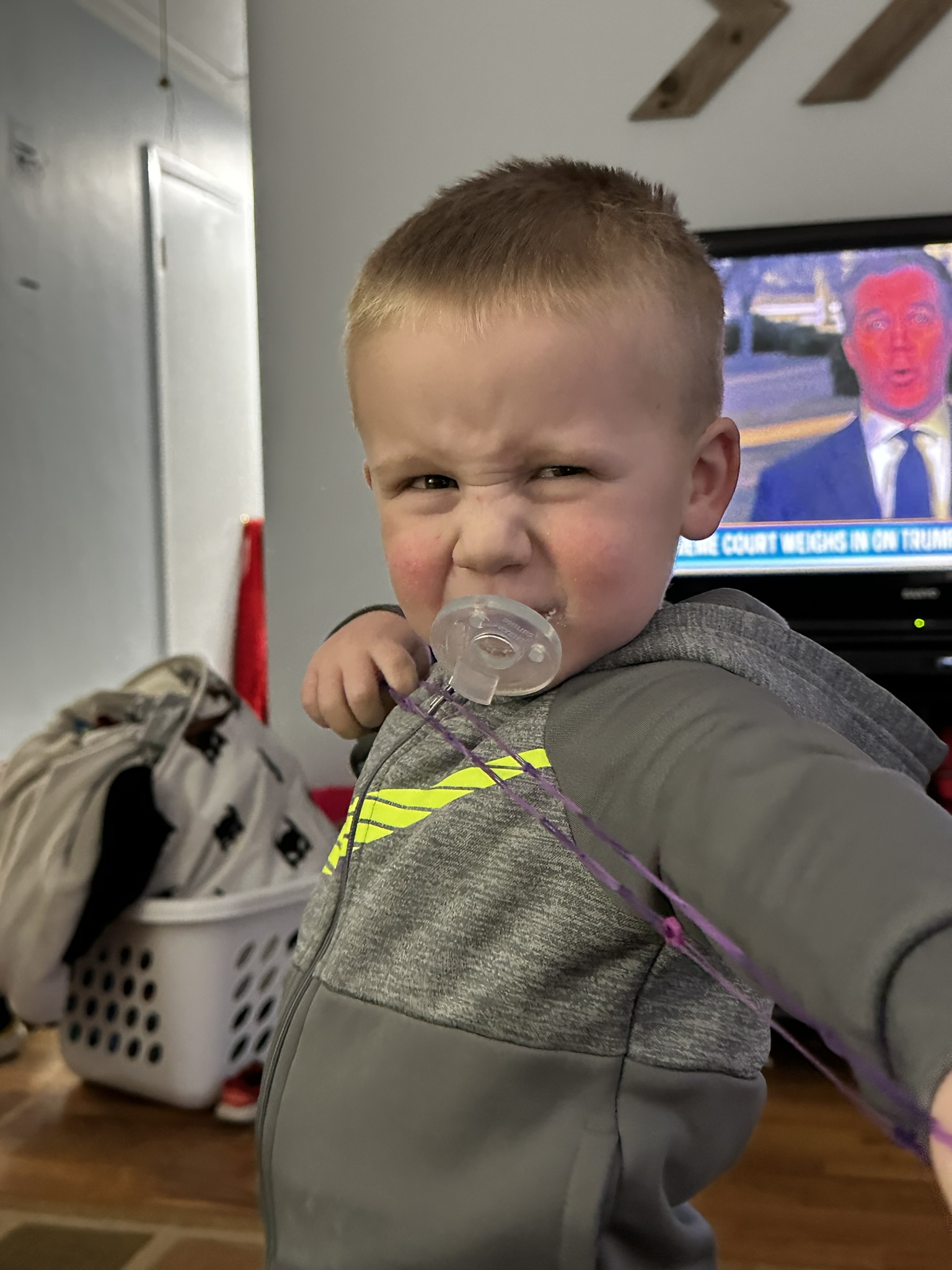
Then there’s my youngest, who has developed an obsession with Spider-Man so intense it borders on method acting. Every night as I wrestle him into his Spidey pajamas (the cleanest pair I can find), he fixes me with a look of grave concern and asks, “What’s happening to me?” It’s as though he genuinely believes the pajamas might trigger a radioactive spider bite and transform him into a web-slinging vigilante before bedtime.

But back to Sundays—the day that seems determined to ruin itself. They’re always gloomy, aren’t they? The sky turns gray as if even nature has decided it can’t be bothered with cheerfulness. There’s laundry to do, coffee never seems strong enough, and every task feels like an uphill battle against time itself. Sundays are not just for the birds; they’re for the grumpy, caffeine-deprived humans who wish they could fast-forward straight to Monday.

And then there are Sunday long runs—the supposed panacea for the weekend’s lethargy. But let’s be honest, they’re more like a double-edged sword. On one hand, they offer a fleeting sense of accomplishment and a brief respite from the chaos that ensues when three miniature humans are left unattended for more than five minutes. On the other hand, they have a peculiar way of making Sundays even more unbearable.

Spend more than an hour pounding the pavement, and you’ll find yourself wondering if the rest of the day has been irreparably damaged. It’s as if the clock itself has been warped by your exertions, stretching out the hours into an endless expanse of exhaustion and obligation. You return home, drenched in sweat and feeling like you’ve been put through a wringer, only to be greeted by the unrelenting demands of laundry, meal prep, and refereeing the ongoing battle between your offspring.

The irony is that long runs are meant to clear your head and invigorate your spirit. But on Sundays, they seem to have the opposite effect. The rest of the day becomes a blur of fatigue and anxiety, with every task feeling like a Herculean challenge. You’re left wondering if the temporary high of endorphins was worth the subsequent crash into the abyss of Sunday blues.

And don’t even get me started on the Spider-Man obsessed youngest, who, upon seeing you stumble through the door, sweat-drenched and limping, will look at you with an air of deep concern and ask, “What’s happening to you?” It’s as though he suspects that the long run has somehow triggered a transformation into a superhero, albeit one who’s lost his cape and can barely make it to the couch.

So yes, give me Mondays or give me death. Mondays may be mundane, but at least they don’t pretend to be something they’re not. They don’t lure you in with promises of relaxation only to slap you with a laundry list of chores and existential angst. Mondays are honest—they show up with their spreadsheets and schedules and say, “Let’s get on with it.” And honestly? That suits me just fine.